Ting See-Yeun, Yan Nicholas L, Schilke Brenda A, Craig Elizabeth A
Department of Biochemistry, University of Wisconsin-Madison, Madison, United States.
Elife. 2017 Apr 25;6:e23609. doi: 10.7554/eLife.23609.
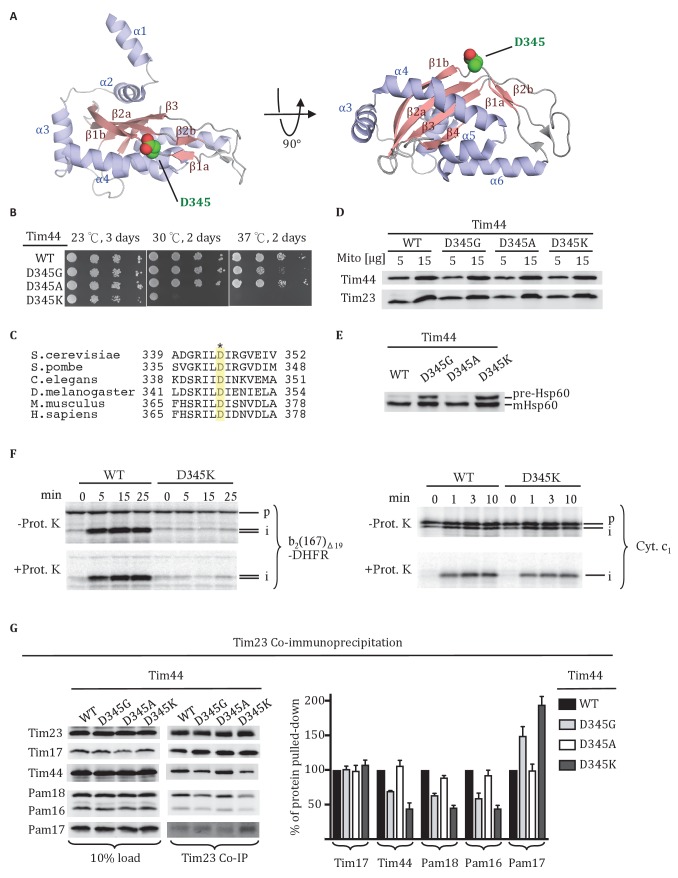
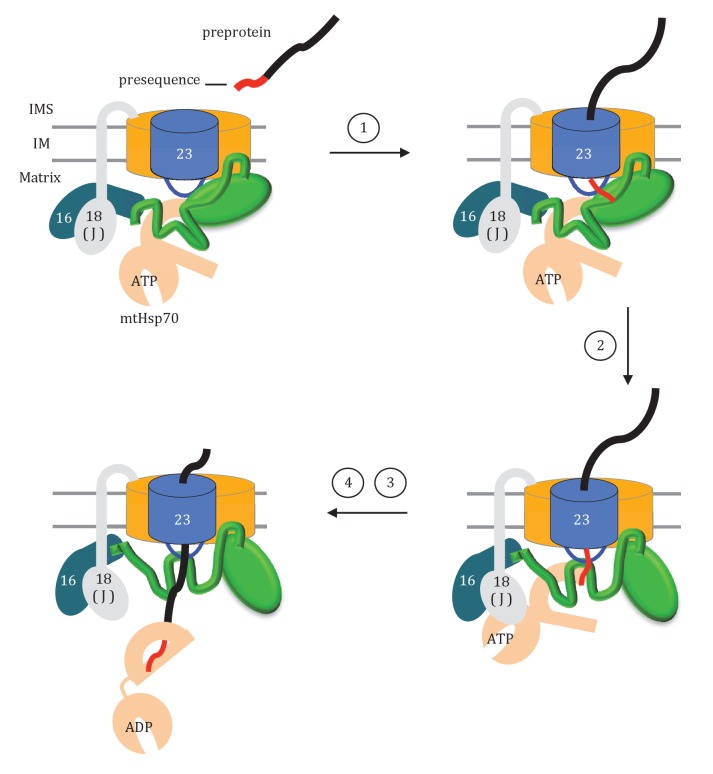
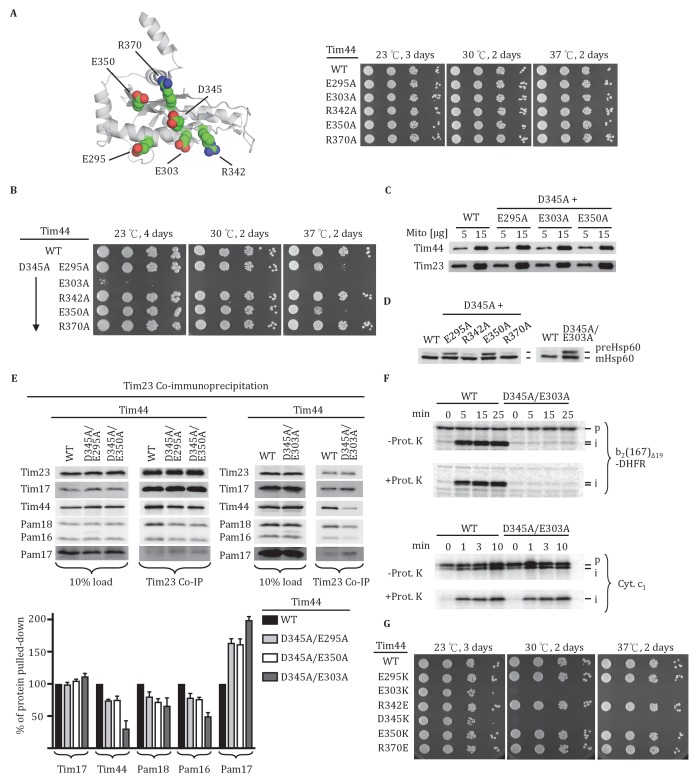
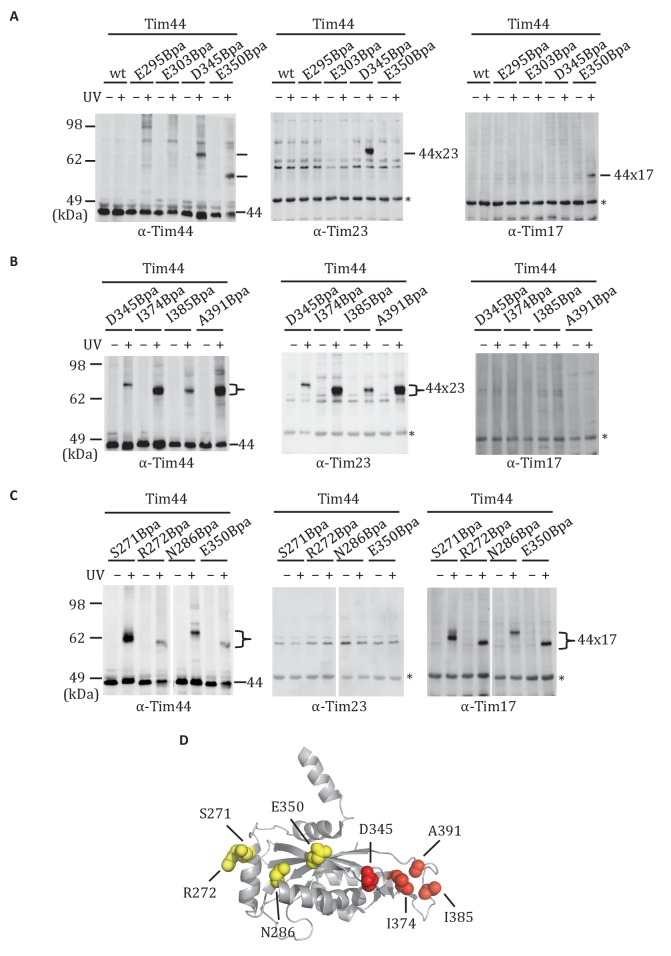
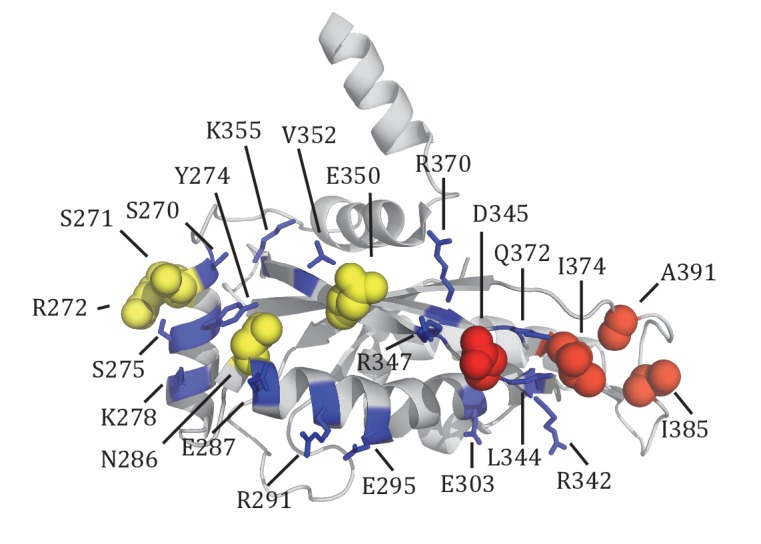
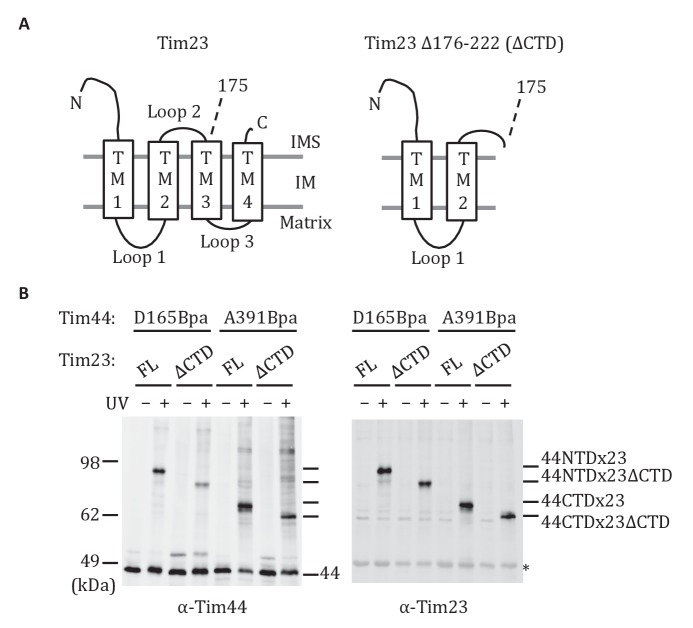
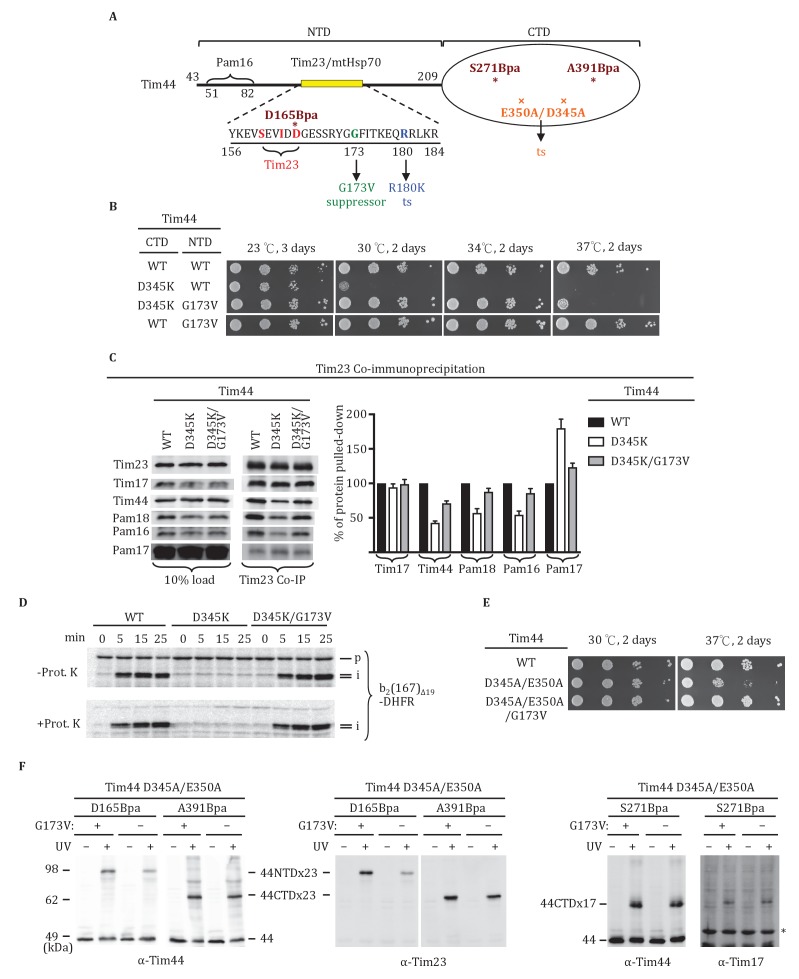
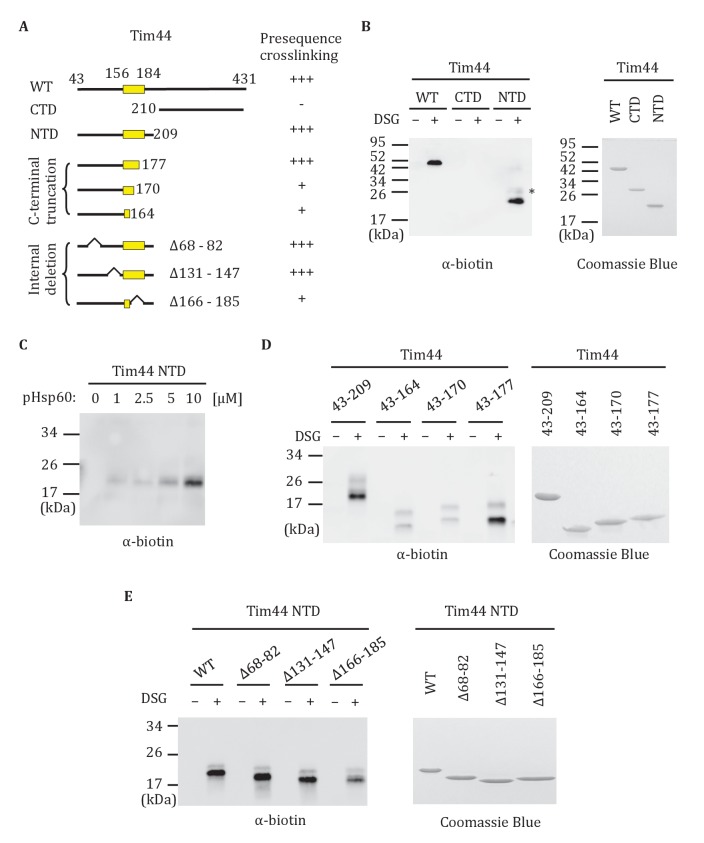
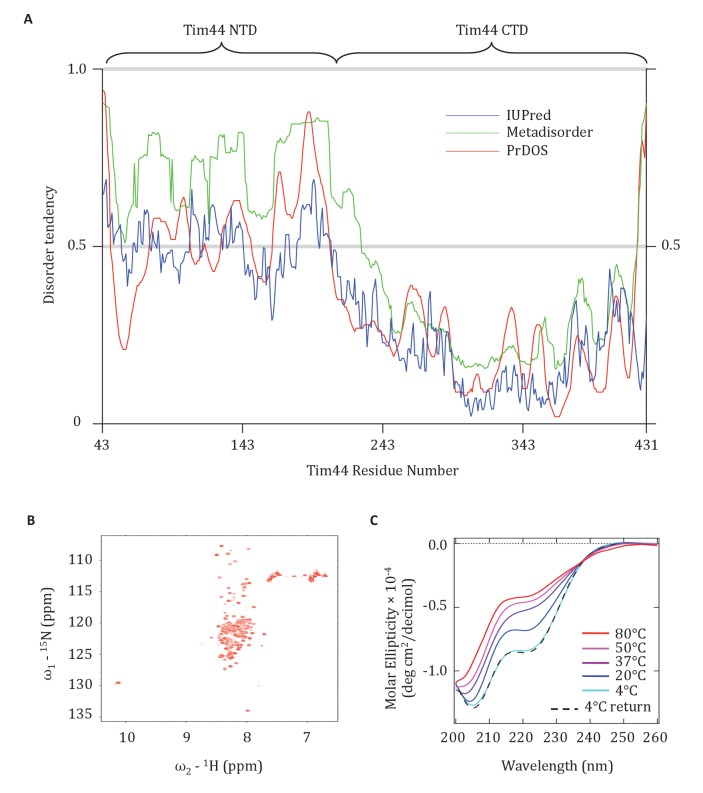
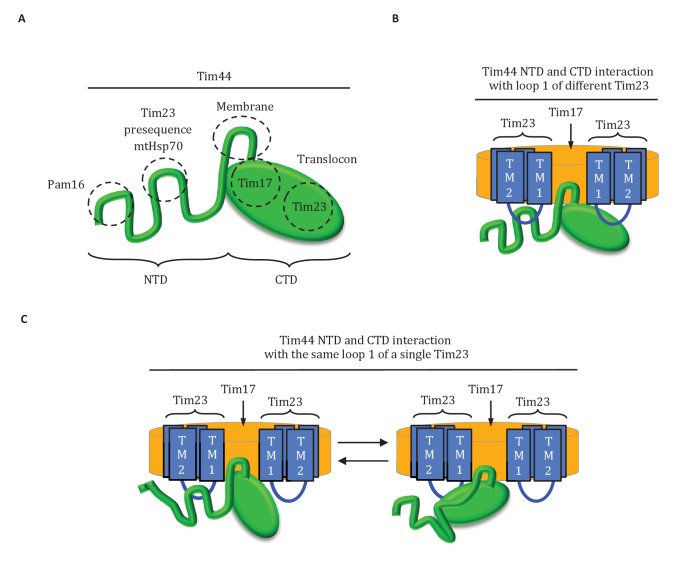
Proteins destined for the mitochondrial matrix are targeted to the inner membrane Tim17/23 translocon by their presequences. Inward movement is driven by the matrix-localized, Hsp70-based motor. The scaffold Tim44, interacting with the matrix face of the translocon, recruits other motor subunits and binds incoming presequence. The basis of these interactions and their functional relationships remains unclear. Using site-specific in vivo crosslinking and genetic approaches in , we found that both domains of Tim44 interact with the major matrix-exposed loop of Tim23, with the C-terminal domain (CTD) binding Tim17 as well. Results of in vitro experiments showed that the N-terminal domain (NTD) is intrinsically disordered and binds presequence near a region important for interaction with Hsp70 and Tim23. Our data suggest a model in which the CTD serves primarily to anchor Tim44 to the translocon, whereas the NTD is a dynamic arm, interacting with multiple components to drive efficient translocation.
定位于线粒体基质的蛋白质通过其前导序列被靶向到内膜Tim17/23转位酶。向内移动由基质定位的基于Hsp70的马达驱动。支架蛋白Tim44与转位酶的基质面相互作用,招募其他马达亚基并结合进入的前导序列。这些相互作用的基础及其功能关系仍不清楚。通过在体内进行位点特异性交联和基因方法,我们发现Tim44的两个结构域都与Tim23主要暴露于基质的环相互作用,其C末端结构域(CTD)也结合Tim17。体外实验结果表明,N末端结构域(NTD)本质上是无序的,并且在与Hsp70和Tim23相互作用的重要区域附近结合前导序列。我们的数据提出了一个模型,其中CTD主要用于将Tim44锚定到转位酶上,而NTD是一个动态臂,与多个组件相互作用以驱动高效转位。