School of Biochemistry, University of Bristol, Bristol, United Kingdom.
Elife. 2022 Jun 8;11:e75426. doi: 10.7554/eLife.75426.
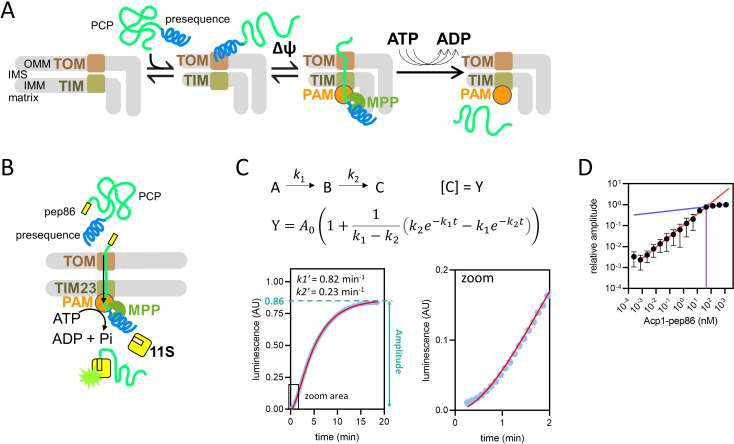
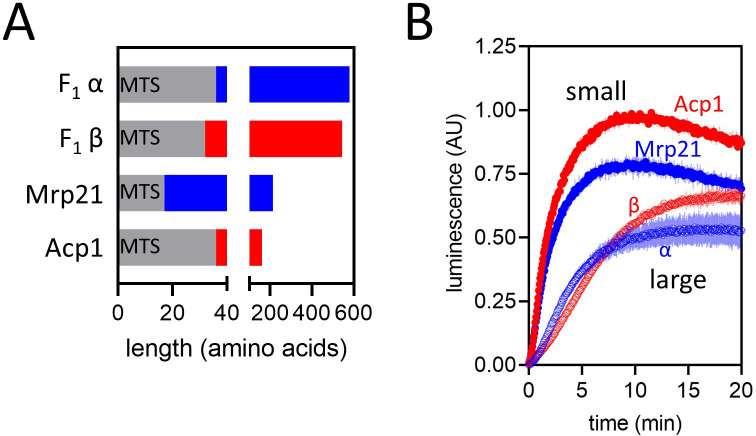
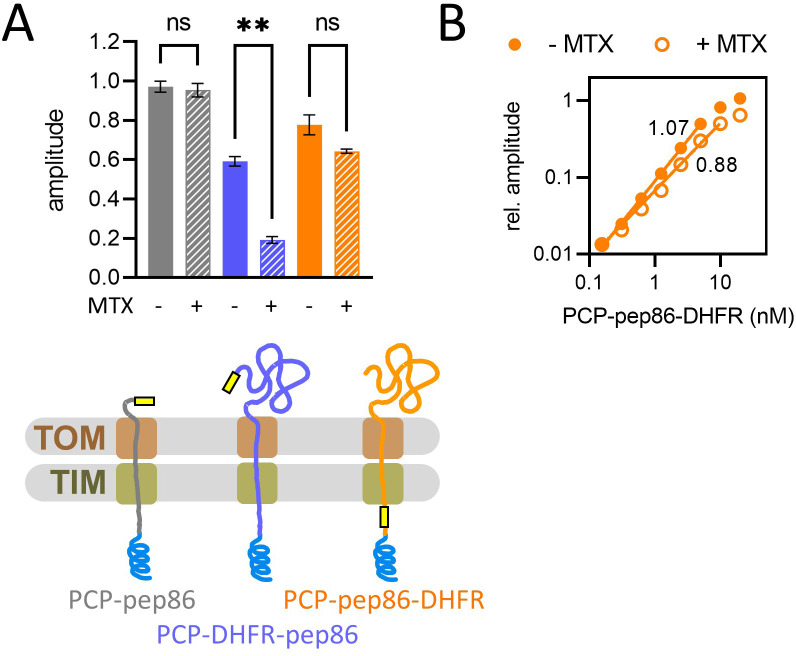
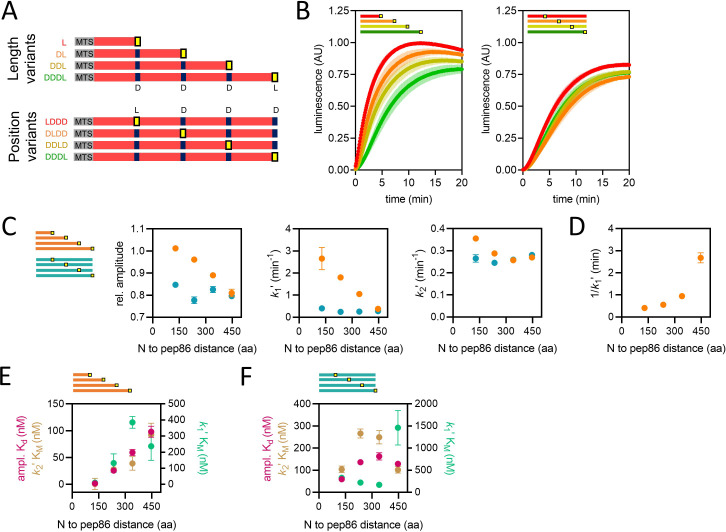
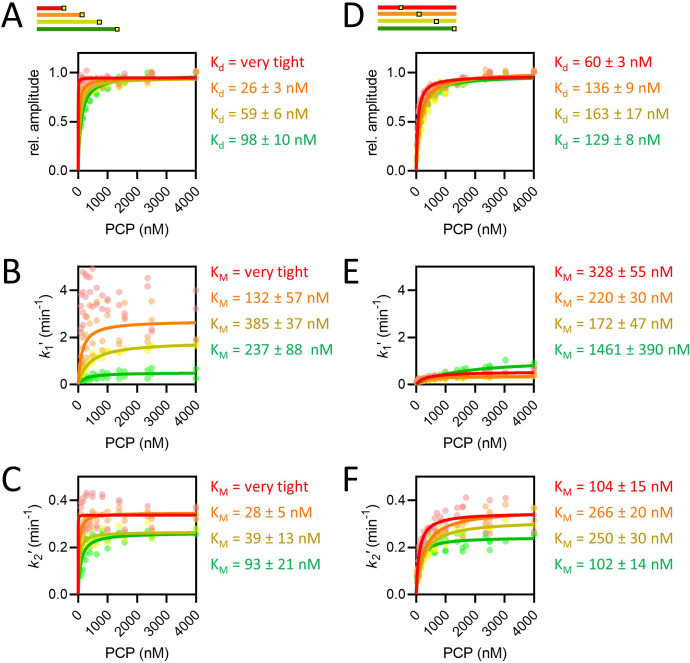
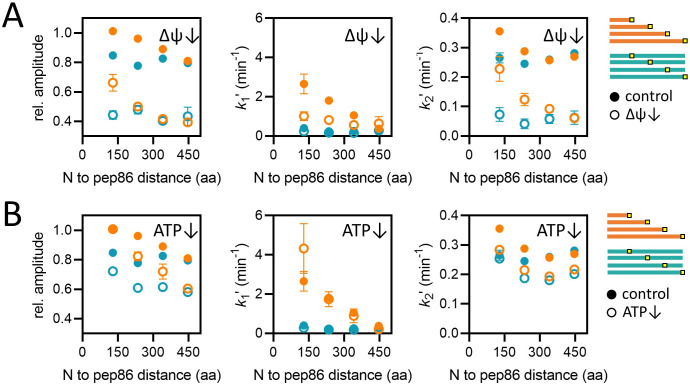
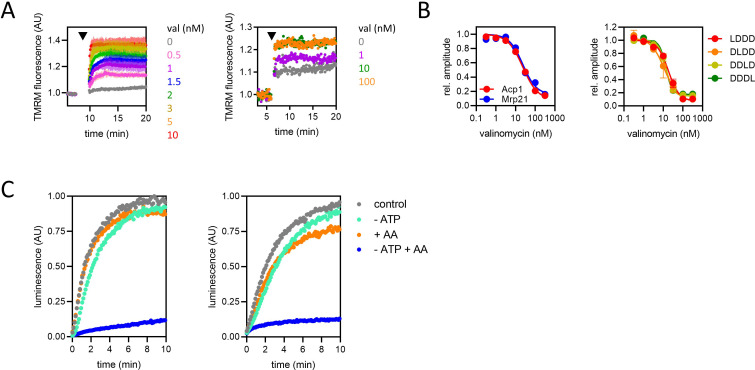
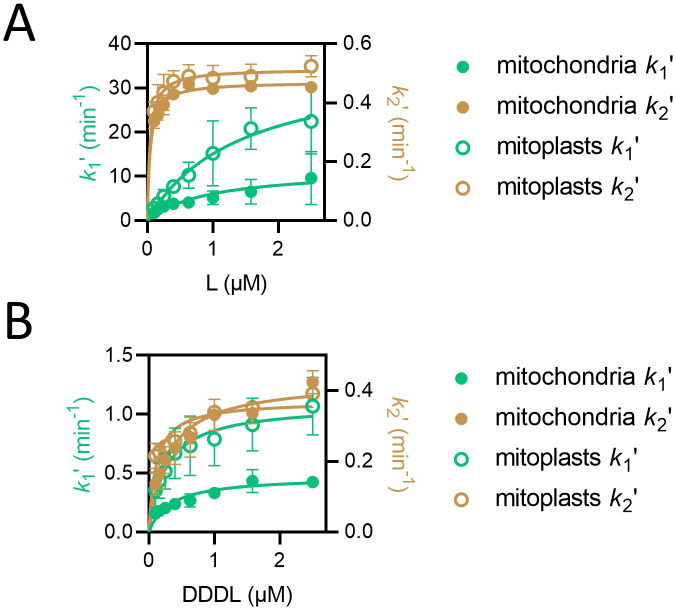
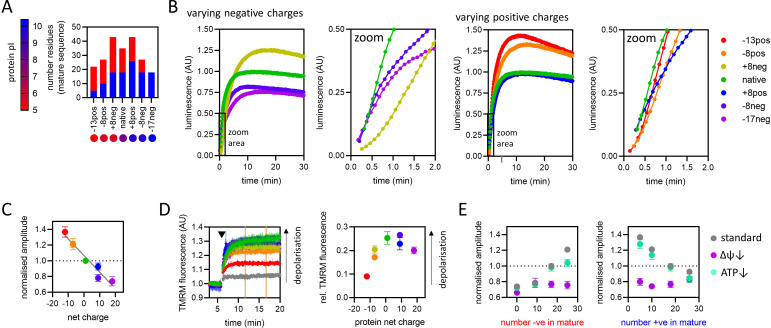
Nearly all mitochondrial proteins need to be targeted for import from the cytosol. For the majority, the first port of call is the translocase of the outer membrane (TOM complex), followed by a procession of alternative molecular machines, conducting transport to their final destination. The pre-sequence translocase of the inner membrane (TIM23-complex) imports proteins with cleavable pre-sequences. Progress in understanding these transport mechanisms has been hampered by the poor sensitivity and time resolution of import assays. However, with the development of an assay based on split NanoLuc luciferase, we can now explore this process in greater detail. Here, we apply this new methodology to understand how ∆ψ and ATP hydrolysis, the two main driving forces for import into the matrix, contribute to the transport of pre-sequence-containing precursors (PCPs) with varying properties. Notably, we found that two major rate-limiting steps define PCP import time: passage of PCP across the outer membrane and initiation of inner membrane transport by the pre-sequence - the rates of which are influenced by PCP size and net charge. The apparent distinction between transport through the two membranes (passage through TOM is substantially complete before PCP-TIM engagement) is in contrast with the current view that import occurs through TOM and TIM in a single continuous step. Our results also indicate that PCPs spend very little time in the TIM23 channel - presumably rapid success or failure of import is critical for maintenance of mitochondrial fitness.
几乎所有的线粒体蛋白都需要从细胞质中靶向输入。对于大多数蛋白来说,首先到达的是外膜转位酶(TOM 复合物),然后是一系列替代的分子机器,将它们运输到最终目的地。内膜的前导序列转位酶(TIM23 复合物)导入具有可切割前导序列的蛋白。对这些转运机制的理解进展受到转运测定中灵敏度和时间分辨率差的阻碍。然而,随着基于分割 NanoLuc 荧光酶测定法的发展,我们现在可以更详细地探索这个过程。在这里,我们应用这种新方法来了解 ∆ψ 和 ATP 水解这两个主要的驱动力如何促进具有不同特性的前导序列包含前体(PCP)的转运。值得注意的是,我们发现两个主要的限速步骤定义了 PCP 导入的时间:PCP 通过外膜的传递和前导序列启动内膜运输,其速率受 PCP 大小和净电荷的影响。通过内外膜的转运(PCP-TIM 结合之前,PCP 通过 TOM 的传递已基本完成)与当前的观点(即导入通过 TOM 和 TIM 以单个连续步骤进行)形成鲜明对比。我们的结果还表明,PCP 在 TIM23 通道中停留的时间非常短——对于维持线粒体活力来说,快速成功或失败的导入是至关重要的。