Bruce-Keller Annadora J, Fernandez-Kim Sun-Ok, Townsend R Leigh, Kruger Claudia, Carmouche Richard, Newman Susan, Salbaum J Michael, Berthoud Hans-Rudolf
Pennington Biomedical Research Center, Louisiana State University System, Baton Rouge, LA, United States of America.
PLoS One. 2017 Apr 25;12(4):e0175577. doi: 10.1371/journal.pone.0175577. eCollection 2017.
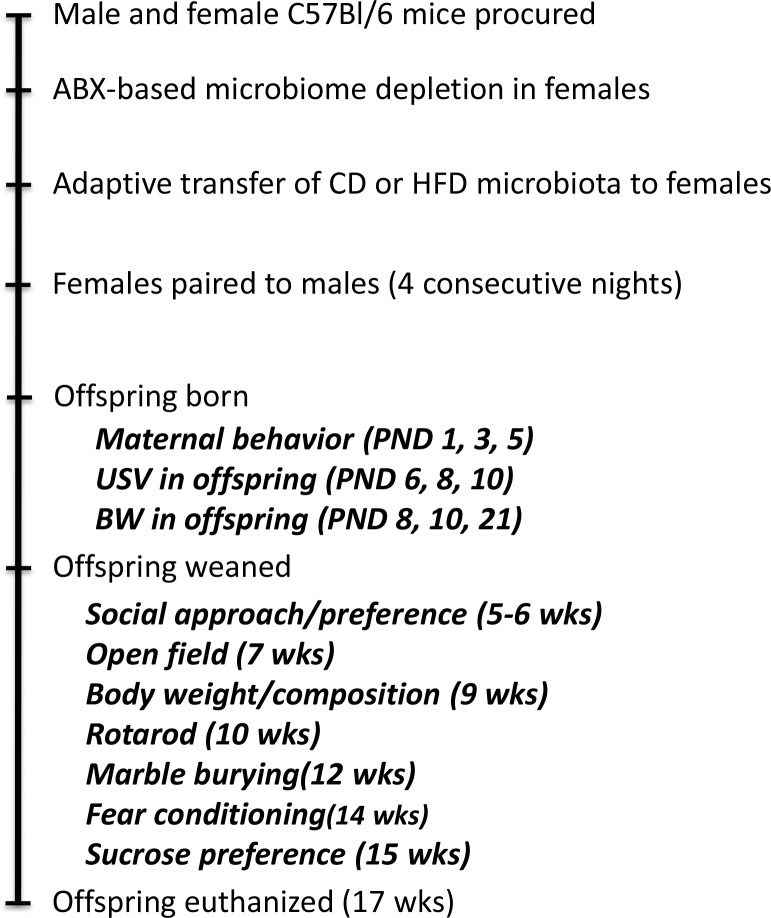
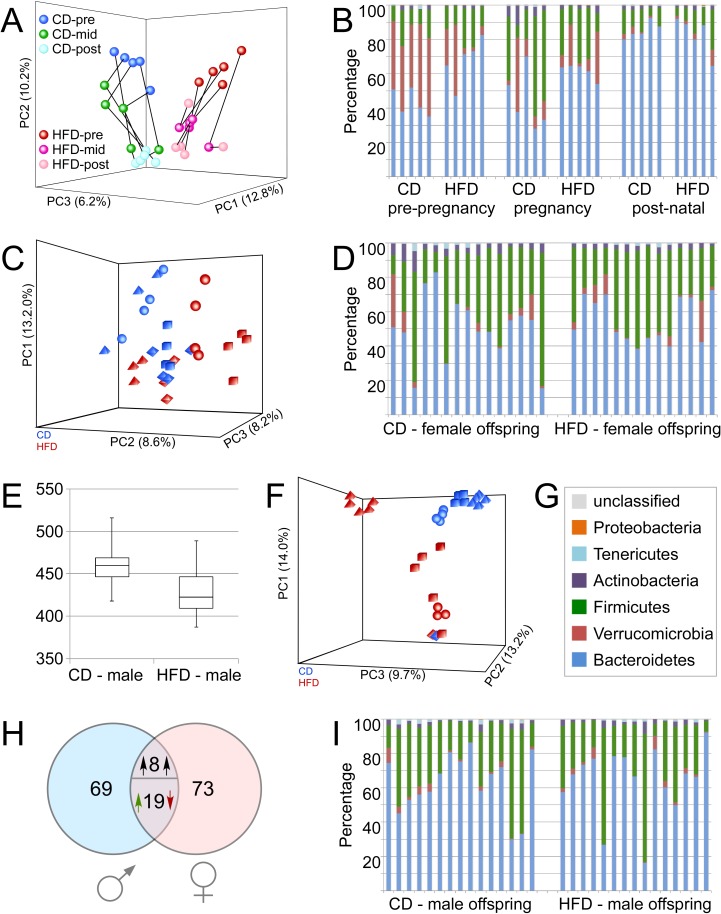
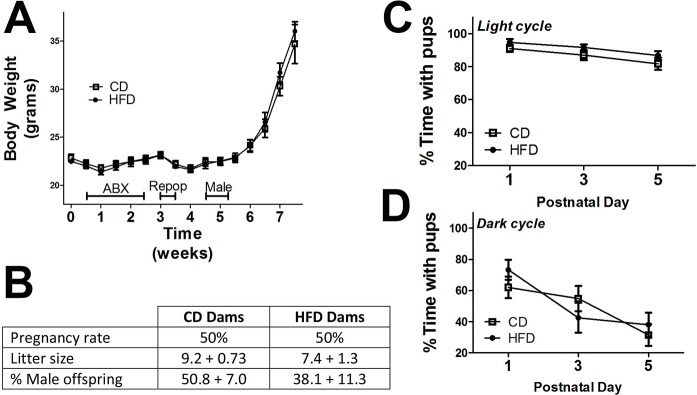
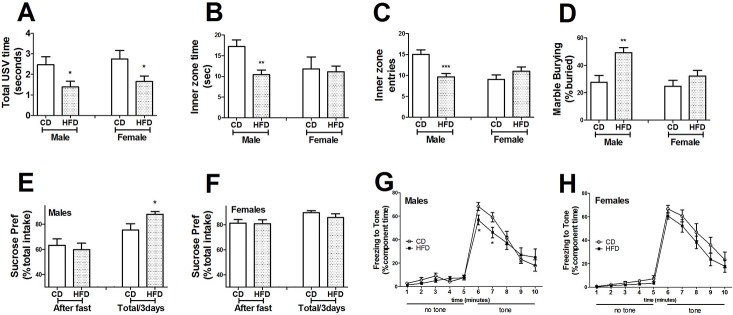
Maternal obesity is known to predispose offspring to metabolic and neurodevelopmental abnormalities. While the mechanisms underlying these phenomena are unclear, high fat diets dramatically alter intestinal microbiota, and gut microbiota can impact physiological function. To determine if maternal diet-induced gut dysbiosis can disrupt offspring neurobehavioral function, we transplanted high fat diet- (HFD) or control low fat diet-associated (CD) gut microbiota to conventionally-housed female mice. Recipient mice were then bred and the behavioral phenotype of male and female offspring was tracked. While maternal behavior was unaffected, neonatal offspring from HFD dams vocalized less upon maternal separation than pups from CD dams. Furthermore, weaned male offspring from HFD dams had significant and selective disruptions in exploratory, cognitive, and stereotypical/compulsive behavior compared to male offspring from CD dams; while female offspring from HFD dams had increases in body weight and adiposity. 16S metagenomic analyses confirmed establishment of divergent microbiota in CD and HFD dams, with alterations in diversity and taxonomic distribution throughout pregnancy and lactation. Likewise, significant alterations in gut microbial diversity and distribution were noted in offspring from HFD dams compared to CD dams, and in males compared to females. Regression analyses of behavioral performance against differentially represented taxa suggest that decreased representation of specific members of the Firmicutes phylum predict behavioral decline in male offspring. Collectively, these data establish that high fat diet-induced maternal dysbiosis is sufficient to disrupt behavioral function in murine offspring in a sex-specific manner. Thus these data reinforce the essential link between maternal diet and neurologic programming in offspring and suggest that intestinal dysbiosis could link unhealthy modern diets to the increased prevalence of neurodevelopmental and childhood disorders.
众所周知,母亲肥胖会使后代易患代谢和神经发育异常。虽然这些现象背后的机制尚不清楚,但高脂肪饮食会显著改变肠道微生物群,而肠道微生物群会影响生理功能。为了确定母体饮食诱导的肠道菌群失调是否会破坏后代的神经行为功能,我们将高脂肪饮食(HFD)或对照低脂饮食(CD)相关的肠道微生物群移植到常规饲养的雌性小鼠体内。然后让受体小鼠繁殖,并跟踪雄性和雌性后代的行为表型。虽然母体行为未受影响,但与CD组母鼠的幼崽相比,HFD组母鼠的新生后代在与母亲分离时发声较少。此外,与CD组母鼠的雄性后代相比,HFD组母鼠断奶后的雄性后代在探索、认知和刻板/强迫行为方面存在显著且选择性的破坏;而HFD组母鼠的雌性后代体重和肥胖增加。16S宏基因组分析证实,CD组和HFD组母鼠中建立了不同的微生物群,在整个怀孕和哺乳期,微生物群的多样性和分类分布发生了改变。同样,与CD组母鼠的后代相比,HFD组母鼠的后代以及雄性后代与雌性后代相比,肠道微生物多样性和分布也有显著改变。对行为表现与差异代表性分类群的回归分析表明,厚壁菌门特定成员的代表性降低预示着雄性后代的行为衰退。总体而言,这些数据表明,高脂肪饮食诱导的母体菌群失调足以以性别特异性方式破坏小鼠后代的行为功能。因此,这些数据强化了母体饮食与后代神经编程之间的重要联系,并表明肠道菌群失调可能将不健康的现代饮食与神经发育障碍和儿童疾病的患病率增加联系起来。