Simanjuntak Yogy, Liang Jian-Jong, Lee Yi-Ling, Lin Yi-Ling
Institute of Biomedical Sciences, Academia SinicaTaipei, Taiwan.
Genomic Research Center, Academia SinicaTaipei, Taiwan.
Front Microbiol. 2017 Apr 11;8:651. doi: 10.3389/fmicb.2017.00651. eCollection 2017.
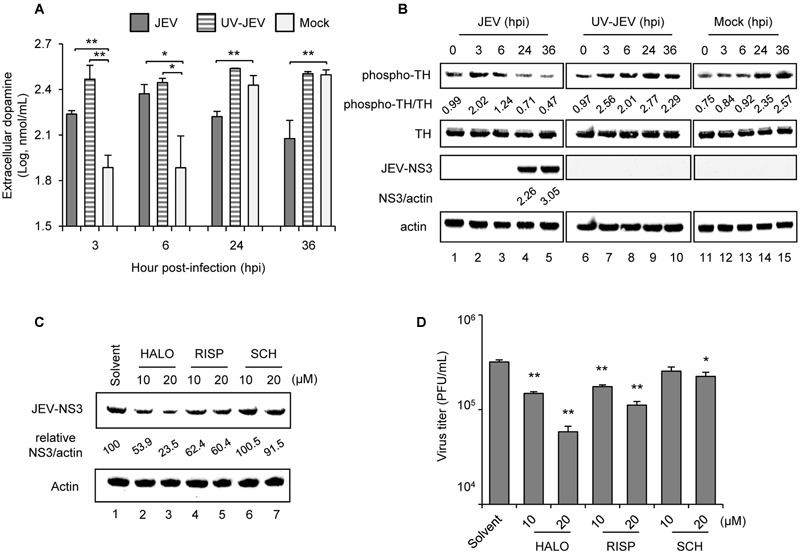
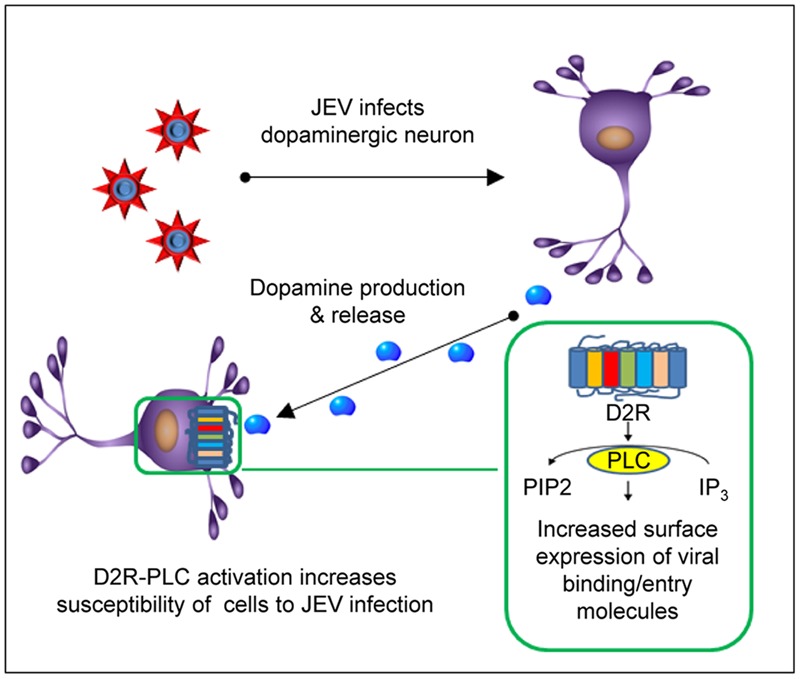
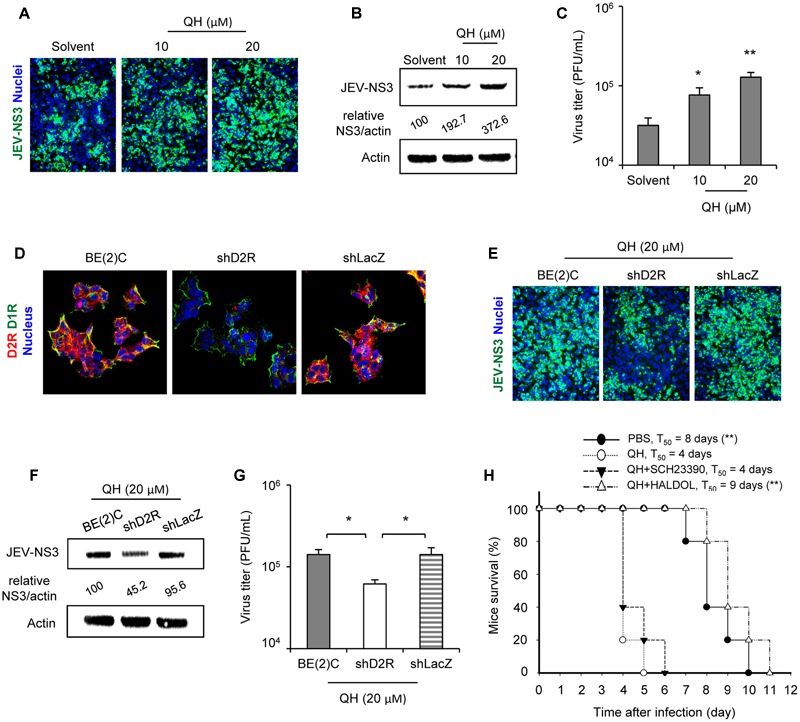
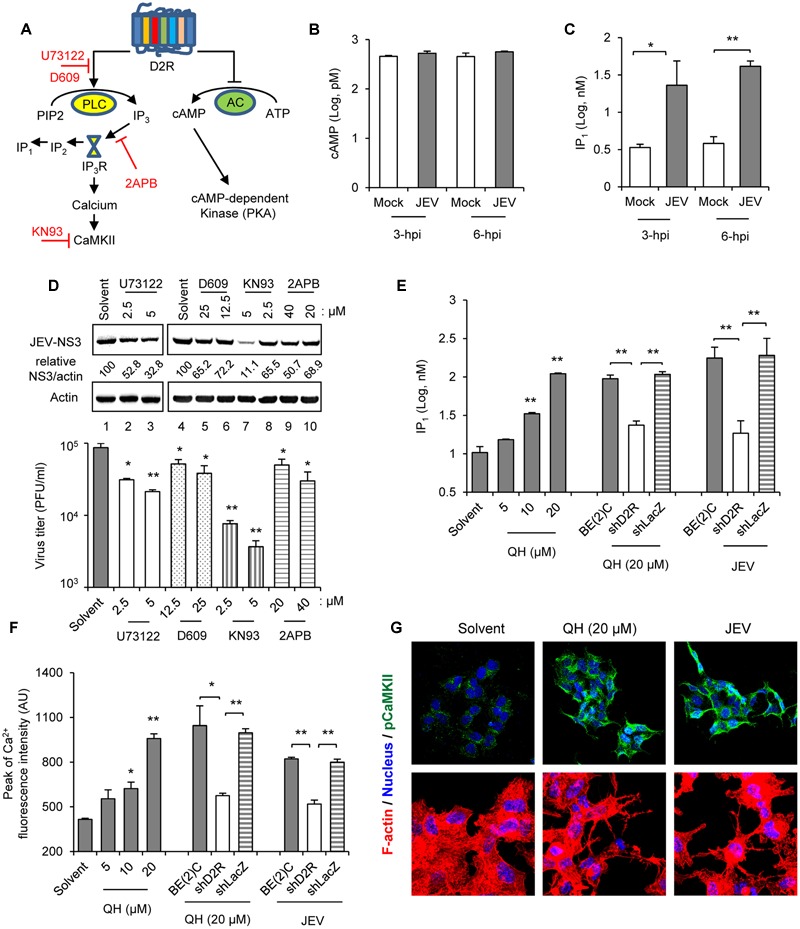
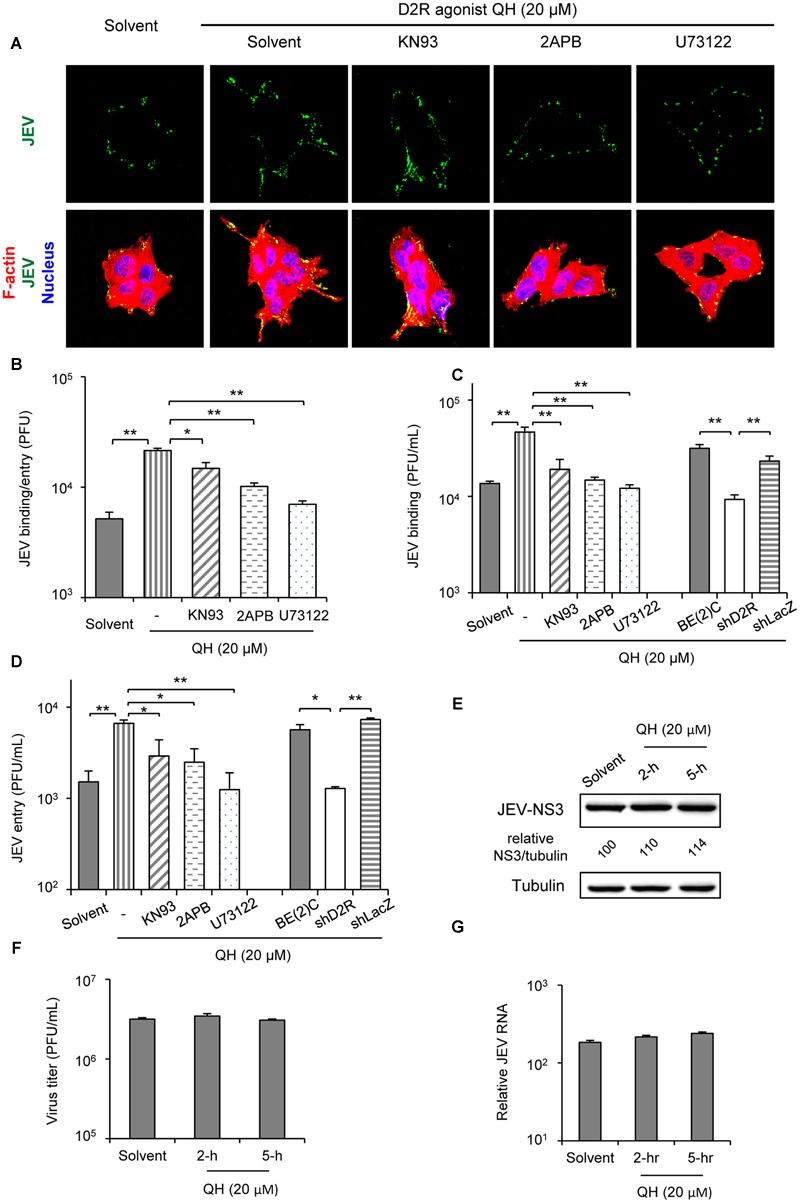
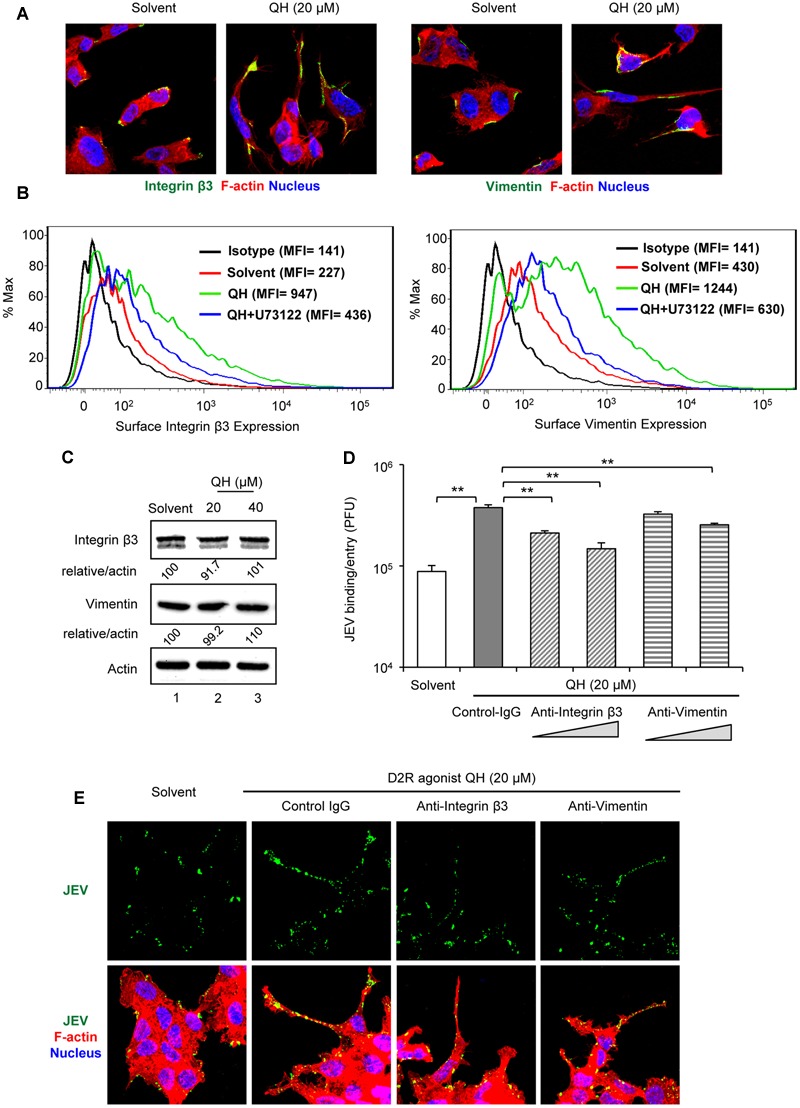
Despite the availability of vaccines for Japanese encephalitis virus (JEV), the re-emerging virus remains a clinically important pathogen that causes acute encephalitis and permanent neuropsychiatric sequels. JEV highly targets dopaminergic neuron-rich brain regions including the thalamus and midbrain. The molecular mechanism contributing to the high susceptibility of these particular brain regions remains largely unclear. This study addressed whether this tissue tropism of JEV is associated with signaling of dopaminergic neurons. Three pieces of evidence indicate that JEV exploits dopamine signaling to facilitate its infection: (1) JEV infection modulates dopamine level; (2) a selective dopamine D2 receptor (D2R) agonist enhances JEV infection; and (3) stimulation of D2R activates phospholipase C (PLC) to enhance the surface expression of JEV binding/entry molecules, integrin β3 and vimentin. Overall, JEV may exploit dopamine-mediated neuronal communication to increase the susceptibility of D2R-expressing cells to JEV infection. This study identifies a potential underlying mechanism of viral invasiveness in the dopaminergic brain regions and suggests antiviral strategies against viral infection by targeting D2R-PLC signaling.
尽管有日本脑炎病毒(JEV)疫苗,但这种再度出现的病毒仍是一种临床上重要的病原体,可导致急性脑炎和永久性神经精神后遗症。JEV高度靶向富含多巴胺能神经元的脑区,包括丘脑和中脑。导致这些特定脑区高度易感性的分子机制在很大程度上仍不清楚。本研究探讨了JEV的这种组织嗜性是否与多巴胺能神经元的信号传导有关。三条证据表明JEV利用多巴胺信号传导来促进其感染:(1)JEV感染调节多巴胺水平;(2)选择性多巴胺D2受体(D2R)激动剂增强JEV感染;(3)刺激D2R激活磷脂酶C(PLC)以增强JEV结合/进入分子整合素β3和波形蛋白的表面表达。总体而言,JEV可能利用多巴胺介导的神经元通讯来增加表达D2R的细胞对JEV感染的易感性。本研究确定了多巴胺能脑区病毒侵袭性的潜在潜在机制,并提出了通过靶向D2R-PLC信号传导来对抗病毒感染的抗病毒策略。