Wongchitrat Prapimpun, Chanmee Theerawut, Govitrapong Piyarat
Center for Research Innovation and Biomedical Informatics, Faculty of Medical Technology, Mahidol University, 999 Phutthamonthon 4 Road, Salaya, Phutthamonthon, Nakhon Pathom, 73170, Thailand.
Department of Clinical Chemistry, Faculty of Medical Technology, Mahidol University, Salaya, Nakhon Pathom, Thailand.
Mol Neurobiol. 2024 May;61(5):2881-2903. doi: 10.1007/s12035-023-03761-6. Epub 2023 Nov 9.
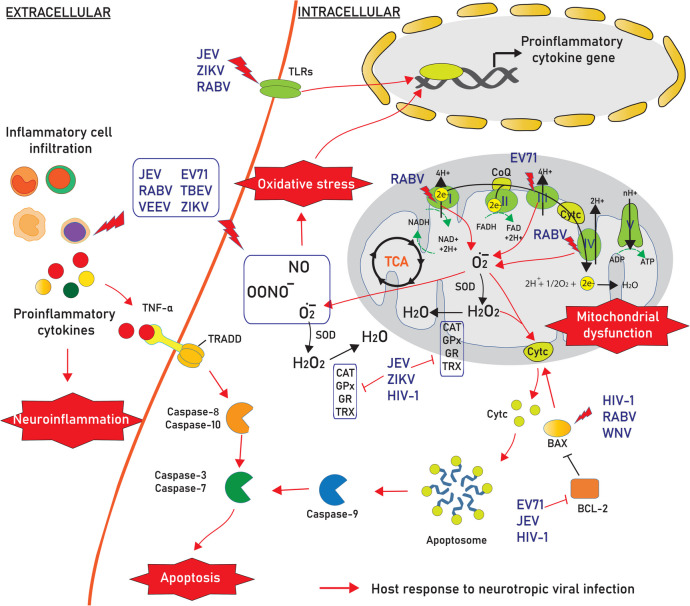
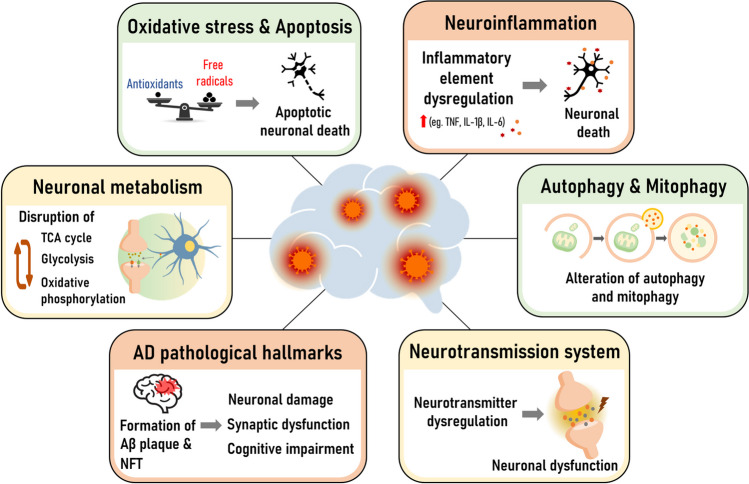
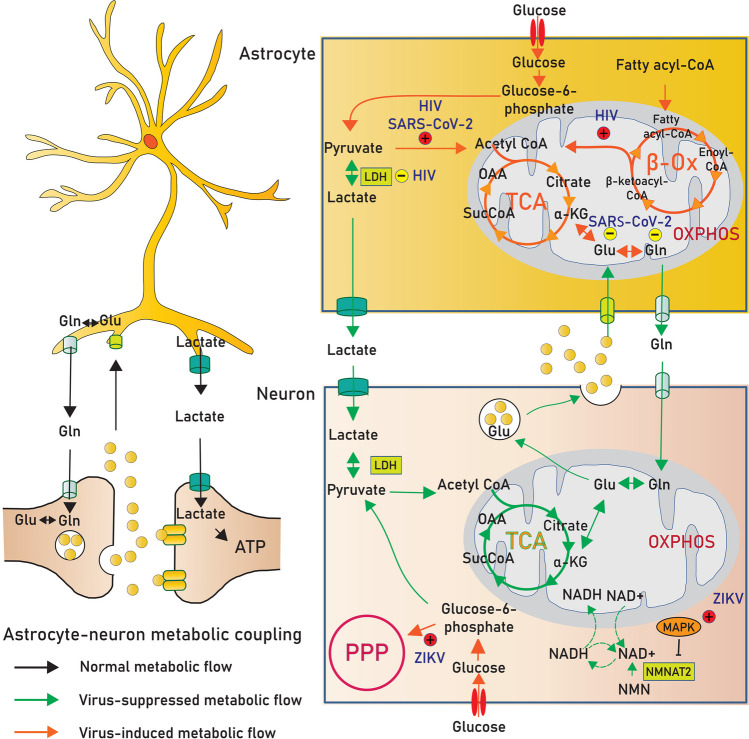
Viral infections of the central nervous system (CNS) cause variable outcomes from acute to severe neurological sequelae with increased morbidity and mortality. Viral neuroinvasion directly or indirectly induces encephalitis via dysregulation of the immune response and contributes to the alteration of neuronal function and the degeneration of neuronal cells. This review provides an overview of the cellular and molecular mechanisms of virus-induced neurodegeneration. Neurotropic viral infections influence many aspects of neuronal dysfunction, including promoting chronic inflammation, inducing cellular oxidative stress, impairing mitophagy, encountering mitochondrial dynamics, enhancing metabolic rewiring, altering neurotransmitter systems, and inducing misfolded and aggregated pathological proteins associated with neurodegenerative diseases. These pathogenetic mechanisms create a multidimensional injury of the brain that leads to specific neuronal and brain dysfunction. The understanding of the molecular mechanisms underlying the neurophathogenesis associated with neurodegeneration of viral infection may emphasize the strategies for prevention, protection, and treatment of virus infection of the CNS.
中枢神经系统(CNS)的病毒感染会导致从急性到严重神经后遗症等不同的结果,发病率和死亡率都会增加。病毒神经侵袭通过免疫反应失调直接或间接诱发脑炎,并导致神经元功能改变和神经元细胞退化。本综述概述了病毒诱导神经变性的细胞和分子机制。嗜神经病毒感染会影响神经元功能障碍的许多方面,包括促进慢性炎症、诱导细胞氧化应激、损害线粒体自噬、干扰线粒体动力学、增强代谢重塑、改变神经递质系统,以及诱导与神经退行性疾病相关的错误折叠和聚集的病理性蛋白质。这些致病机制对大脑造成多维度损伤,导致特定的神经元和脑功能障碍。对与病毒感染神经变性相关的神经发病机制的分子机制的理解,可能会突出预防、保护和治疗中枢神经系统病毒感染的策略。