Mazzoni Elisa, Di Stefano Mariantonietta, Fiore Josè R, Destro Federica, Manfrini Marco, Rotondo John Charles, Casali Maria V, Vesce Fortunato, Greco Pantaleo, Scutiero Gennaro, Martini Fernanda, Tognon Mauro G
Department of Morphology, Surgery and Experimental Medicine, Section of Pathology, Oncology and Experimental Biology, Laboratories of Cell Biology and Molecular Genetics, University of Ferrara, Ferrara, Italy.
Department of Clinical and Experimental Medicine, Clinic of Infectious Diseases, School of Medicine, University of Foggia, Foggia, Italy.
Front Immunol. 2017 Apr 10;8:411. doi: 10.3389/fimmu.2017.00411. eCollection 2017.
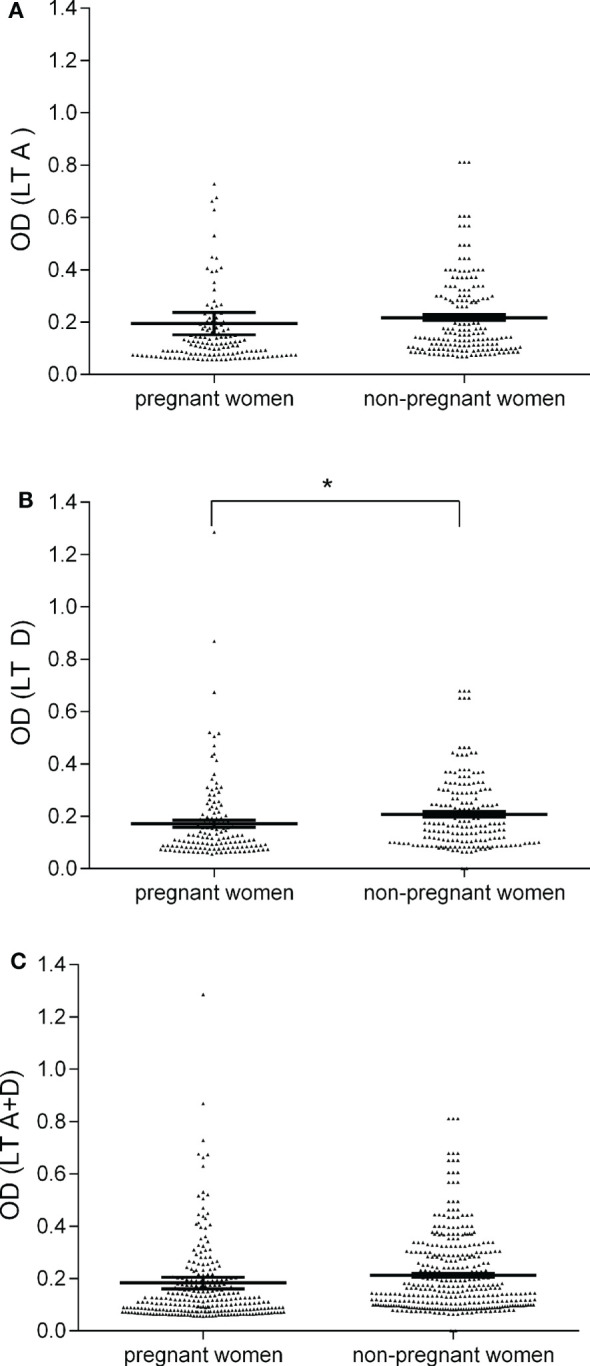
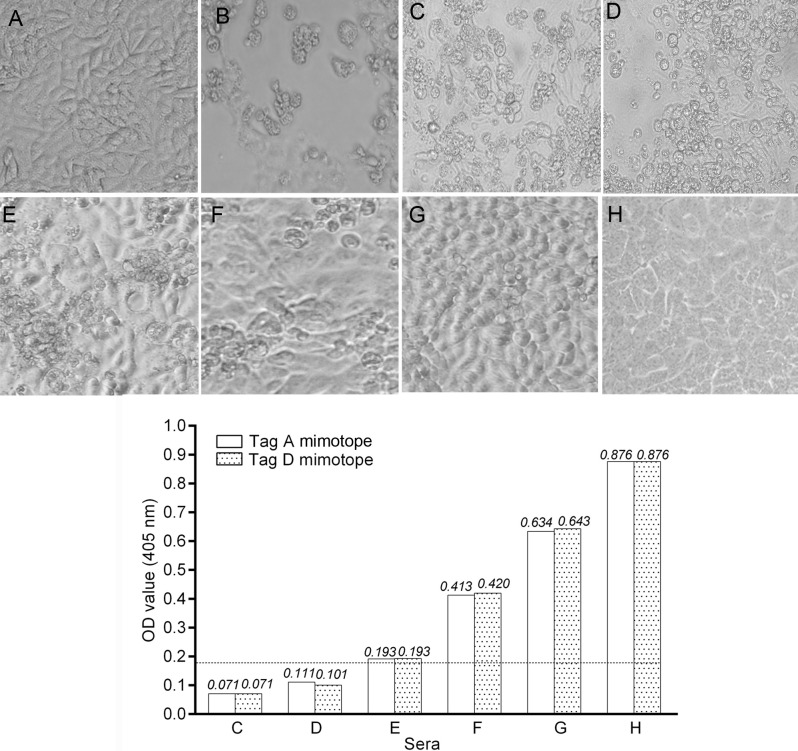
Simian virus 40 (SV40) () coding sequences were revealed in different human samples, whereas SV40 antibodies (Ab) were detected in human sera of cancer patients and healthy individuals, although with a lower prevalence. Previous studies carried out by the neutralization assay gave a SV40 seroprevalence, in the general population, up to 8%, although higher rates, 12%, were detected in kidney transplant children, in a group of HIV-positive patients, and in healthy females. In this study, serum samples from pregnant women, together with those from non-pregnant women, were analyzed to check the prevalence of IgG Ab reacting to SV40 LT antigens. Serum samples were collected from pregnant and non-pregnant women, with the same mean age. Women were in the range of 15-48 years old. Samples were assayed by an indirect ELISA employing specific SV40 LT mimotopes as antigens, whereas functional analysis was performed by neutralization of the viral infectivity in cell cultures. As a control, sera were analyzed for Ab against BK polyomavirus (BKPyV), which is a human polyomavirus homologous to SV40. Statistical analyses employed chi-square with Yates' correction, and Student's tests. Indirect ELISAs indicated that pregnant women tested SV40 LT-positive with a prevalence of 17% (23/134), whereas non-pregnant women had a prevalence of 20% (36/180) ( > 0.05). Ab against BKPyV were detected with a prevalence of 80% in pregnant women and with a prevalence of 78% in non-pregnant women. These data indicate that SV40 infects at a low prevalence pregnant women. We may speculate that SV40, or a close human polyomavirus still undetected, could be transmitted from mother to fetus.
在不同的人类样本中发现了猴病毒40(SV40)的编码序列,而在癌症患者和健康个体的人血清中检测到了SV40抗体(Ab),尽管其流行率较低。先前通过中和试验进行的研究表明,在一般人群中,SV40血清流行率高达8%,尽管在肾移植儿童、一组HIV阳性患者和健康女性中检测到更高的比率,即12%。在本研究中,分析了孕妇和非孕妇的血清样本,以检查与SV40大T抗原反应的IgG抗体的流行情况。从年龄均值相同的孕妇和非孕妇中采集血清样本。女性年龄在15至48岁之间。样本通过使用特定的SV40大T模拟表位作为抗原的间接ELISA进行检测,而功能分析则通过在细胞培养物中中和病毒感染性来进行。作为对照,分析血清中针对BK多瘤病毒(BKPyV)的抗体,BKPyV是一种与SV40同源的人类多瘤病毒。统计分析采用带Yates校正的卡方检验和学生t检验。间接ELISA表明,孕妇中检测出SV40大T阳性的流行率为17%(23/134),而非孕妇的流行率为20%(36/180)(P>0.05)。检测到针对BKPyV的抗体在孕妇中的流行率为80%,在非孕妇中的流行率为78%。这些数据表明,SV40感染孕妇的流行率较低。我们可以推测,SV40或一种尚未被发现的密切相关的人类多瘤病毒可能会从母亲传播给胎儿。