Nairz Manfred, Schroll Andrea, Haschka David, Dichtl Stefanie, Tymoszuk Piotr, Demetz Egon, Moser Patrizia, Haas Hubertus, Fang Ferric C, Theurl Igor, Weiss Günter
Department of Internal Medicine II, Infectious Diseases, Immunology, Rheumatology, Pneumology, Medical University of InnsbruckInnsbruck, Austria.
Department of Pathology, Medical University of InnsbruckInnsbruck, Austria.
Front Cell Infect Microbiol. 2017 Apr 11;7:110. doi: 10.3389/fcimb.2017.00110. eCollection 2017.
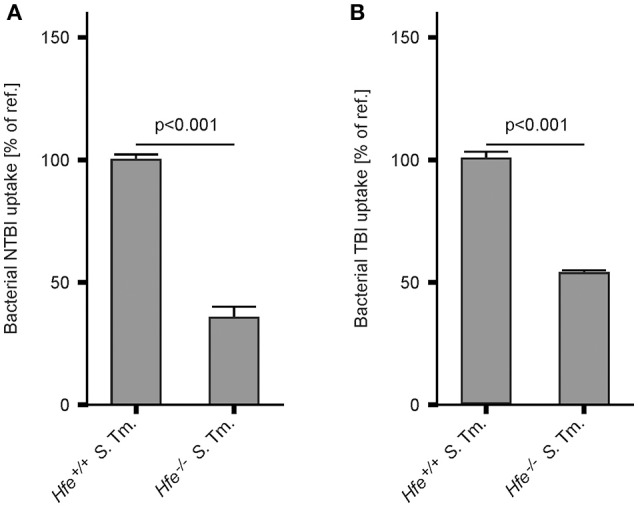
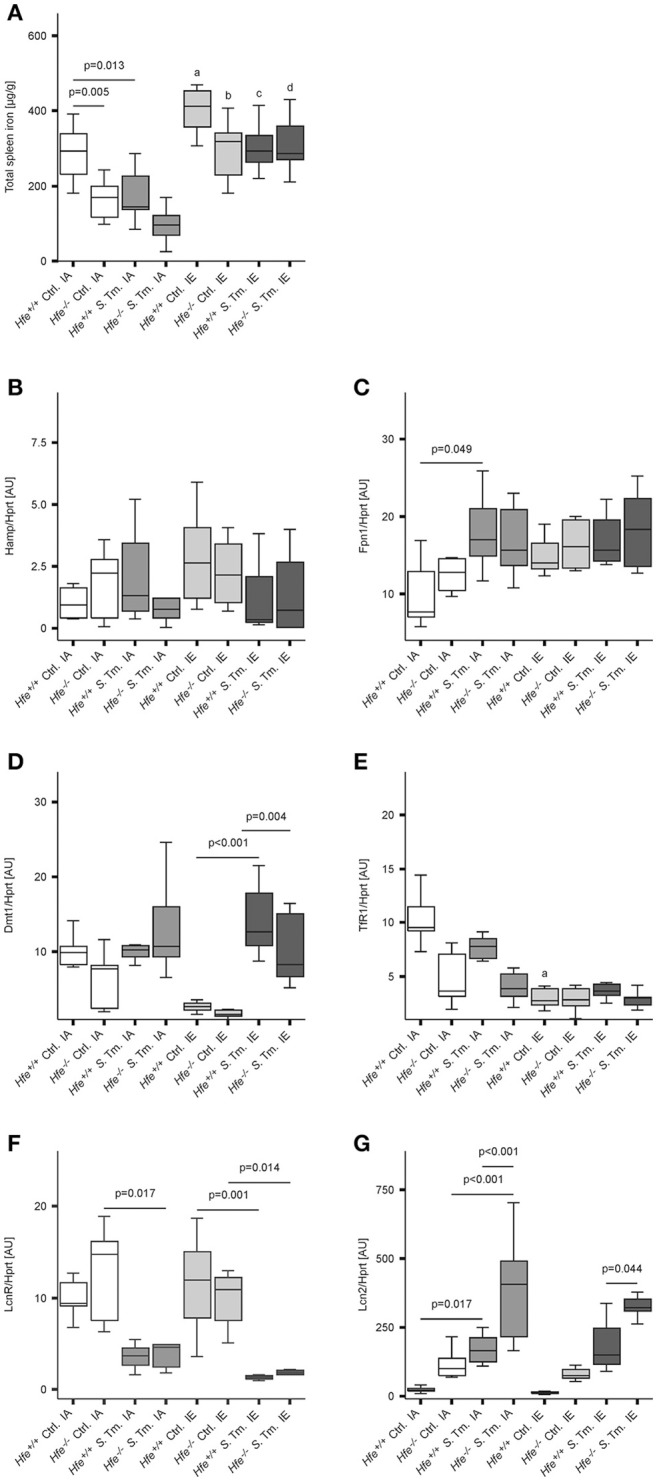
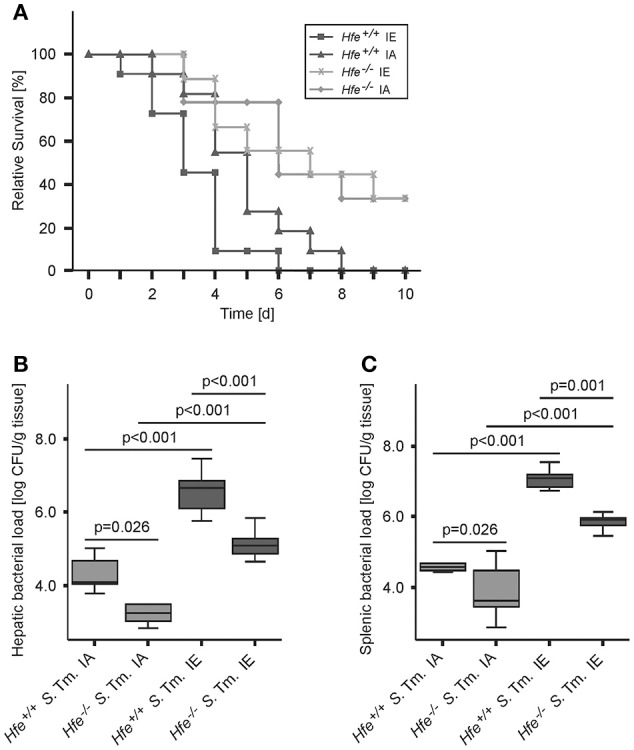
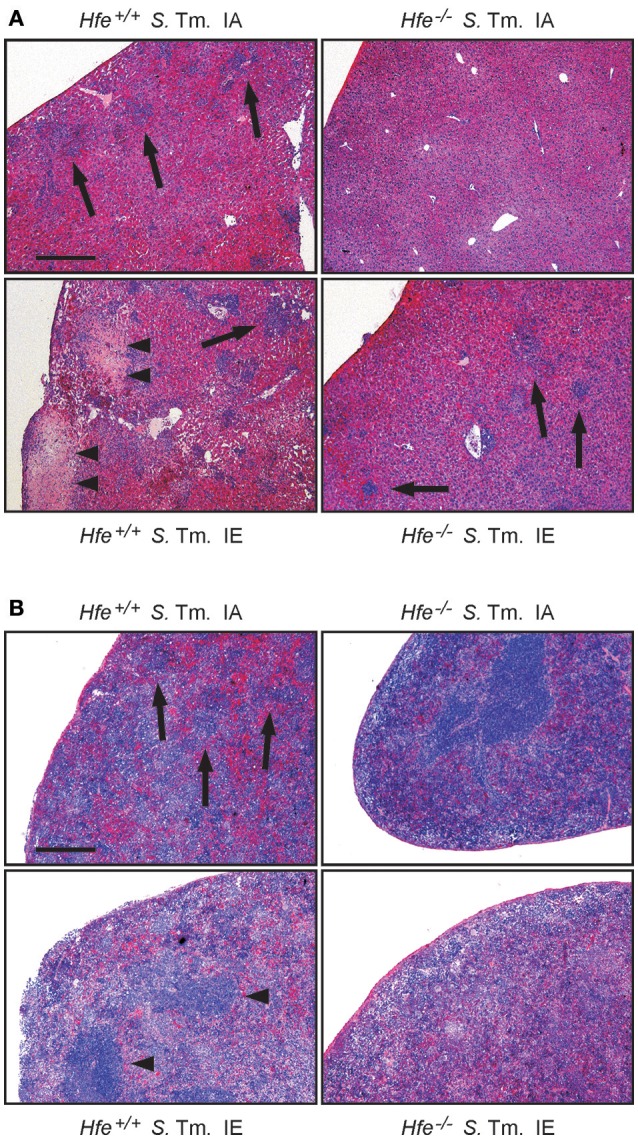
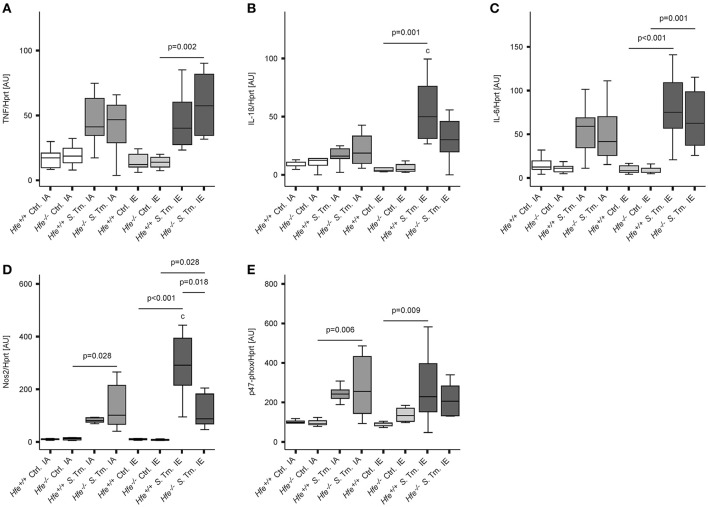
Genetic and dietary forms of iron overload have distinctive clinical and pathophysiological features. HFE-associated hereditary hemochromatosis is characterized by overwhelming intestinal iron absorption, parenchymal iron deposition, and macrophage iron depletion. In contrast, excessive dietary iron intake results in iron deposition in macrophages. However, the functional consequences of genetic and dietary iron overload for the control of microbes are incompletely understood. Using and mice in combination with oral iron overload in a model of serovar Typhimurium infection, we found animals of either genotype to induce hepcidin antimicrobial peptide expression and hypoferremia following systemic infection in an Hfe-independent manner. As predicted, mice, a model of hereditary hemochromatosis, displayed reduced spleen iron content, which translated into improved control of replication. adapted to the iron-poor microenvironment in the spleens of mice by inducing the expression of its siderophore iron-uptake machinery. Dietary iron loading resulted in higher bacterial numbers in both WT and mice, although Hfe deficiency still resulted in better pathogen control and improved survival. This suggests that Hfe deficiency may exert protective effects in addition to the control of iron availability for intracellular bacteria. Our data show that a dynamic adaptation of iron metabolism in both immune cells and microbes shapes the host-pathogen interaction in the setting of systemic infection. Moreover, Hfe-associated iron overload and dietary iron excess result in different outcomes in infection, indicating that tissue and cellular iron distribution determines the susceptibility to infection with specific pathogens.
遗传性和饮食性铁过载具有独特的临床和病理生理特征。与HFE相关的遗传性血色素沉着症的特点是肠道铁吸收过多、实质铁沉积以及巨噬细胞铁耗竭。相比之下,过量的饮食铁摄入会导致铁在巨噬细胞中沉积。然而,遗传性和饮食性铁过载对微生物控制的功能后果尚未完全了解。在鼠伤寒沙门氏菌血清型感染模型中,我们将Hfe基因敲除小鼠和野生型小鼠与口服铁过载相结合,发现任何一种基因型的动物在全身感染后均以不依赖Hfe的方式诱导铁调素抗菌肽表达和低铁血症。正如预期的那样,遗传性血色素沉着症模型Hfe基因敲除小鼠的脾脏铁含量降低,这转化为对细菌复制的更好控制。鼠伤寒沙门氏菌通过诱导其铁载体铁摄取机制的表达来适应Hfe基因敲除小鼠脾脏中的缺铁微环境。饮食性铁负荷导致野生型小鼠和Hfe基因敲除小鼠体内的细菌数量增加,尽管Hfe缺乏仍能更好地控制病原体并提高生存率。这表明,除了控制细胞内细菌的铁供应外,Hfe缺乏可能还具有保护作用。我们的数据表明,免疫细胞和微生物中铁代谢的动态适应在全身感染的情况下塑造了宿主与病原体之间的相互作用。此外,与Hfe相关的铁过载和饮食性铁过量在感染中导致不同的结果,表明组织和细胞铁分布决定了对特定病原体感染的易感性。