Crawford Matthew A, Henard Calvin A, Tapscott Timothy, Porwollik Steffen, McClelland Michael, Vázquez-Torres Andrés
Department of Immunology and Microbiology, University of Colorado School of Medicine Aurora, CO, USA.
Molecular Biology Program, University of Colorado School of Medicine Aurora, CO, USA.
Front Microbiol. 2016 Mar 31;7:444. doi: 10.3389/fmicb.2016.00444. eCollection 2016.
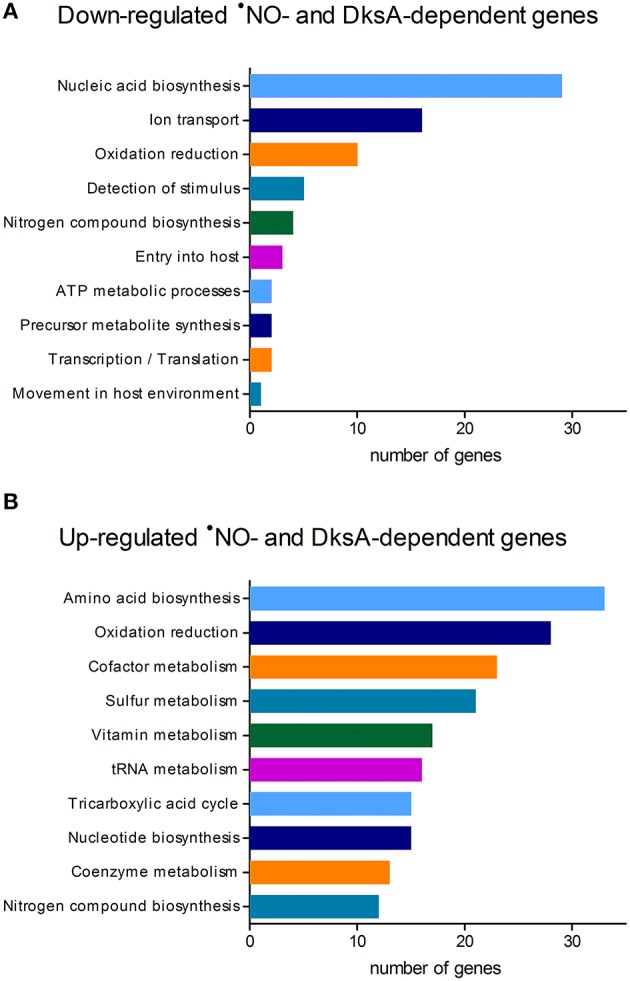
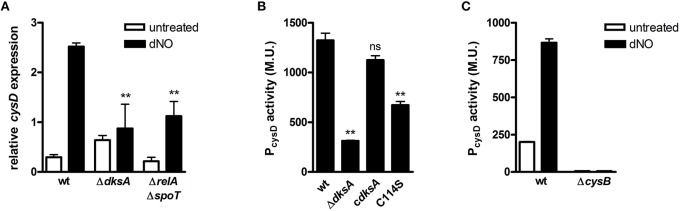
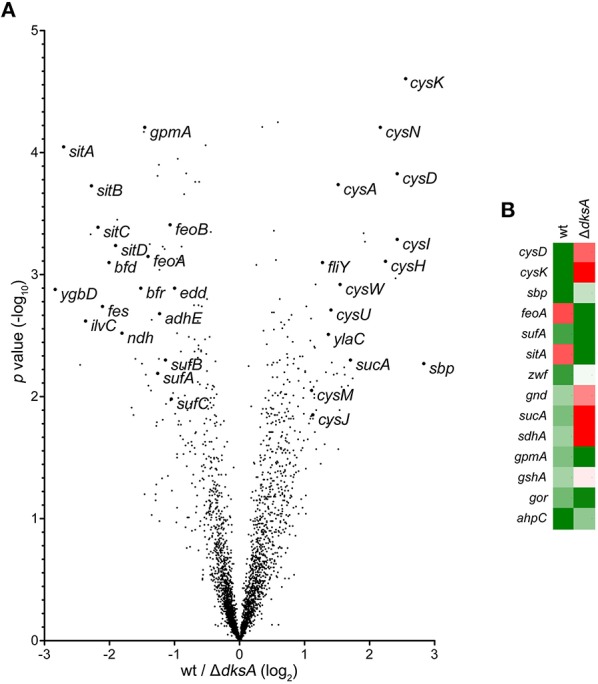
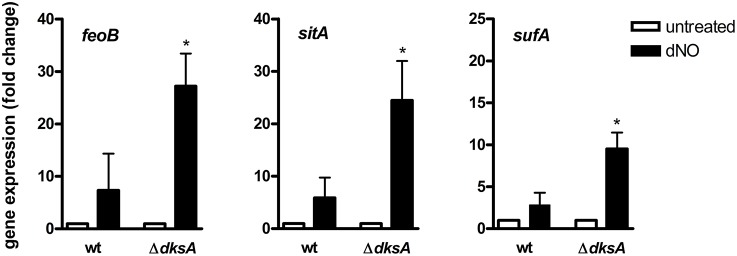
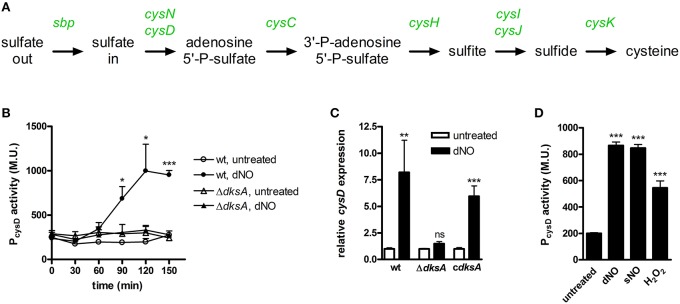
Redox-based signaling is fundamental to the capacity of bacteria to sense, and respond to, nitrosative and oxidative stress encountered in natural and host environments. The conserved RNA polymerase regulatory protein DksA is a thiol-based sensor of reactive nitrogen and oxygen species. DksA-dependent transcriptional control promotes antinitrosative and antioxidative defenses that contribute to Salmonella pathogenesis. The specific adaptive changes mediated by DksA in response to reactive species, however, have not been elucidated. Herein, we characterize DksA-dependent changes in gene expression in Salmonella enterica experiencing nitrosative stress. Genome-wide expression analysis of wild-type and ΔdksA Salmonella exposed to the nitric oxide ((•)NO) donor DETA NONOate demonstrated (•)NO- and DksA-dependent regulatory control of 427 target genes. Transcriptional changes centered primarily on genes encoding aspects of cellular metabolism. Several antioxidants and oxidoreductases important in redox buffering, (•)NO detoxification, and damage repair were also observed to be up-regulated in an (•)NO- and DksA-dependent manner. Compared to wild-type bacteria, (•)NO-treated ΔdksA Salmonella exhibited a de-repression of genes encoding components of iron homeostasis and failed to activate sulfur assimilation and cysteine biosynthetic operons. As cysteine is integral to efficient antinitrosative and antioxidative defense and repair programs, we further examined the redox-responsive transcriptional control of cysteine biosynthesis by DksA. These investigations revealed that the activation of genes comprising cysteine biosynthesis also occurs in response to hydrogen peroxide, is dependent upon the redox-sensing zinc finger motif of DksA, and requires the transcriptional regulator CysB. Our observations demonstrate that DksA mediates global adaptation to nitrosative stress in Salmonella and provide unique insight into a novel regulatory mechanism by which cysteine biosynthesis is controlled in response to reactive oxygen and nitrogen species.
基于氧化还原的信号传导是细菌感知并响应在自然环境和宿主环境中遇到的亚硝化和氧化应激能力的基础。保守的RNA聚合酶调节蛋白DksA是一种基于硫醇的活性氮和氧物种传感器。DksA依赖的转录控制促进了抗亚硝化和抗氧化防御,这有助于沙门氏菌的致病作用。然而,DksA响应活性物种介导的特定适应性变化尚未阐明。在此,我们表征了遭受亚硝化应激的肠炎沙门氏菌中DksA依赖的基因表达变化。对暴露于一氧化氮(•NO)供体DETA NONOate的野生型和ΔdksA沙门氏菌进行全基因组表达分析,结果表明427个靶基因受到•NO和DksA依赖的调控。转录变化主要集中在编码细胞代谢各方面的基因上。还观察到几种在氧化还原缓冲、•NO解毒和损伤修复中重要的抗氧化剂和氧化还原酶以•NO和DksA依赖的方式上调。与野生型细菌相比,经•NO处理的ΔdksA沙门氏菌表现出编码铁稳态成分的基因去抑制,并且未能激活硫同化和半胱氨酸生物合成操纵子。由于半胱氨酸是有效的抗亚硝化和抗氧化防御及修复程序所必需的,我们进一步研究了DksA对半胱氨酸生物合成的氧化还原响应转录控制。这些研究表明,组成半胱氨酸生物合成的基因的激活也发生在对过氧化氢的响应中,依赖于DksA的氧化还原感应锌指基序,并且需要转录调节因子CysB。我们的观察结果表明,DksA介导了沙门氏菌对亚硝化应激的全局适应,并为响应活性氧和氮物种时控制半胱氨酸生物合成的新型调节机制提供了独特的见解。