Lee Seungah, Lee Dong Yun
Department of Bioengineering, College of Engineering, and BK21 PLUS Future Biopharmaceutical Human Resources Training and Research Team, Hanyang University, Seoul, Korea.
Institute of Nano Science & Technology (INST), Hanyang University, Seoul, Korea.
Ann Pediatr Endocrinol Metab. 2017 Mar;22(1):15-26. doi: 10.6065/apem.2017.22.1.15. Epub 2017 Mar 31.
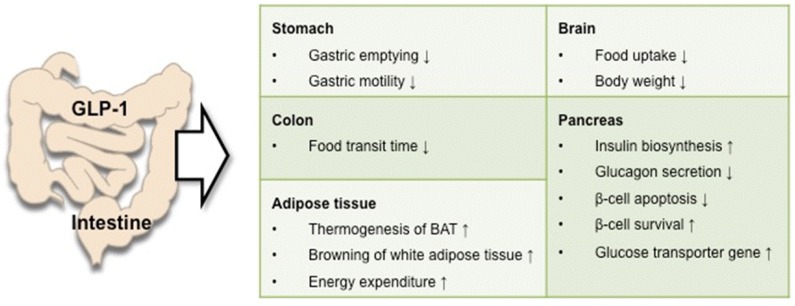
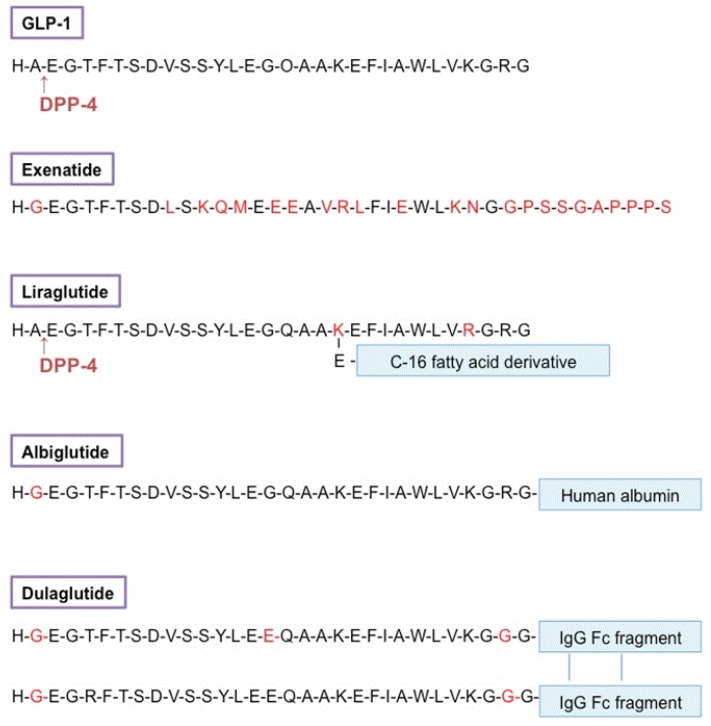
The prevalence of type 2 diabetes (T2D) is increasing worldwide. Patients with T2D suffer from various diabetes-related complications. Since there are many patients with T2D that cannot be controlled by previously developed drugs, it has been necessary to develop new drugs, one of which is a glucagon-like peptide-1 (GLP-1) based therapy. GLP-1 has been shown to ameliorate diabetes-related conditions by augmenting pancreatic β-cell insulin secretion and having the low risk of causing hypoglycemia. Because of a very short half-life of GLP-1, many researches have been focused on the development of GLP-1 receptor (GLP-1R) agonists with long half-lives such as exenatide and dulaglutide. Now GLP-1R agonists have a variety of dosing-cycle forms to meet the needs of various patients. In this article, we review the physiological features of GLP-1, the effects of GLP-1 on T2D, the features of several GLP-1R agonists, and the therapeutic effect on T2D.
2型糖尿病(T2D)在全球的患病率正在上升。T2D患者会出现各种与糖尿病相关的并发症。由于有许多T2D患者无法通过先前开发的药物得到控制,因此有必要开发新药,其中之一就是基于胰高血糖素样肽-1(GLP-1)的疗法。GLP-1已被证明可通过增强胰腺β细胞胰岛素分泌并降低引起低血糖的风险来改善与糖尿病相关的状况。由于GLP-1的半衰期非常短,许多研究都集中在开发半衰期长的GLP-1受体(GLP-1R)激动剂,如艾塞那肽和度拉鲁肽。现在,GLP-1R激动剂有多种给药周期形式,以满足不同患者的需求。在本文中,我们综述了GLP-1的生理特性、GLP-1对T2D的影响、几种GLP-1R激动剂的特点以及对T2D的治疗效果。