Schwartz Carolyn E, Powell Victoria E, Eldar-Lissai Adi
DeltaQuest Foundation, Inc., 31 Mitchell Road, Concord, MA, 01742, USA.
Departments of Medicine and Orthopaedic Surgery, Tufts University Medical School, Boston, MA, USA.
Qual Life Res. 2017 Sep;26(9):2551-2562. doi: 10.1007/s11136-017-1572-y. Epub 2017 Apr 25.
The purpose of this article is to describe the psychometric development of the Hemophilia Caregiver Impact measure.
Qualitative interviews (n = 22) and a cross-sectional web-based study (n = 458) were implemented with caregivers of people with hemophilia. Classical test theory and item response theory analyses were implemented to evaluate the psychometric characteristics of the measure.
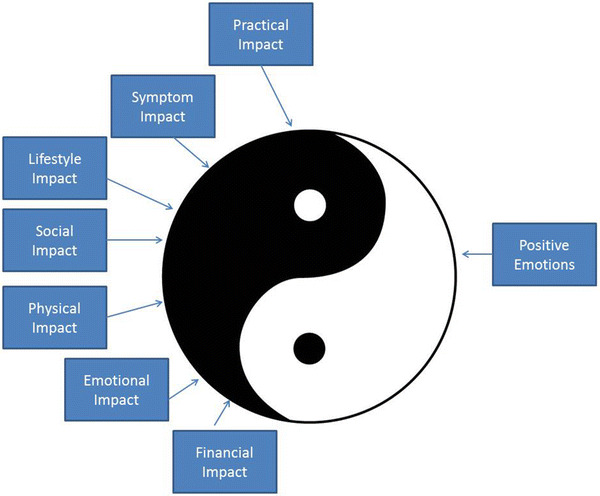
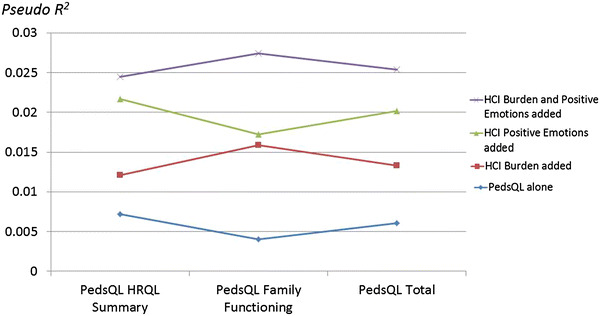
The study sample had a mean age of 39 and a median level of college education. It was predominantly female (88%), and had an average of two children. 85% of this study sample had at least one child with hemophilia. The final 36-item Hemophilia Caregiver Impact measure is composed of seven subscales assessing relevant negative aspects of caregiver impact (Burden Summary) as well as one subscale reflecting a positive aspect of caregiver impact (Positive Emotions). These two summary scores are orthogonal and can be used together in analyses examining negative and positive aspects of caregiver impact. The items included within each subscale reflect a unidimensional construct, demonstrate good item information and trace lines, and lack of local dependence. The resulting subscales demonstrate high reliability, and good construct validity. They show moderate incremental and discriminant validity.
The Hemophilia Caregiver Impact measure is a useful new tool for clinical research on hemophilia. In addition to having eight relevant subscales, the measure can also be summarized with two scores. This versatility can be useful in analyzing studies with very small samples, which is to be expected when dealing with a rare condition like hemophilia.
本文旨在描述血友病照顾者影响量表的心理测量学发展情况。
对血友病患者的照顾者进行了定性访谈(n = 22)和基于网络的横断面研究(n = 458)。采用经典测试理论和项目反应理论分析来评估该量表的心理测量学特征。
研究样本的平均年龄为39岁,大学教育程度中位数。样本主要为女性(88%),平均有两个孩子。该研究样本中85%至少有一个患血友病的孩子。最终的36项血友病照顾者影响量表由七个子量表组成,用于评估照顾者影响的相关负面方面(负担总结),以及一个反映照顾者影响积极方面的子量表(积极情绪)。这两个总结分数相互正交,可在分析照顾者影响的负面和正面方面时一起使用。每个子量表中的项目反映了一个单维结构,显示出良好的项目信息和特征曲线,且不存在局部依赖性。由此产生的子量表具有高信度和良好的结构效度。它们还显示出适度的增量效度和区分效度。
血友病照顾者影响量表是血友病临床研究的一种有用的新工具。除了有八个相关子量表外,该量表还可以用两个分数进行总结。这种多功能性在分析非常小的样本研究时可能会很有用,在处理像血友病这样的罕见疾病时,这种小样本情况是可以预料的。