Institut für Biologie, Molekulare Biophysik, IRI Life Sciences, Humboldt-Universität zu Berlin, Invalidenstrasse 42, 10115, Berlin, Germany.
Leibniz-Institut für Molekulare Pharmakologie (FMP), Robert-Rössle-Strasse-10, 13125, Berlin, Germany.
Angew Chem Int Ed Engl. 2017 May 15;56(21):5931-5936. doi: 10.1002/anie.201702005. Epub 2017 Apr 26.
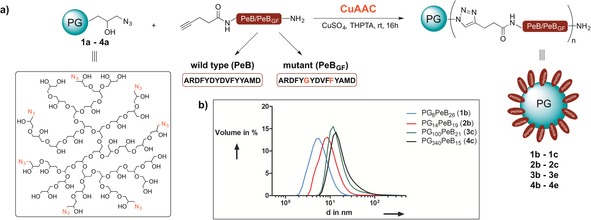
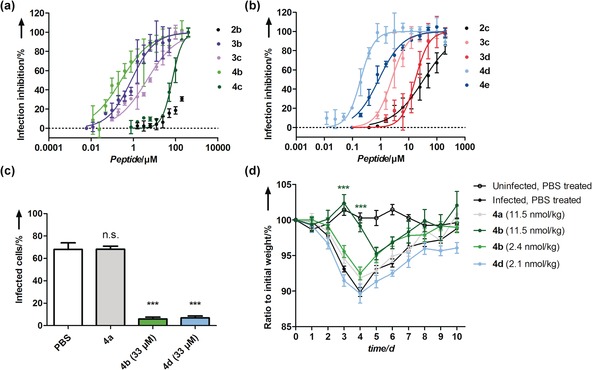
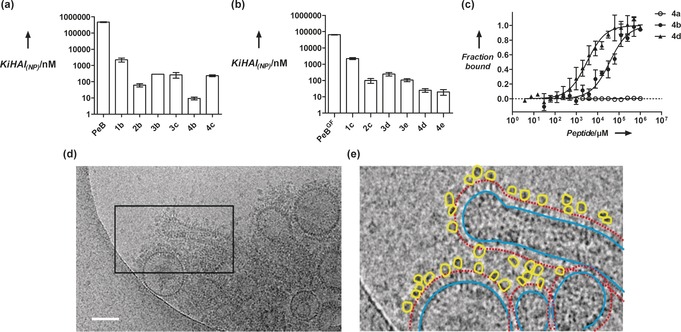
To inhibit binding of the influenza A virus to the host cell glycocalyx, we generate multivalent peptide-polymer nanoparticles binding with nanomolar affinity to the virus via its spike protein hemagglutinin. The chosen dendritic polyglycerol scaffolds are highly biocompatible and well suited for a multivalent presentation. We could demonstrate in vitro that by increasing the size of the polymer scaffold and adjusting the peptide density, viral infection is drastically reduced. Such a peptide-polymer conjugate qualified also in an in vivo infection scenario. With this study we introduce the first non-carbohydrate-based, covalently linked, multivalent virus inhibitor in the nano- to picomolar range by ensuring low peptide-ligand density on a larger dendritic scaffold.
为了抑制甲型流感病毒与宿主细胞糖萼的结合,我们通过其刺突蛋白血凝素生成了具有纳摩尔亲和力的多价肽-聚合物纳米颗粒。所选的树枝状多聚甘油支架具有高度的生物相容性,非常适合多价展示。我们在体外证明,通过增加聚合物支架的尺寸并调整肽密度,可以大大降低病毒感染。这种肽-聚合物缀合物在体内感染情况下也符合要求。通过这项研究,我们通过在较大的树枝状支架上确保低肽配体密度,引入了第一个基于非碳水化合物的、共价连接的、纳米到皮摩尔范围内的多价病毒抑制剂。