Martin-Rodriguez Jose Luis, Gonzalez-Cantero Jorge, Gonzalez-Cantero Alvaro, Arrebola Juan Pedro, Gonzalez-Calvin Jorge Luis
Department of Radiology, University Hospital San Cecilio Department of Radiology, HGU Gregorio Marañón Madrid Spain, and University of Granada Complejo Hospitalario de Toledo, Toledo, Castilla-La Mancha Complejo Hospitalario Universitario de Granada, Instituto de Investigación, Biosanitariaibs CIBERESP Department of Gastroenterology, University Hospital San Cecilio, University of Granada, Granada, Spain.
Medicine (Baltimore). 2017 Apr;96(17):e6770. doi: 10.1097/MD.0000000000006770.
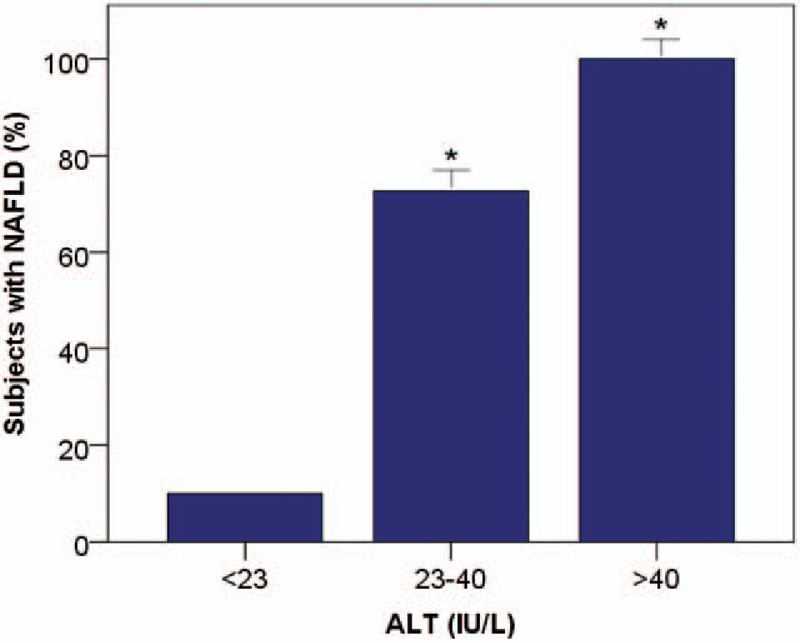
Recognition of the close relationship of nonalcoholic fatty liver disease (NAFLD) with diabetes mellitus 2, obesity, metabolic syndrome, and cardiovascular disease has stimulated growing interest in NAFLD as a public health problem. Serum alanine aminotransferase (ALT) has been proposed as a marker of NAFLD, but levels are within the range currently considered "normal" in a large proportion of NAFLD subjects.The aim of the study was to determine the diagnostic accuracy of serum ALT for identifying individuals with NAFLD, using 3-Tesla (T) magnetic resonance spectroscopy (H-MRS).A cross-sectional study was conducted in 129 healthy subjects. Liver triglyceride content was quantified by H-MRS. NAFLD was defined as liver triglyceride content greater than 5.56%.Liver triglyceride content was >5.56% in 79 participants (NAFLD) and lower in the remaining 50 (normal). Serum ALT levels correlated positively with liver triglyceride content (r = 0.58, P < .001), Homeostatic Model Assessment for Insulin Resistance (r = 0.32, P < .01), and fasting insulin (r = 0.31, P < .01), and inversely correlated with adiponectin (r = 0.35, P < .01) and high-density lipoprotein cholesterol (r = 0.32, P < .01). Regression analysis showed that serum ALT was the best predictor of NAFLD (P < .01). Optimal serum ALT cut-off to predict NAFLD was 23 IU/L (area under receiver-operating characteristic curve: 0.93; sensitivity: 0.94; specificity: 0.72).This study shows that serum ALT is a sensitive and accurate biomarker of NAFLD if the "normal" ALT value is revised and established at a lower level. An ALT threshold of 23 IU/L identified 94% of individuals with NAFLD in the present series, using 3-T H-MRS for liver triglyceride quantification.
非酒精性脂肪性肝病(NAFLD)与2型糖尿病、肥胖、代谢综合征及心血管疾病之间的密切关系已被认识,这激发了人们对NAFLD作为一个公共卫生问题的日益浓厚的兴趣。血清丙氨酸氨基转移酶(ALT)已被提议作为NAFLD的一个标志物,但在很大一部分NAFLD患者中,其水平处于目前被认为“正常”的范围内。本研究的目的是使用3特斯拉(T)磁共振波谱(H-MRS)来确定血清ALT用于识别NAFLD个体的诊断准确性。
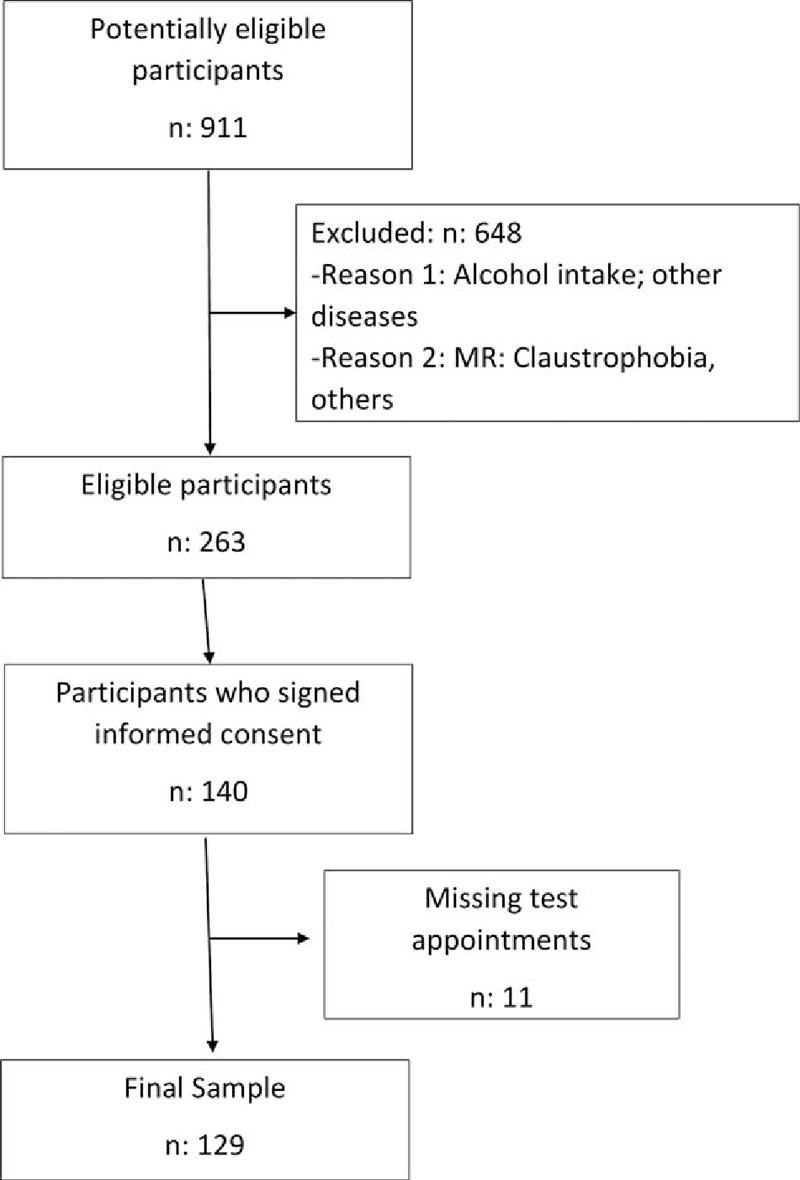
对129名健康受试者进行了一项横断面研究。通过H-MRS对肝脏甘油三酯含量进行定量。NAFLD被定义为肝脏甘油三酯含量大于5.56%。
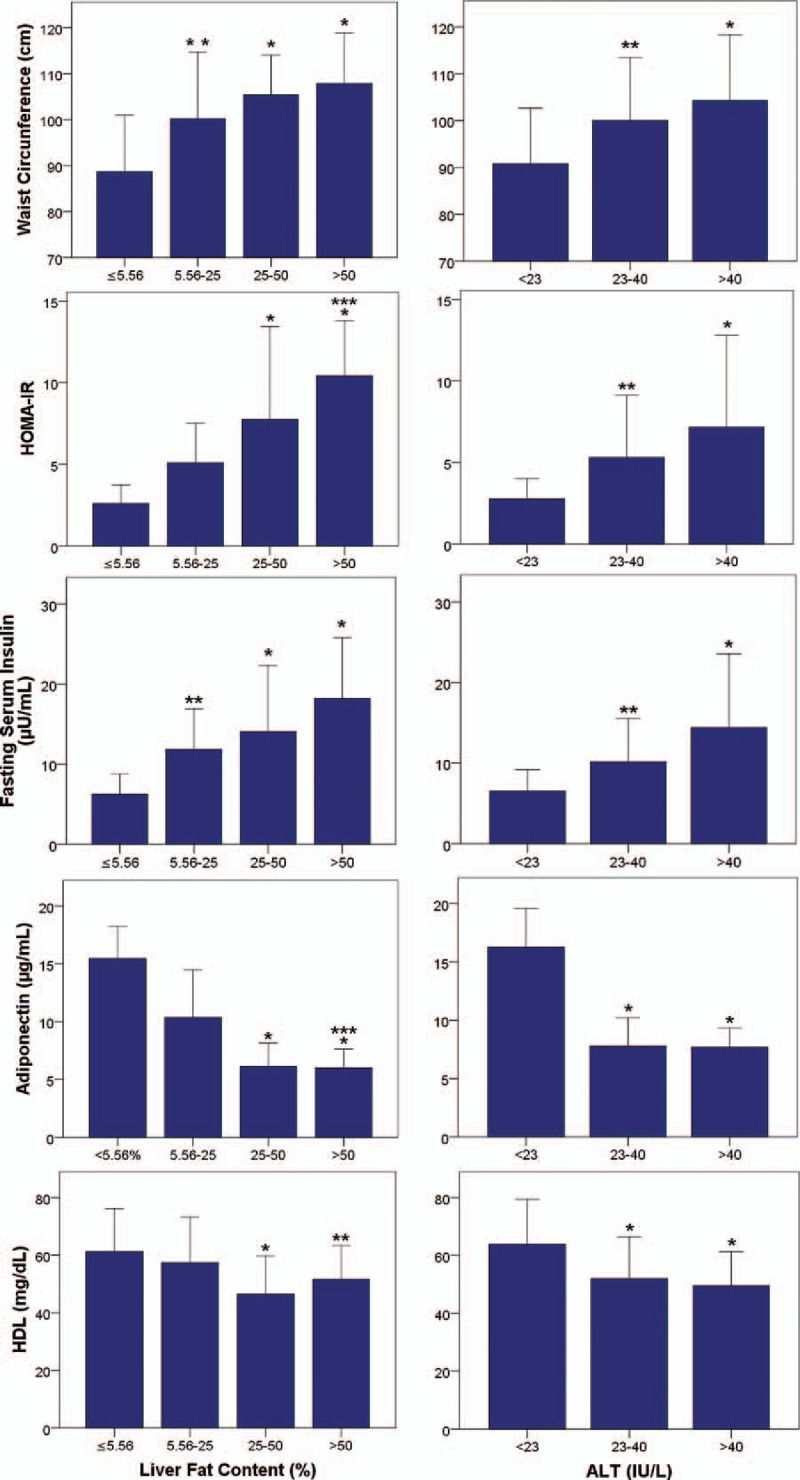
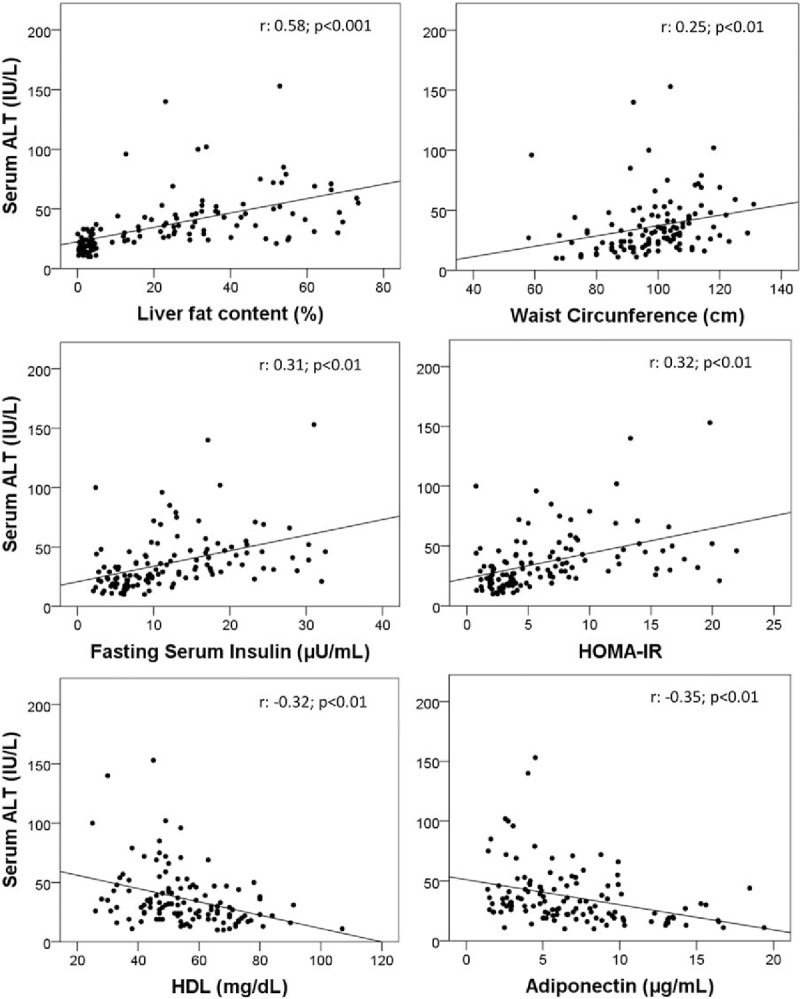
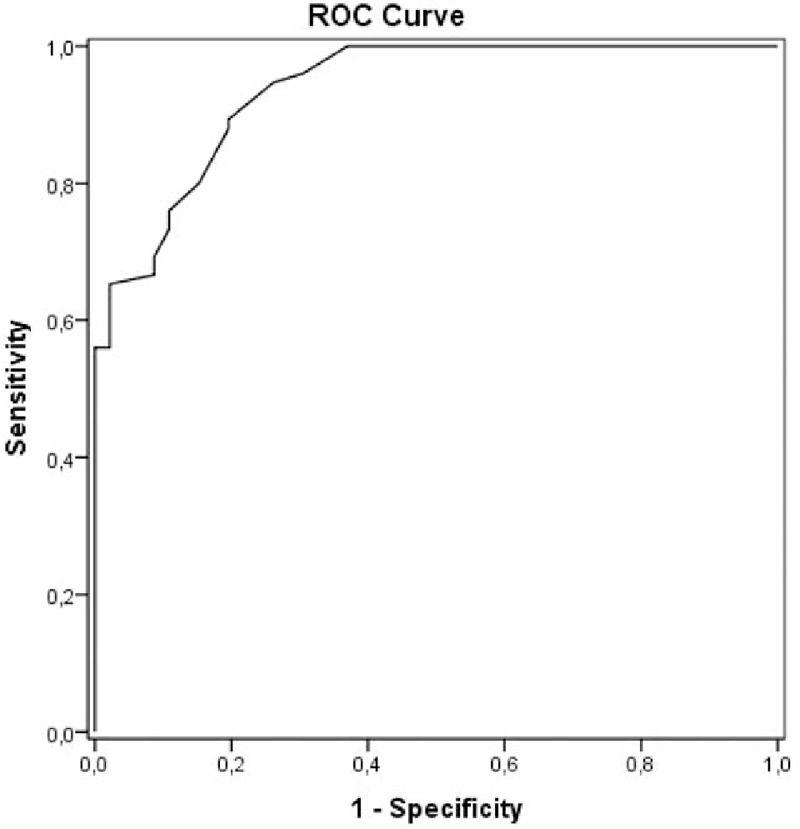
79名参与者(NAFLD)的肝脏甘油三酯含量>5.56%,其余50名(正常)的含量较低。血清ALT水平与肝脏甘油三酯含量呈正相关(r = 0.58,P <.001)、与胰岛素抵抗的稳态模型评估(r = 0.32,P <.01)及空腹胰岛素呈正相关(r = 0.31,P <.01),与脂联素呈负相关(r = 0.35,P <.01)以及与高密度脂蛋白胆固醇呈负相关(r = 0.32,P <.01)。回归分析表明血清ALT是NAFLD的最佳预测指标(P <.01)。预测NAFLD的最佳血清ALT临界值为23 IU/L(受试者工作特征曲线下面积:0.93;敏感性:0.94;特异性:0.72)。
本研究表明,如果将“正常”ALT值修订并设定在较低水平,血清ALT是NAFLD的一个敏感且准确的生物标志物。在本系列研究中,使用3T H-MRS对肝脏甘油三酯进行定量时,ALT阈值为23 IU/L可识别出94%的NAFLD个体。