JnBaptiste Courtney K, Gurtan Allan M, Thai Kevin K, Lu Victoria, Bhutkar Arjun, Su Mei-Ju, Rotem Asaf, Jacks Tyler, Sharp Phillip A
Department of Biology, Massachusetts Institute of Technology, Cambridge, Massachusetts 02139, USA.
David H. Koch Institute for Integrative Cancer Research at Massachusetts Institute of Technology, Cambridge, Massachusetts 02139, USA.
Genes Dev. 2017 Apr 1;31(7):674-687. doi: 10.1101/gad.296301.117.
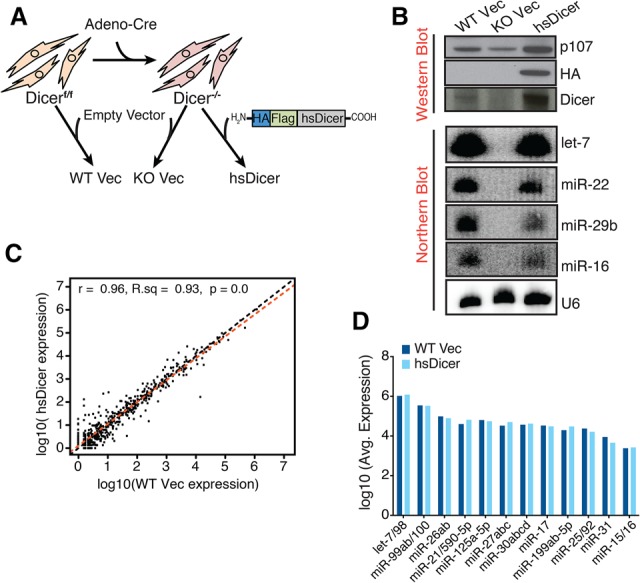
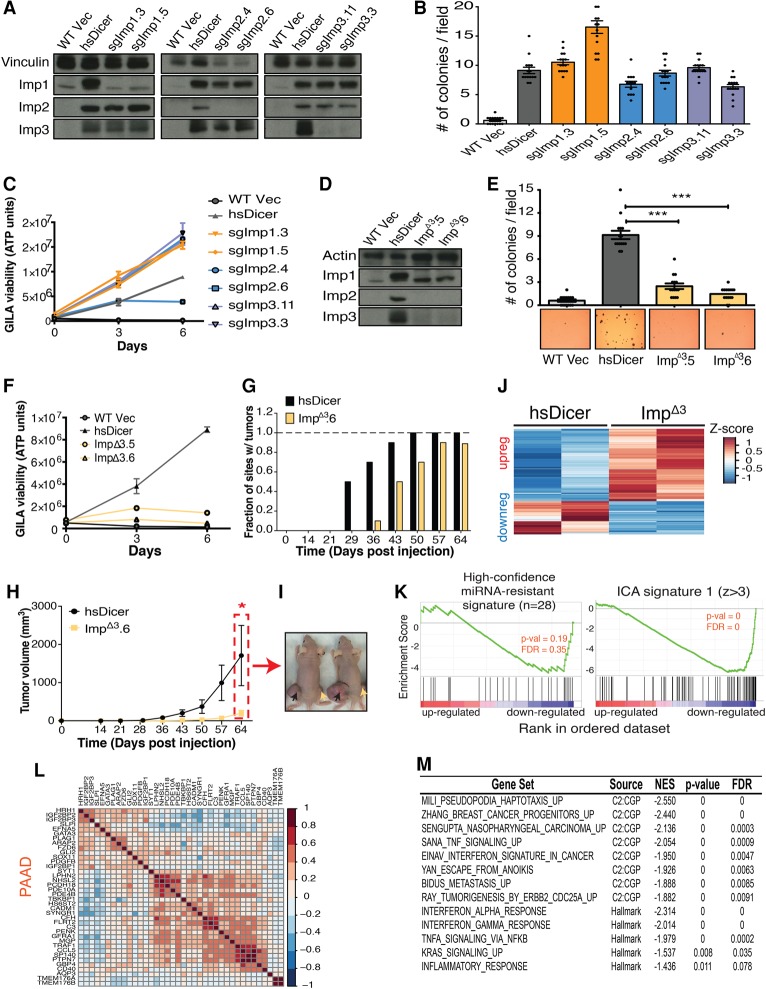
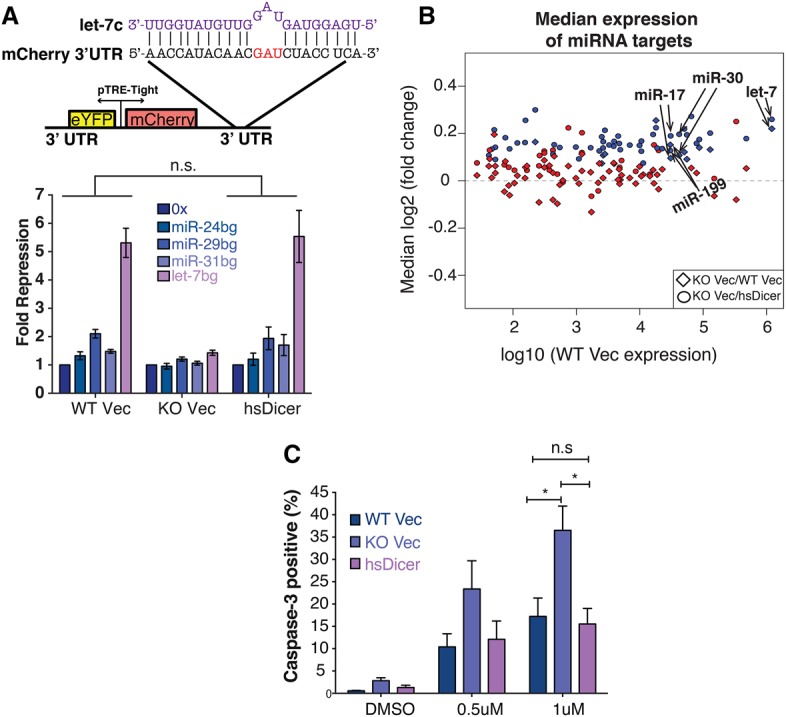
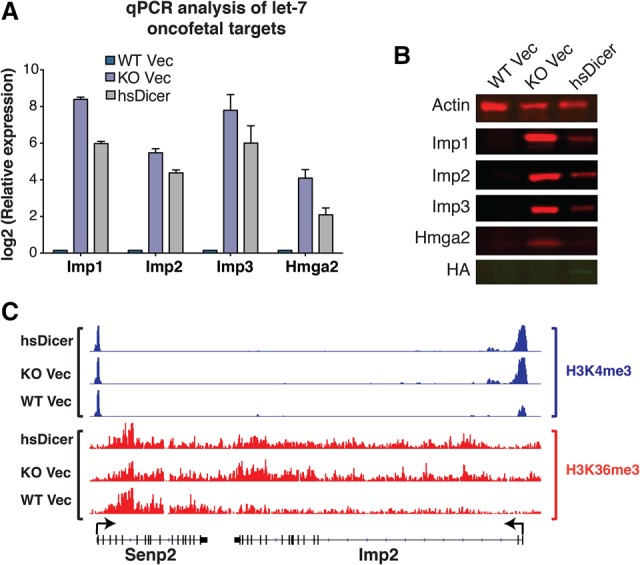
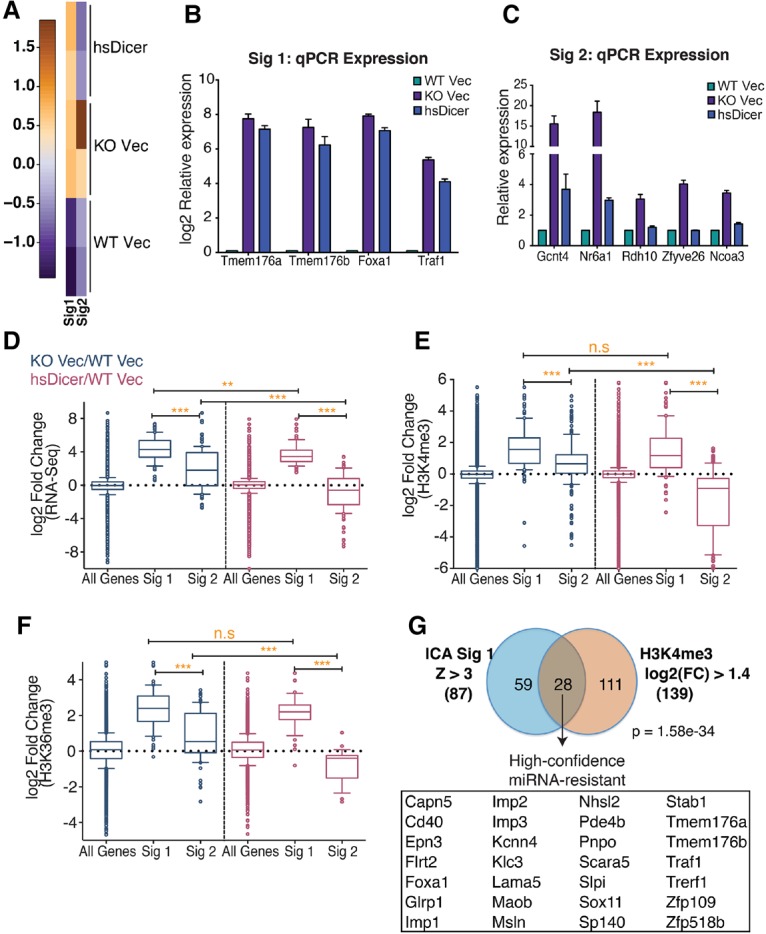
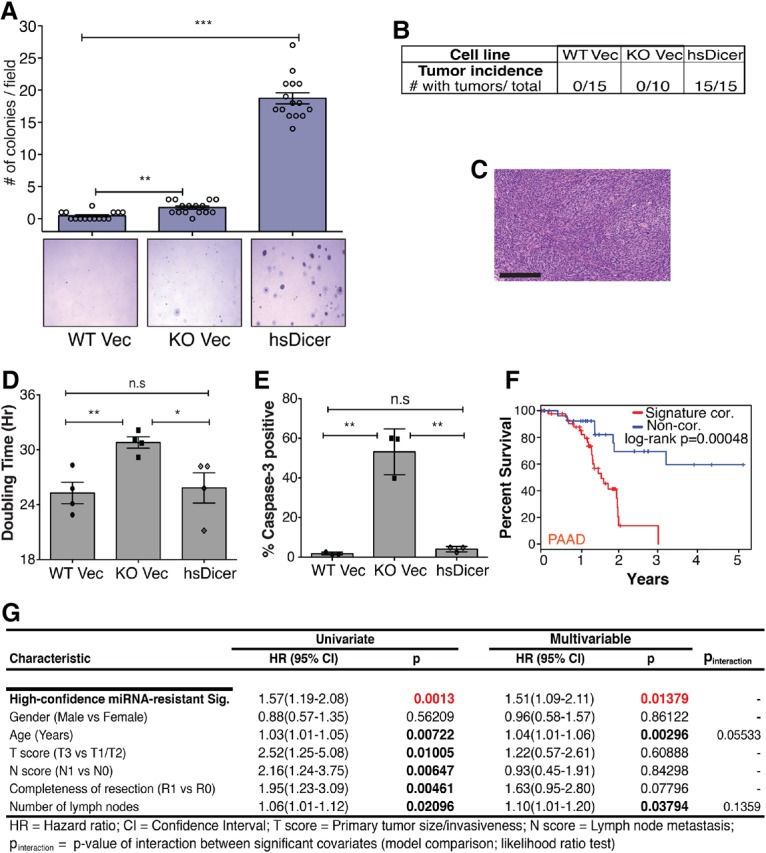
MicroRNAs (miRNAs) are post-transcriptional regulators of gene expression critical for organismal viability. Changes in miRNA activity are common in cancer, but how these changes relate to subsequent alterations in transcription and the process of tumorigenesis is not well understood. Here, we report a deep transcriptional, oncogenic network regulated by miRNAs. We present analysis of the gene expression and phenotypic changes associated with global miRNA restoration in miRNA-deficient fibroblasts. This analysis uncovers a miRNA-repressed network containing oncofetal genes , , and () that is up-regulated primarily transcriptionally >100-fold upon loss and is resistant to resilencing by complete restoration of miRNA activity. This Dicer-resistant epigenetic switch confers tumorigenicity to these cells. Let-7 targets Imp1-3 are required for this tumorigenicity and feed back to reinforce and sustain expression of the oncogenic network. Together, these Dicer-resistant genes constitute an mRNA expression signature that is present in numerous human cancers and is associated with poor survival.
微小RNA(miRNA)是对生物体生存至关重要的基因表达的转录后调节因子。miRNA活性的变化在癌症中很常见,但这些变化如何与随后的转录改变及肿瘤发生过程相关尚不清楚。在此,我们报道了一个由miRNA调控的深度转录致癌网络。我们对与miRNA缺陷型成纤维细胞中全局miRNA恢复相关的基因表达和表型变化进行了分析。该分析揭示了一个包含癌胚基因、和()的miRNA抑制网络,该网络在缺失时主要在转录水平上上调超过100倍,并且对通过完全恢复miRNA活性进行的再沉默具有抗性。这种抗Dicer的表观遗传开关赋予这些细胞致瘤性。这种致瘤性需要Let-7靶向的Imp1-3,并反馈以增强和维持致癌网络的表达。这些抗Dicer基因共同构成了一种mRNA表达特征,该特征存在于多种人类癌症中并与不良生存相关。