Lázaro Beatriz, Villa Juan A, Santín Omar, Cabezas Matilde, Milagre Cintia D F, de la Cruz Fernando, Moncalián Gabriel
Departamento de Biología Molecular, Universidad de Cantabria and Instituto de Biomedicina y Biotecnología de Cantabria (IBBTEC), Consejo Superior de Investigaciones Científicas - Universidad de Cantabria, C/ Albert Einstein, Santander, Cantabria, Spain.
Department of Organic Chemistry, Institute of Chemistry, Universidade Estadual Paulista (UNESP), Rua Prof. Francisco Degni, Araraquara, São Paulo, Brazil.
PLoS One. 2017 Apr 27;12(4):e0176520. doi: 10.1371/journal.pone.0176520. eCollection 2017.
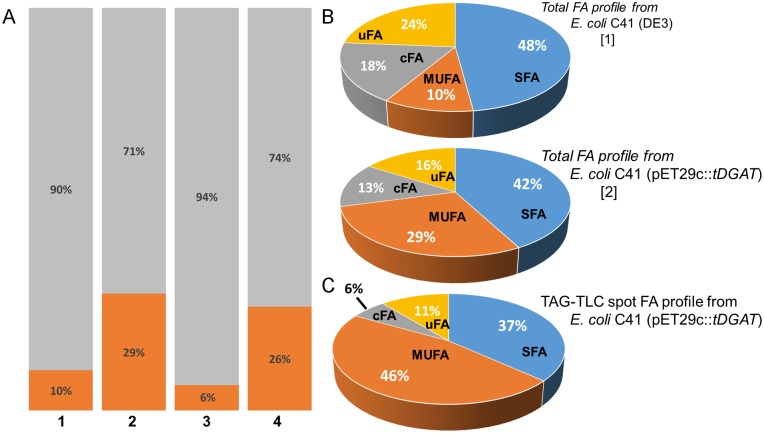
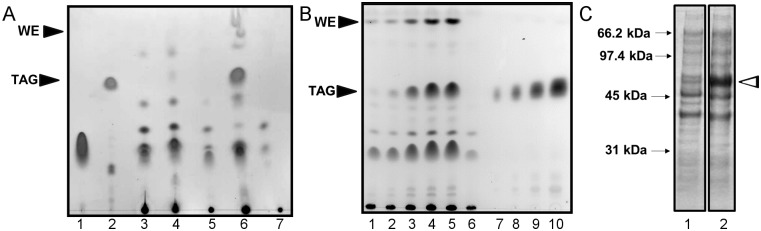
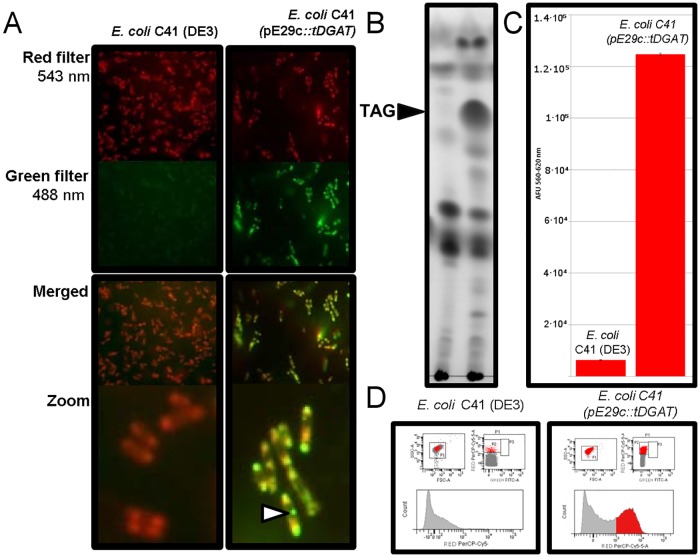
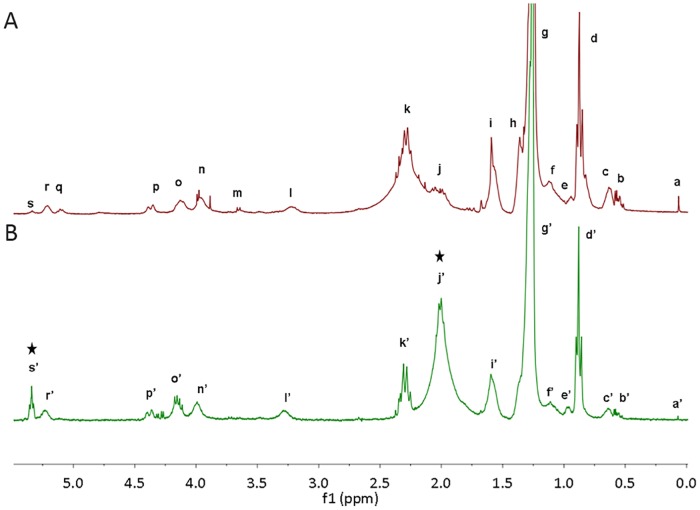
Triglycerides (TAGs), the major storage molecules of metabolic energy and source of fatty acids, are produced as single cell oil by some oleogenic microorganisms. However, these microorganisms require strict culture conditions, show low carbon source flexibilities, lack efficient genetic modification tools and in some cases pose safety concerns. TAGs have essential applications such as behaving as a source for added-value fatty acids or giving rise to the production of biodiesel. Hence, new alternative methods are urgently required for obtaining these oils. In this work we describe TAG accumulation in the industrially appropriate microorganism Escherichia coli expressing the heterologous enzyme tDGAT, a wax ester synthase/triacylglycerol:acylCoA acyltranferase (WS/DGAT). With this purpose, we introduce a codon-optimized gene from the thermophilic actinomycete Thermomonospora curvata coding for a WS/DGAT into different E. coli strains, describe the metabolic effects associated to the expression of this protein and evaluate neutral lipid accumulation. We observe a direct relation between the expression of this WS/DGAT and TAG production within a wide range of culture conditions. More than 30% TAGs were detected within the bacterial neutral lipids in 90 minutes after induction. TAGs were observed to be associated with the hydrophobic enzyme while forming round intracytoplasmic bodies, which could represent a bottleneck for lipid accumulation in E. coli. We detected an increase of almost 3-fold in the monounsaturated fatty acids (MUFA) occurring in the recombinant strains. These MUFA were predominant in the accumulated TAGs achieving 46% of the TAG fatty acids. These results set the basis for further research on the achievement of a suitable method towards the sustainable production of these neutral lipids.
甘油三酯(TAGs)是代谢能量的主要储存分子和脂肪酸来源,一些产油微生物可将其作为单细胞油生产出来。然而,这些微生物需要严格的培养条件,碳源灵活性低,缺乏有效的基因编辑工具,并且在某些情况下存在安全隐患。TAGs具有重要应用,例如作为增值脂肪酸的来源或用于生产生物柴油。因此,迫切需要新的替代方法来获取这些油。在这项工作中,我们描述了在表达异源酶tDGAT(一种蜡酯合酶/三酰甘油:酰基辅酶A酰基转移酶(WS/DGAT))的工业适用微生物大肠杆菌中TAG的积累情况。为此,我们将来自嗜热放线菌弯曲嗜热单孢菌编码WS/DGAT的密码子优化基因导入不同的大肠杆菌菌株,描述与该蛋白表达相关的代谢效应并评估中性脂质积累。我们观察到在广泛的培养条件下,这种WS/DGAT的表达与TAG产生之间存在直接关系。诱导后90分钟内,在细菌中性脂质中检测到超过30%的TAGs。观察到TAGs与疏水性酶相关联,同时形成圆形胞质内体,这可能是大肠杆菌脂质积累的一个瓶颈。我们检测到重组菌株中单不饱和脂肪酸(MUFA)增加了近3倍。这些MUFA在积累的TAGs中占主导地位,达到TAG脂肪酸的46%。这些结果为进一步研究实现可持续生产这些中性脂质的合适方法奠定了基础。