Raymond Christopher K, Hernandez Jennifer, Karr Reynold, Hill Kay, Li Mark
Resolution Bioscience, Bellevue, Washington, United States of America.
PlasmaLab International, Everett, Washington, United States of America.
PLoS One. 2017 Apr 27;12(4):e0176241. doi: 10.1371/journal.pone.0176241. eCollection 2017.
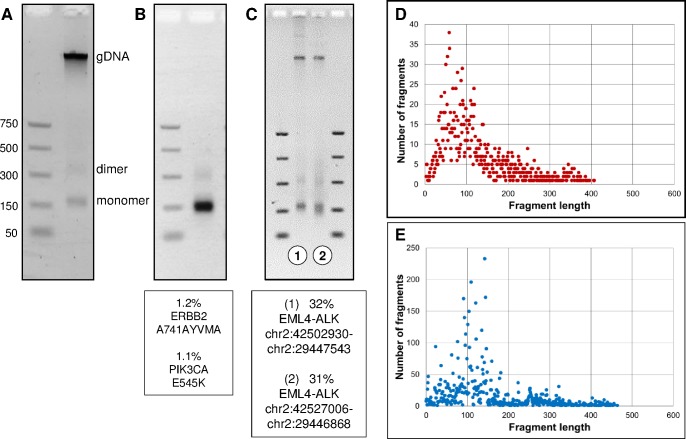
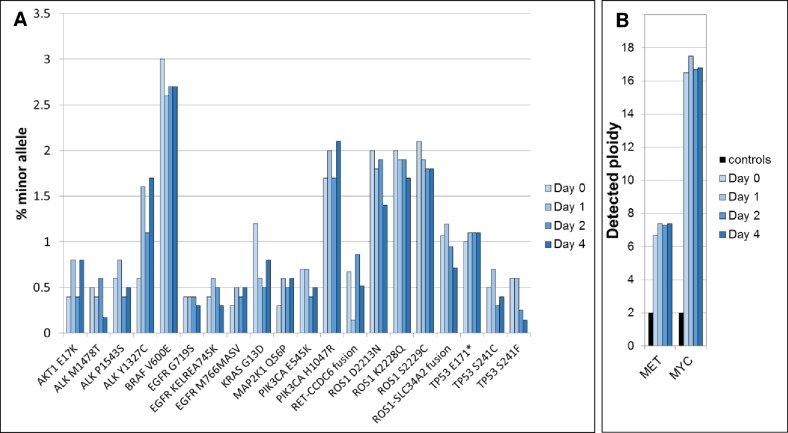
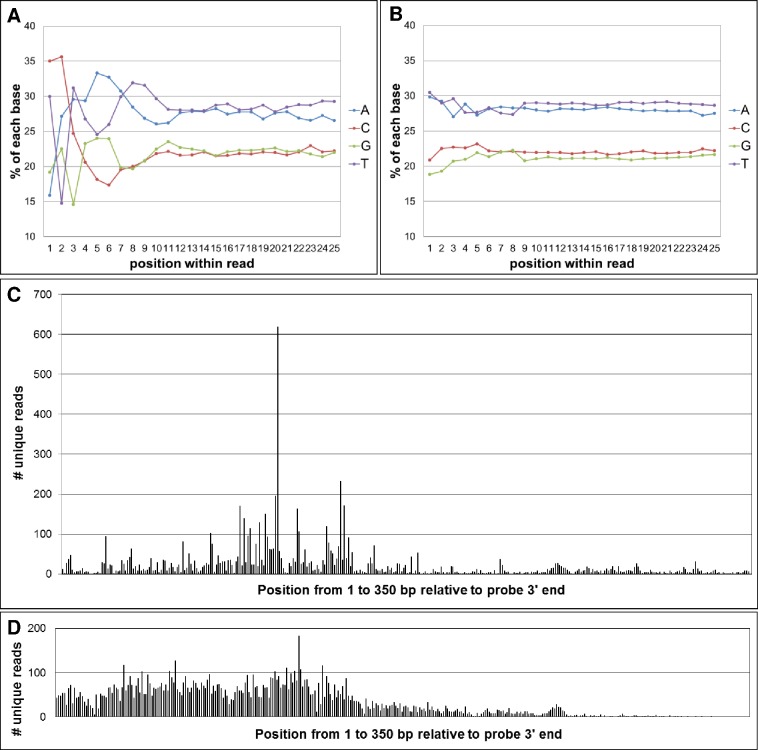
The breadth of diagnostic procedures that utilize cell free DNA (cfDNA) from human plasma has increased dramatically in recent years. Here, we confirm that tumor-derived cfDNA fragments are similar in size distribution to cfDNA derived from normal tissues. Therefore, collection procedures optimized with healthy donor specimens are likely to be applicable to the diagnosis and monitoring of many different cancer types. We verify that the distribution and DNA sequences of fragmentation sites in cfDNA from both normal-germline and tumor-derived cfDNA are non-random. A broad survey of cfDNA from healthy donors suggests that average individuals possess ~6 ng of cfDNA per mL of plasma. Importantly, the cfDNA present in plasma samples that were initially collected as whole blood in K2-EDTA tubes and subsequently processed by centrifugation is stable for several days at ambient temperatures. This observation has the potential to significantly reduce the cost and logistical complexity of shipping clinical samples from the site of collection to centers proficient in diagnostic analysis. Finally, plasma samples collected with high-volume plasma collection devices possess abundant quantities of cfDNA. Since the quantity of analyzed cfDNA is directly proportional to sensitivity of diagnostic assays, this method of plasma collection, where available, could enable highly sensitive post-treatment disease monitoring and early detection of cancer in at-risk individuals.
近年来,利用人血浆中游离DNA(cfDNA)的诊断程序范围急剧扩大。在此,我们证实肿瘤来源的cfDNA片段在大小分布上与正常组织来源的cfDNA相似。因此,用健康供体样本优化的采集程序可能适用于多种不同癌症类型的诊断和监测。我们验证了正常种系和肿瘤来源的cfDNA中片段化位点的分布和DNA序列是非随机的。对健康供体的cfDNA进行的广泛调查表明,普通个体每毫升血浆中约含有6纳克cfDNA。重要的是,最初作为全血采集于K2-EDTA管中,随后通过离心处理的血浆样本中存在的cfDNA在环境温度下可稳定保存数天。这一发现有可能显著降低将临床样本从采集地点运送到精通诊断分析的中心的成本和后勤复杂性。最后,用大容量血浆采集装置采集的血浆样本含有大量的cfDNA。由于分析的cfDNA数量与诊断检测的灵敏度直接相关,这种血浆采集方法(如果可用)可以在高危个体中实现高度灵敏的治疗后疾病监测和癌症早期检测。