Haines Brandon E, Kawakami Takahiro, Kuwata Keiko, Murakami Kei, Itami Kenichiro, Musaev Djamaladdin G
Cherry L. Emerson Center for Scientific Computation , Department of Chemistry , Emory University , Atlanta , Georgia 30322 , USA . Email:
Institute of Transformative Bio-Molecules (WPI-ITbM) and Graduate School of Science , Nagoya University , Chikusa , Nagoya 464-8602 , Japan.
Chem Sci. 2017 Feb 1;8(2):988-1001. doi: 10.1039/c6sc04145k. Epub 2016 Oct 19.
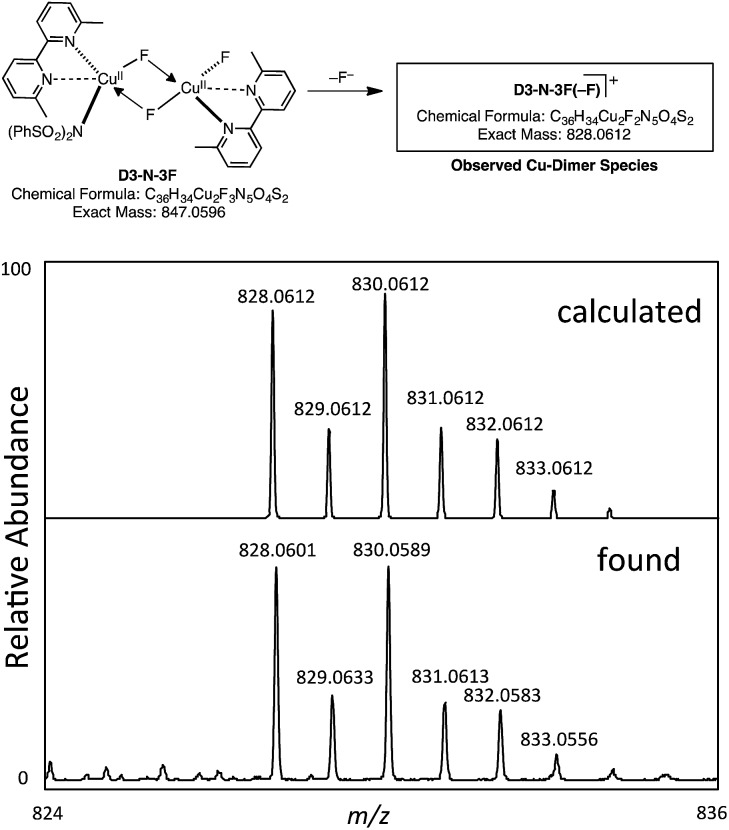
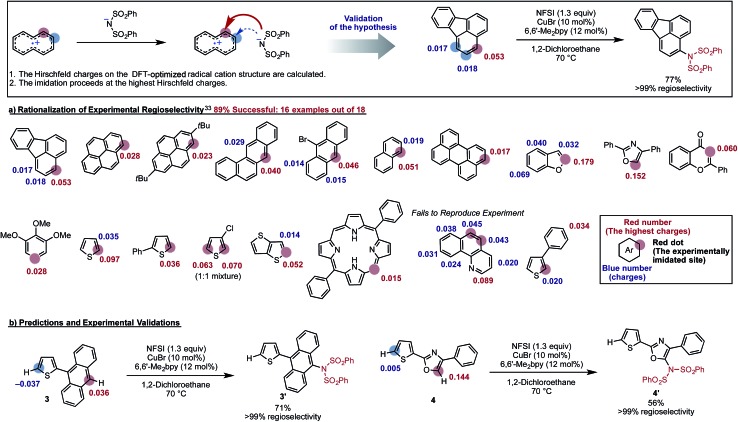
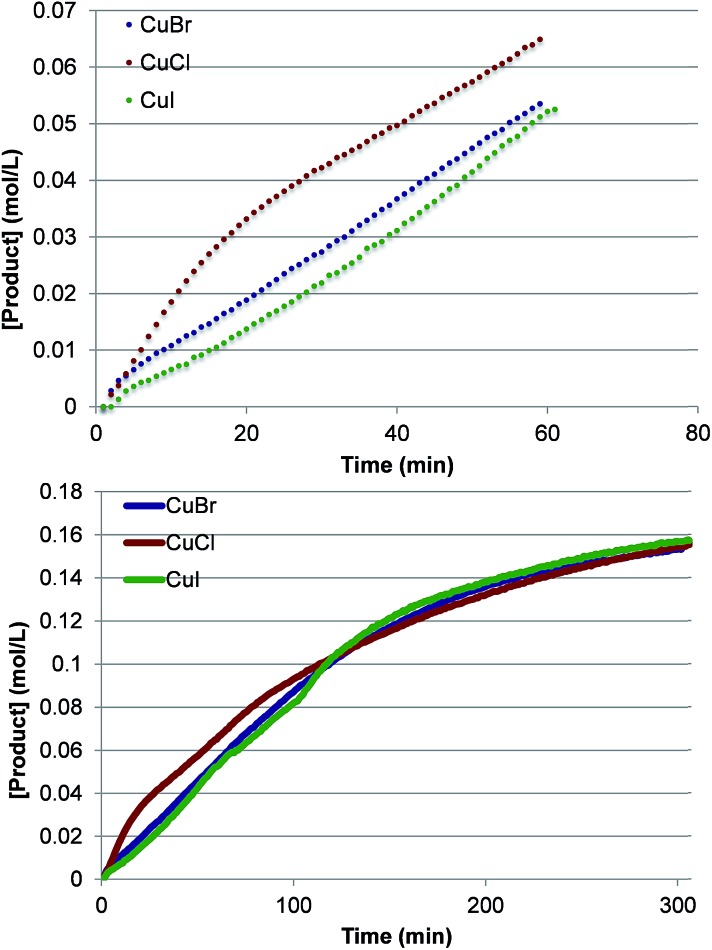
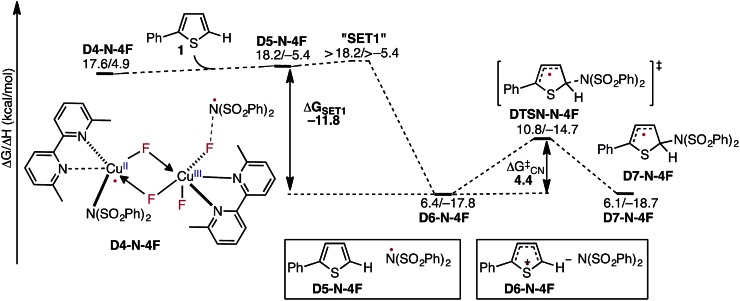
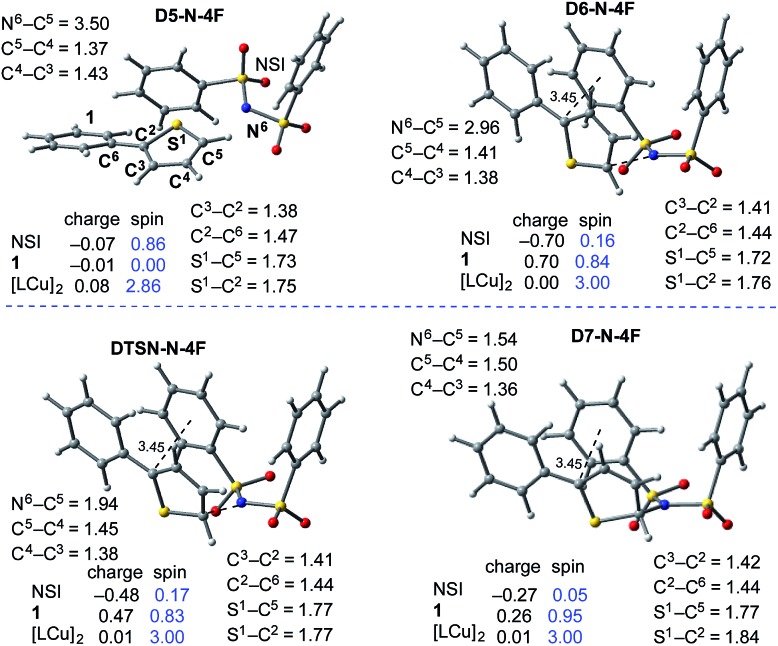
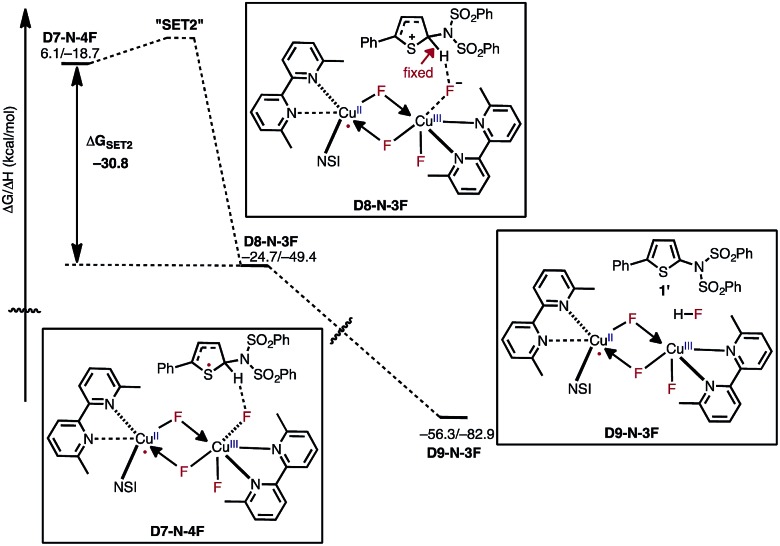
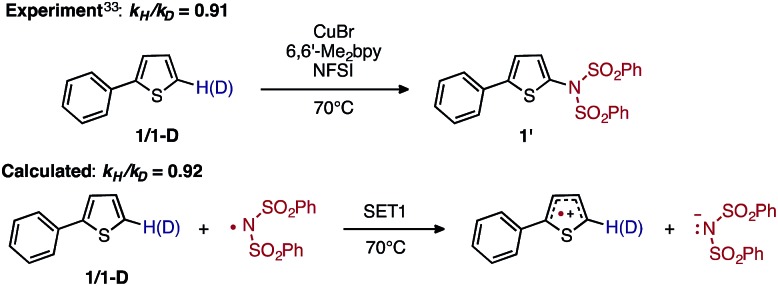
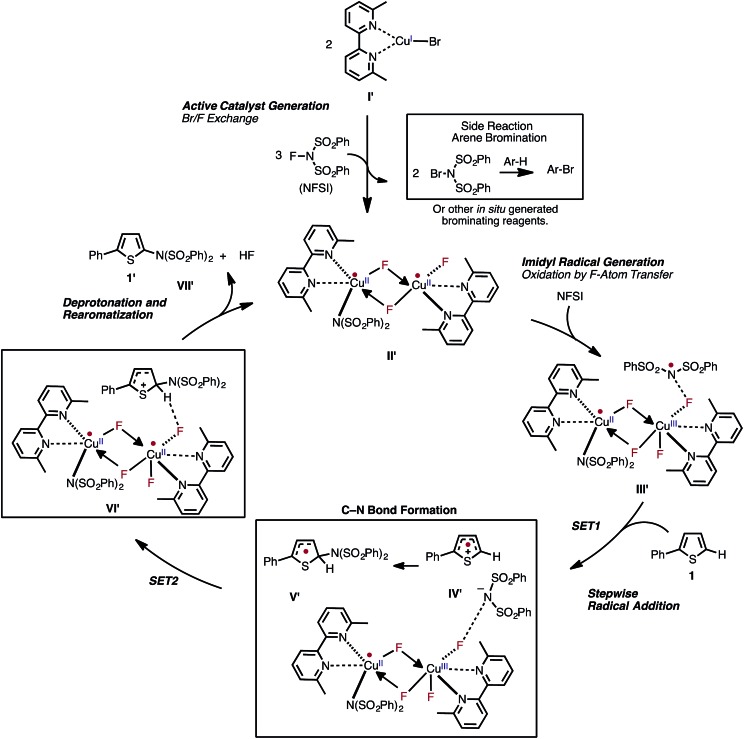
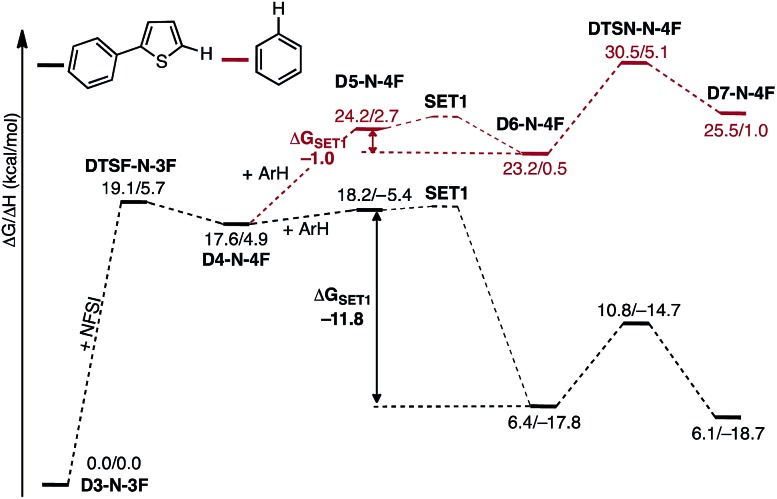
The LCuBr-catalyzed C-H imidation of arenes by -fluorobenzenesulfonimide (NFSI), previously reported by us, utilizes an inexpensive catalyst and is applicable to a broad scope of complex arenes. The computational and experimental study reported here shows that the mechanism of the reaction is comprised of two parts: (1) generation of the active dinuclear Cu-Cu catalyst; and (2) the catalytic cycle for the C-H bond imidation of arenes. Computations show that the LCuBr complex used in experiments is not an active catalyst. Instead, upon reacting with NFSI it converts to an active dinuclear Cu-Cu catalyst that is detected using HRMS techniques. The catalytic cycle starting from the Cu-Cu dinuclear complex proceeds (a) one-electron oxidation of the active catalyst by NFSI to generate an imidyl radical and dinuclear Cu-Cu intermediate, (b) turnover-limiting single-electron-transfer () from the arene to the imidyl radical, (c) fast C-N bond formation with an imidyl anion and an aryl radical cation, (d) reduction of the Cu-Cu dinuclear intermediate by the aryl radical to regenerate the active catalyst and produce an aryl-cation intermediate, and (e) deprotonation and rearomatization of the arene ring to form the imidated product. The calculated KIE for the turnover-limiting step reproduces its experimentally observed value. A simple predictive tool was developed and experimentally validated to determine the regiochemical outcome for a given substrate. We demonstrated that the pre-reaction LCuX complexes, where X = Cl, Br and I, show a similar reactivity pattern as these complexes convert to the same catalytically active dinuclear Cu-Cu species.
我们之前报道过,在溴化亚铜(LCuBr)催化下,芳烃与N-氟苯磺酰亚胺(NFSI)发生C-H亚胺化反应,该反应使用廉价催化剂,适用于多种复杂芳烃。本文报道的计算和实验研究表明,该反应机理包括两个部分:(1)活性双核铜-铜催化剂的生成;(2)芳烃C-H键亚胺化的催化循环。计算结果表明,实验中使用的LCuBr配合物不是活性催化剂。相反,它与NFSI反应后会转化为一种活性双核铜-铜催化剂,可通过高分辨质谱(HRMS)技术检测到。从双核铜-铜配合物开始的催化循环过程如下:(a)活性催化剂被NFSI单电子氧化,生成亚胺基自由基和双核铜-铜中间体;(b)限速单电子转移(SET),芳烃将电子转移给亚胺基自由基;(c)亚胺基阴离子与芳基自由基阳离子快速形成C-N键;(d)芳基自由基将双核铜-铜中间体还原,再生活性催化剂,并生成芳基阳离子中间体;(e)芳烃环去质子化并重新芳构化,形成亚胺化产物。计算得到的限速SET步骤的动力学同位素效应(KIE)与实验观测值相符。开发了一种简单的预测工具并通过实验验证,以确定给定底物的区域化学结果。我们证明,反应前的LCuX配合物(X = Cl、Br和I)表现出相似的反应模式,因为这些配合物会转化为相同的催化活性双核铜-铜物种。