Hodonsky Chani J, Jain Deepti, Schick Ursula M, Morrison Jean V, Brown Lisa, McHugh Caitlin P, Schurmann Claudia, Chen Diane D, Liu Yong Mei, Auer Paul L, Laurie Cecilia A, Taylor Kent D, Browning Brian L, Li Yun, Papanicolaou George, Rotter Jerome I, Kurita Ryo, Nakamura Yukio, Browning Sharon R, Loos Ruth J F, North Kari E, Laurie Cathy C, Thornton Timothy A, Pankratz Nathan, Bauer Daniel E, Sofer Tamar, Reiner Alex P
Department of Epidemiology, University of North Carolina Gillings School of Public Health, Chapel Hill, NC, United States of America.
Department of Biostatistics, University of Washington, Seattle, WA, United States of America.
PLoS Genet. 2017 Apr 28;13(4):e1006760. doi: 10.1371/journal.pgen.1006760. eCollection 2017 Apr.
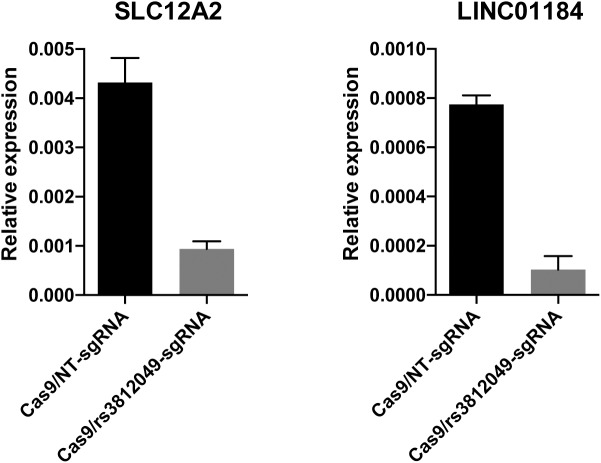
Prior GWAS have identified loci associated with red blood cell (RBC) traits in populations of European, African, and Asian ancestry. These studies have not included individuals with an Amerindian ancestral background, such as Hispanics/Latinos, nor evaluated the full spectrum of genomic variation beyond single nucleotide variants. Using a custom genotyping array enriched for Amerindian ancestral content and 1000 Genomes imputation, we performed GWAS in 12,502 participants of Hispanic Community Health Study and Study of Latinos (HCHS/SOL) for hematocrit, hemoglobin, RBC count, RBC distribution width (RDW), and RBC indices. Approximately 60% of previously reported RBC trait loci generalized to HCHS/SOL Hispanics/Latinos, including African ancestral alpha- and beta-globin gene variants. In addition to the known 3.8kb alpha-globin copy number variant, we identified an Amerindian ancestral association in an alpha-globin regulatory region on chromosome 16p13.3 for mean corpuscular volume and mean corpuscular hemoglobin. We also discovered and replicated three genome-wide significant variants in previously unreported loci for RDW (SLC12A2 rs17764730, PSMB5 rs941718), and hematocrit (PROX1 rs3754140). Among the proxy variants at the SLC12A2 locus we identified rs3812049, located in a bi-directional promoter between SLC12A2 (which encodes a red cell membrane ion-transport protein) and an upstream anti-sense long-noncoding RNA, LINC01184, as the likely causal variant. We further demonstrate that disruption of the regulatory element harboring rs3812049 affects transcription of SLC12A2 and LINC01184 in human erythroid progenitor cells. Together, these results reinforce the importance of genetic study of diverse ancestral populations, in particular Hispanics/Latinos.
先前的全基因组关联研究(GWAS)已在欧洲、非洲和亚洲血统人群中确定了与红细胞(RBC)性状相关的基因座。这些研究未纳入具有美洲印第安人祖先背景的个体,如西班牙裔/拉丁裔,也未评估单核苷酸变异以外的全基因组变异谱。我们使用富含美洲印第安人祖先成分的定制基因分型阵列和千人基因组推断,在西班牙裔社区健康研究和拉丁裔研究(HCHS/SOL)的12502名参与者中,对血细胞比容、血红蛋白、红细胞计数、红细胞分布宽度(RDW)和红细胞指数进行了GWAS。先前报道的红细胞性状基因座中约60%在HCHS/SOL西班牙裔/拉丁裔中具有普遍性,包括非洲祖先的α和β珠蛋白基因变异。除了已知的3.8kbα珠蛋白拷贝数变异外,我们在16号染色体p13.3上的一个α珠蛋白调控区域发现了与平均红细胞体积和平均红细胞血红蛋白相关的美洲印第安人祖先关联。我们还在先前未报道的RDW(SLC12A2 rs17764730、PSMB5 rs941718)和血细胞比容(PROX1 rs3754140)基因座中发现并重复了三个全基因组显著变异。在SLC12A2基因座的代理变异中,我们确定rs3812049位于SLC12A2(编码一种红细胞膜离子转运蛋白)和上游反义长链非编码RNA LINC01184之间的双向启动子中,可能是因果变异。我们进一步证明,含有rs3812049的调控元件的破坏会影响人类红系祖细胞中SLC12A2和LINC01184的转录。总之,这些结果强化了对不同祖先人群,特别是西班牙裔/拉丁裔进行基因研究的重要性。