Li Peidong, Wang Xinjun, Shan Qiao, Wu Yuehui, Wang Zhen
Department of Neurosurgery, The Fifth Affiliated Hospital of Zhengzhou University, Zhengzhou, Henan 450052, P.R. China.
Oncol Lett. 2017 Apr;13(4):2615-2622. doi: 10.3892/ol.2017.5760. Epub 2017 Feb 22.
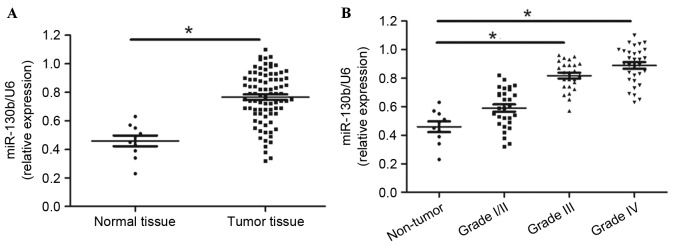
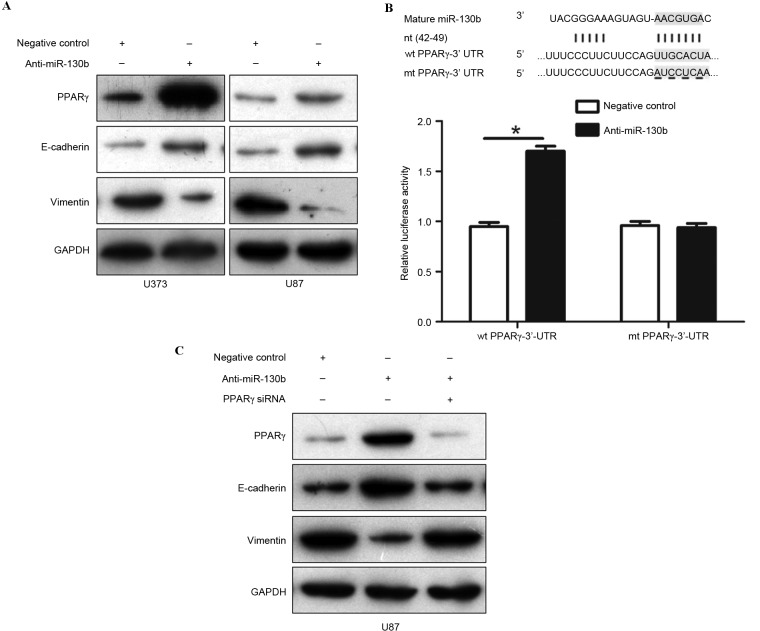
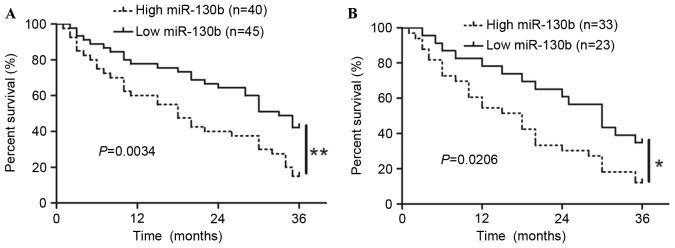
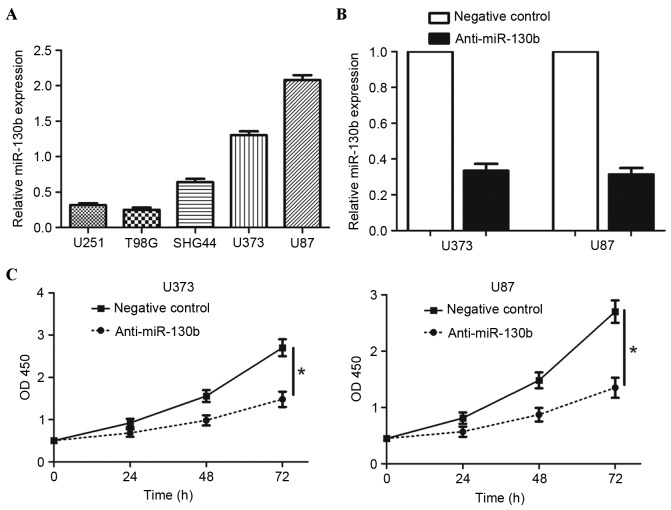
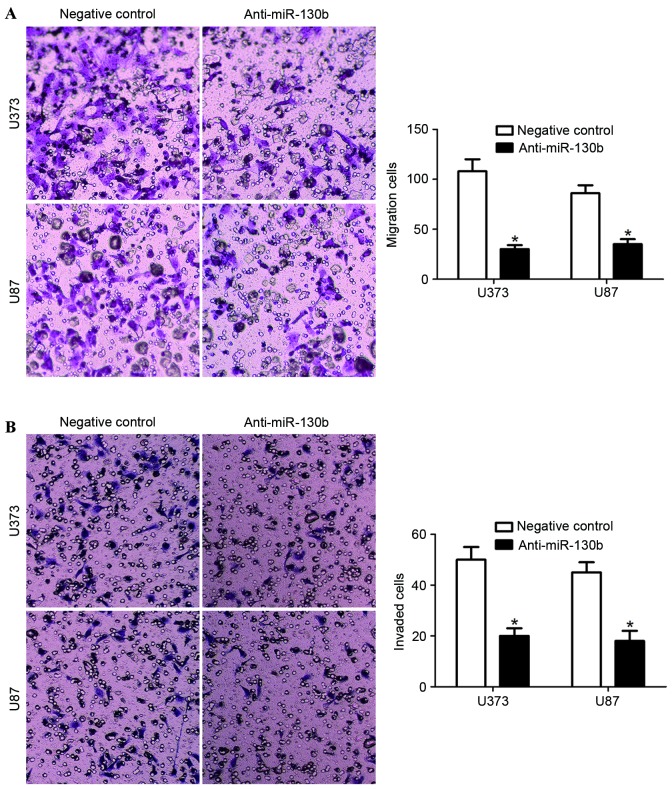
Glioma is the most common and aggressive type of primary brain tumor. MicroRNA (miR)-130b functions as a tumor-associated miR. The dysregulation of miR-130b is involved in numerous biological characteristics and properties of certain types of cancer. The present study revealed the function and possible molecular mechanism of miR-130b in glioma cells, reporting that the level of miR-130b was markedly higher, increasing progressively as the histologic grade of the glioma increased, compared with the level in normal tissues. Additionally, the present study demonstrated that patients with high miR-130b expression exhibited a poor 3-year survival rate and miR-130b was an independent factor for predicting the prognosis of patients with glioma. The downregulation of miR-130b reduced invasion and migration in U373 and U87 cells. Furthermore, the downregulation of miR-130b increased peroxisome proliferator-activated receptor-γ (PPARγ) expression and inhibited epithelial-mesenchymal transition (EMT) in glioma cells. The present study identified PPARγ as a direct target of miR-130b in glioma . Furthermore, PPARγ knockdown was revealed to reduce the effect on EMT caused by the downregulation of miR-130b in U87 cells. The present study demonstrated that miR-130b promotes glioma proliferation, migration and invasion by suppressing PPARγ and subsequently inducing EMT.
胶质瘤是最常见且侵袭性最强的原发性脑肿瘤类型。微小RNA(miR)-130b作为一种肿瘤相关的微小RNA发挥作用。miR-130b的失调与某些类型癌症的众多生物学特性有关。本研究揭示了miR-130b在胶质瘤细胞中的功能及可能的分子机制,报告称与正常组织中的水平相比,miR-130b的水平明显更高,且随着胶质瘤组织学分级的增加而逐渐升高。此外,本研究表明miR-130b高表达的患者3年生存率较差,且miR-130b是预测胶质瘤患者预后的独立因素。miR-130b的下调降低了U373和U87细胞的侵袭和迁移能力。此外,miR-130b的下调增加了过氧化物酶体增殖物激活受体-γ(PPARγ)的表达,并抑制了胶质瘤细胞中的上皮-间质转化(EMT)。本研究确定PPARγ是胶质瘤中miR-130b的直接靶点。此外,研究发现PPARγ敲低可降低miR-130b下调对U87细胞中EMT的影响。本研究表明,miR-130b通过抑制PPARγ并随后诱导EMT来促进胶质瘤的增殖、迁移和侵袭。