Stroke Center, Zhengzhou University People's Hospital, Henan Provincial People's Hospital, Zhengzhou, Henan 450000, P.R. China.
Department of Gastroenterology, Chinese PLA General Hospital, Beijing 100853, P.R. China.
Int J Mol Med. 2018 Jan;41(1):284-292. doi: 10.3892/ijmm.2017.3233. Epub 2017 Nov 2.
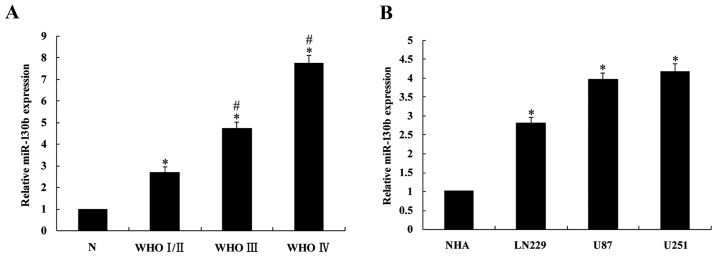
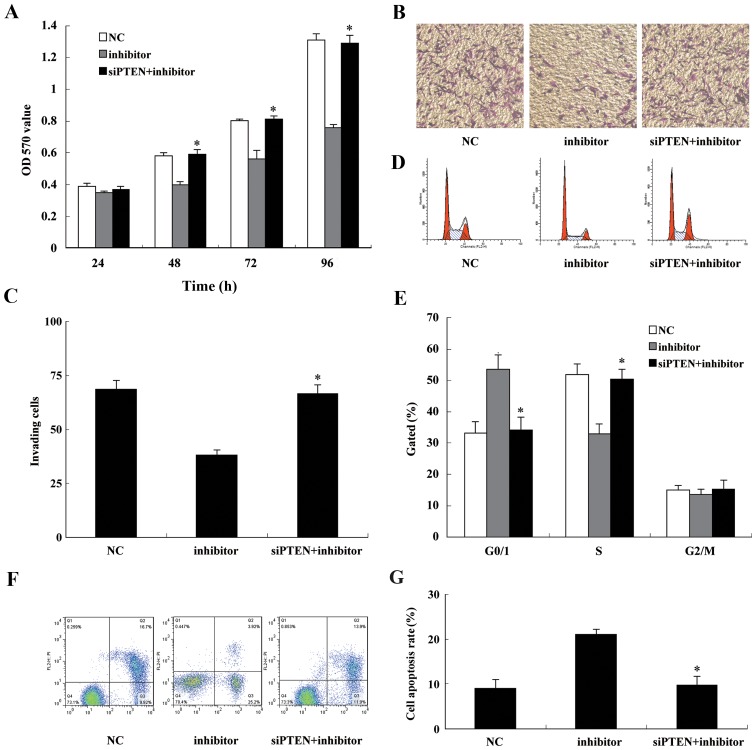
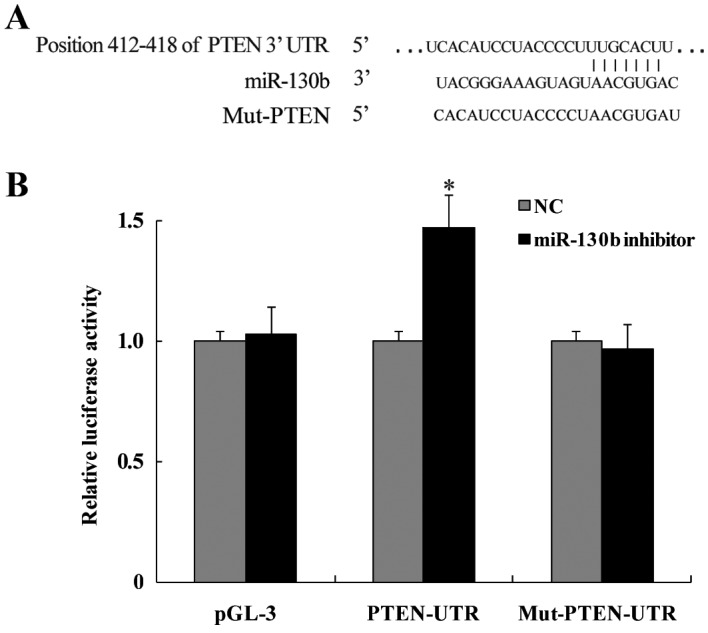
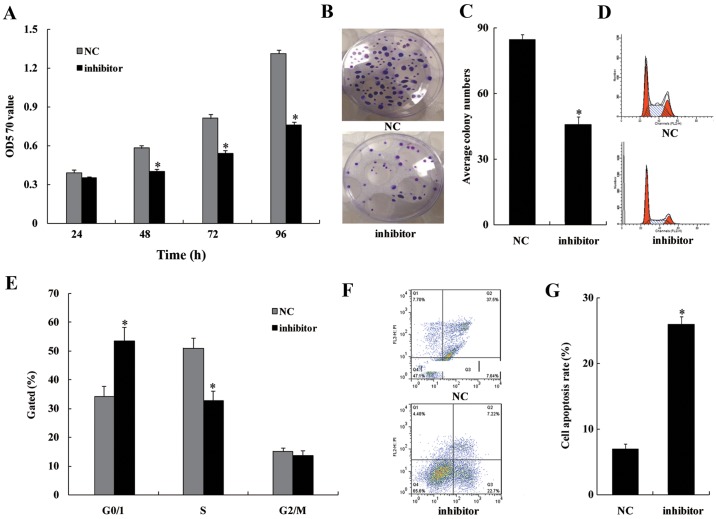
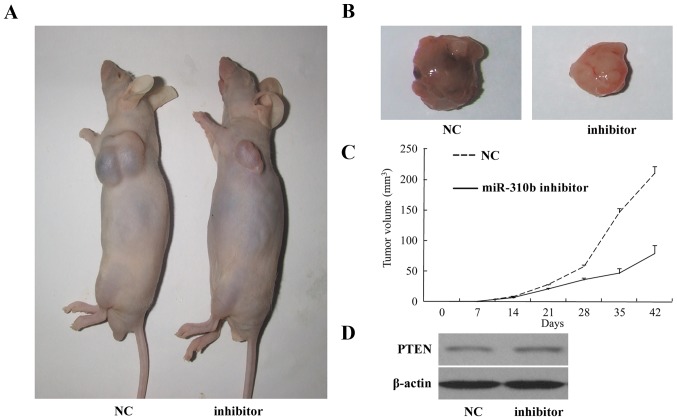
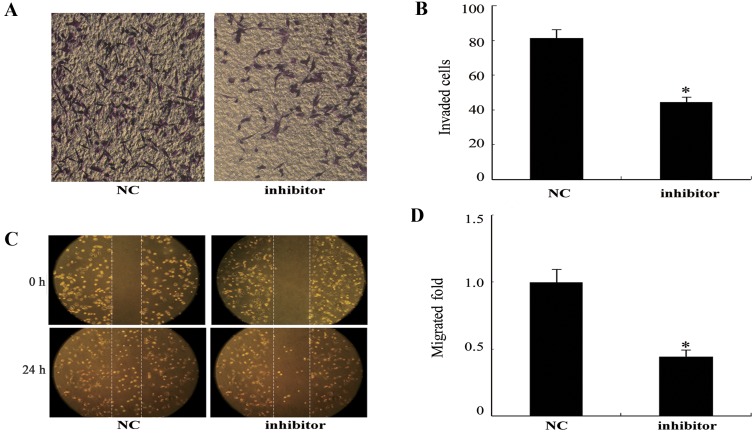
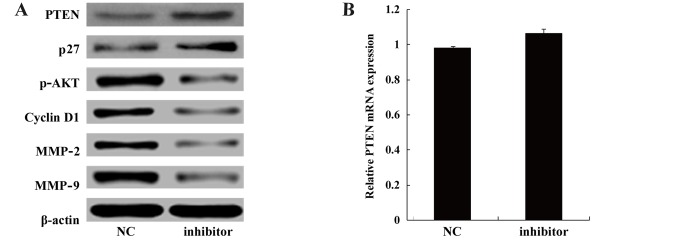
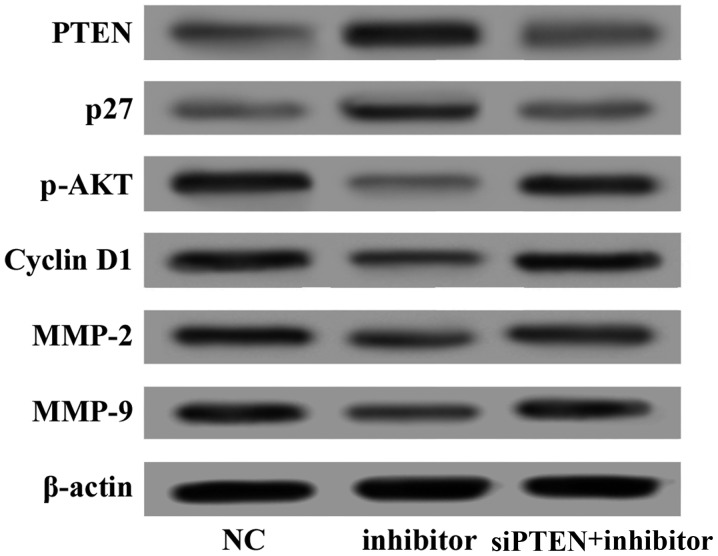
Glioblastoma is the most common malignant brain tumor in adults and is characterized by extensive proliferation and the diffused invasion of tumor cells. Due to the intricate signaling pathways involved in glioma progression, more effective targeted therapies and prognostic biomarkers in clinical practice are required. The suppression of proto-oncogene function or recovery of tumor suppressor gene function remains one of the primary approaches in gene therapy. The close association between the abnormal expression or mutation of microRNA (miRNA) and the tumorigenesis, progression and staging in glioma have been demonstrated previously. However, the expression pattern and specific role of microRNA‑130b (miR‑130b) in the tumor occurrence and progression of glioma are unclear. In the present study, quantitative polymerase chain reaction was performed to determine the expression level of miR-130b in 30 brain glioma patients and 3 glioma cell lines. An miR‑130b inhibitor was transfected into U87 cells to downregulate the expression of miR-130b, and assessments of cell proliferation, cell cycle, apoptosis, cell invasion and migration in vitro and nude mouse tumorigenicity in vivo were conducted. Western blotting and luciferase reporter gene technology were used to verify the downstream target gene of miR-130b, namely phosphatase and tensin homolog (PTEN). The results demonstrated that miR-130b expression was increased in glioma tissues and cell lines in comparison with non-glioma tissues or cells. The downregulated expression of miR-130b inhibited the proliferation and invasion of glioma cells, induced apoptosis of the cells in vitro and inhibited their tumorigenicity in vivo. Western blotting and luciferase reporter assays demonstrated that the PTEN gene is a direct target of miR‑130b. Western blotting revealed that the miR-130b inhibitor upregulated the expression of PTEN, inhibited AKT pathway activation, upregulated the tumor suppressor gene p27, and suppressed cyclin D1, matrix metalloproteinase 2 and 9 expression. These results suggest that the miR-130b inhibitor suppressed glioma cell proliferation and invasion via the PTEN/AKT pathway. Therefore, miR‑130b is suggested to be an effective therapeutic target for glioma.
胶质母细胞瘤是成人中最常见的恶性脑肿瘤,其特征为肿瘤细胞的广泛增殖和弥漫性浸润。由于胶质瘤进展中涉及复杂的信号通路,因此在临床实践中需要更有效的靶向治疗和预后生物标志物。抑制原癌基因功能或恢复抑癌基因功能仍然是基因治疗的主要方法之一。先前已经证明,微小 RNA(miRNA)的异常表达或突变与胶质瘤的发生、进展和分期密切相关。然而,miR-130b 在胶质瘤肿瘤发生和进展中的表达模式和具体作用尚不清楚。在本研究中,通过实时定量聚合酶链反应检测 30 例脑胶质瘤患者和 3 种胶质瘤细胞系中 miR-130b 的表达水平。将 miR-130b 抑制剂转染至 U87 细胞中以下调 miR-130b 的表达,并进行体外细胞增殖、细胞周期、凋亡、细胞侵袭和迁移评估以及体内裸鼠肿瘤发生评估。Western blot 及荧光素酶报告基因技术用于验证 miR-130b 的下游靶基因磷酸酶和张力蛋白同源物(PTEN)。结果表明,与非胶质瘤组织或细胞相比,miR-130b 在胶质瘤组织和细胞系中的表达增加。下调 miR-130b 的表达抑制了胶质瘤细胞的增殖和侵袭,诱导了细胞的体外凋亡并抑制了其体内的肿瘤发生。Western blot 和荧光素酶报告基因分析表明,PTEN 基因是 miR-130b 的直接靶基因。Western blot 显示,miR-130b 抑制剂上调了 PTEN 的表达,抑制了 AKT 通路的激活,上调了抑癌基因 p27,并抑制了周期蛋白 D1、基质金属蛋白酶 2 和 9 的表达。这些结果表明,miR-130b 抑制剂通过 PTEN/AKT 通路抑制了胶质瘤细胞的增殖和侵袭。因此,miR-130b 可能是治疗胶质瘤的有效靶点。