Gies Inge, AlSaleem Bader, Olang Beheshteh, Karima Berkouk, Samy Gamal, Husain Khaled, Elhalik Mahmoud, Miqdady Mohamad, Rawashdeh Mohamad, Salah Mohamed, Mouane Nezha, Rohani Pejman, Singhal Atul, Vandenplas Yvan
Department of Pediatrics, UZ Brussel, Vrije Universiteit Brussel, Brussels, Belgium.
Pediatric Gastroenterology, Hepatology and Nutrition Department, Children's Hospital, King Fahad Medical City, King Saud bin Abdulaziz University for Health Sciences, Riyadh, Kingdom of Saudi Arabia.
BMC Pediatr. 2017 Apr 28;17(1):115. doi: 10.1186/s12887-017-0865-1.
Childhood obesity is one of the most serious public health issues of the twenty-first century affecting even low- and middle-income countries. Overweight and obese children are more likely to stay obese into adulthood. Due to the paucity of data on local practices, our study aimed to assess the knowledge and practices of physicians from the Middle East and North Africa region with respect to early-onset obesity.
A specific questionnaire investigating the perception and knowledge on early-onset obesity was circulated to healthcare providers (general physicians, pediatricians, pediatric gastroenterologist, neonatologists) practicing in 17 Middle East and North African countries.
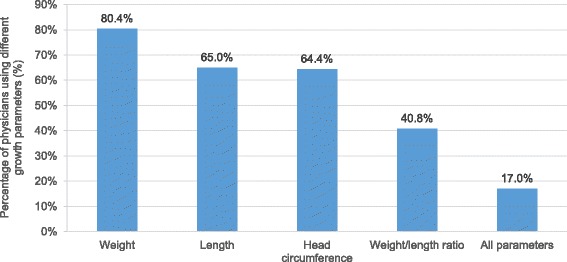
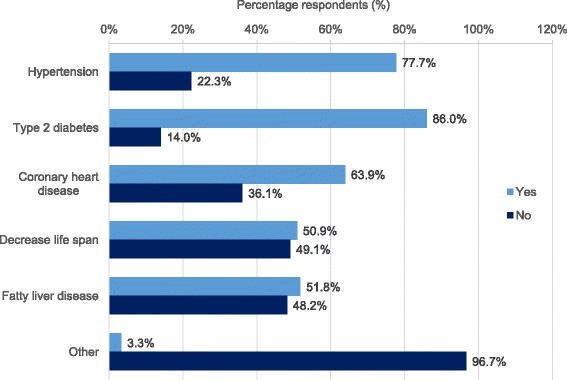
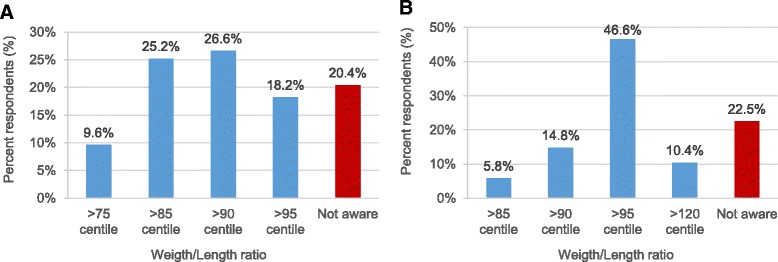
A total of 999/1051 completed forms (95% response) were evaluated. Of all respondents, 28.9% did not consistently use growth charts to monitor growth during every visit and only 25.2% and 46.6% of respondents were aware of the correct cut-off criterion for overweight and obesity, respectively. Of those surveyed, 22.3, 14.0, 36.1, 48.2, and 49.1% of respondents did not consider hypertension, type 2 diabetes, coronary heart disease, fatty liver disease, and decreased life span, respectively, to be a long-term complication of early childhood obesity. Furthermore, only 0.7% of respondents correctly answered all survey questions pertaining to knowledge of early childhood overweight and obesity.
The survey highlights the low use of growth charts in the evaluation of early childhood growth in Middle East and North Africa region, and demonstrated poor knowledge of healthcare providers on the short- and long-term complications of early-onset obesity. This suggests a need for both continued professional education and development, and implementation of guidelines for the prevention and management of early childhood overweight and obesity.
儿童肥胖是21世纪最严重的公共卫生问题之一,甚至影响到低收入和中等收入国家。超重和肥胖儿童成年后更有可能继续肥胖。由于缺乏关于当地做法的数据,我们的研究旨在评估中东和北非地区医生对早发性肥胖的认知和做法。
向在17个中东和北非国家执业的医疗服务提供者(全科医生、儿科医生、儿科胃肠病学家、新生儿科医生)发放了一份关于早发性肥胖认知和知识的特定问卷。
共评估了999/1051份完整表格(回复率95%)。在所有受访者中,28.9%的人在每次就诊时并非始终使用生长图表来监测生长情况,只有25.2%和46.6%的受访者分别知晓超重和肥胖的正确临界标准。在接受调查的人中,分别有22.3%、14.0%、36.1%、48.2%和49.1%的受访者不认为高血压、2型糖尿病、冠心病、脂肪肝和寿命缩短是儿童早期肥胖的长期并发症。此外,只有0.7%的受访者正确回答了所有与儿童早期超重和肥胖知识相关的调查问题。
该调查突出了中东和北非地区在评估儿童早期生长时生长图表使用不足的情况,并表明医疗服务提供者对早发性肥胖的短期和长期并发症了解不足。这表明需要持续进行专业教育和发展,并实施儿童早期超重和肥胖预防与管理指南。