Blijleven Vincent, Koelemeijer Kitty, Jaspers Monique
Center for Marketing & Supply Chain Management, Nyenrode Business University, Breukelen, Netherlands.
Academisch Medisch Centrum, Department of Medical Informatics, University of Amsterdam, Amsterdam, Netherlands.
JMIR Res Protoc. 2017 Apr 28;6(4):e72. doi: 10.2196/resprot.6766.
Health care providers resort to informal temporary practices known as workarounds for handling exceptions to normal workflow that are unintentionally imposed by electronic health record (EHR) systems. Although workarounds may seem favorable at first sight, they are generally suboptimal and may jeopardize patient safety, effectiveness, and efficiency of care. Identifying workarounds and understanding their motivations, scope, and impact is pivotal to support the design of user-friendly EHRs and achieve closer alignment between EHRs and work contexts.
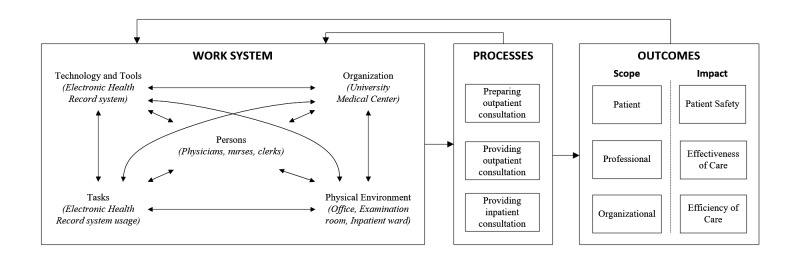
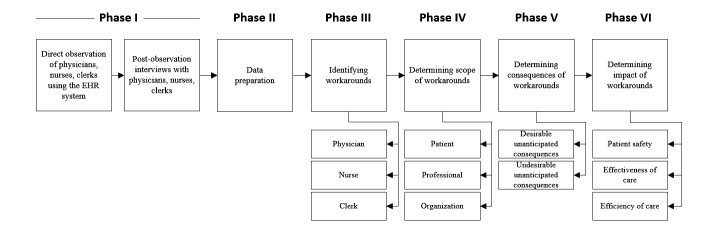
We propose a study protocol to identify EHR workarounds and subsequently determine their scope and impact on health care providers' workflows, patient safety, effectiveness, and efficiency of care. First, knowing whether a workaround solely affects the health care provider who devised it, or whether its effects extends beyond the EHR user to the work context of other health care providers, is key to accurately assessing its degree of influence on the overall patient care workflow. Second, knowing whether the consequence of an EHR workaround is favorable or unfavorable provides insights into how to address EHR-related safety, effectiveness, and efficiency concerns. Knowledge of both perspectives can provide input on optimizing EHR designs.
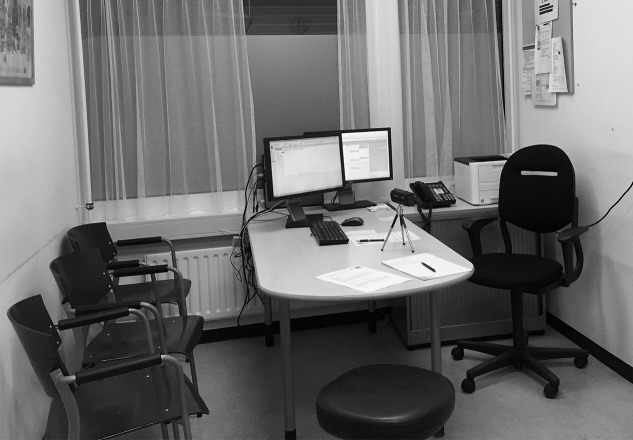
In the study, a combination of direct observations, semistructured interviews, and qualitative coding techniques will be used to identify, analyze, and classify EHR workarounds. The research project will be conducted within three distinct pediatric care processes and settings at a large university hospital.
Data was collected using the described approach from January 2016 to March 2017. Data analysis is underway and is expected to be completed in May 2017. We aim to report the results of this study in a follow-up publication.
This study protocol provides a grounded framework to explore EHR workarounds from a holistic and integral perspective. Insights from this study can inform the design and redesign of EHRs to further align with work contexts of healthcare professionals, and subsequently lead to better organization and safer provision of care.
医疗保健提供者会采用一些非正式的临时做法,即所谓的变通方法,来处理电子健康记录(EHR)系统无意造成的正常工作流程异常情况。尽管变通方法乍一看似乎有利,但通常并非最佳选择,可能会危及患者安全、医疗效果和护理效率。识别变通方法并了解其动机、范围和影响,对于支持设计用户友好型电子健康记录以及使电子健康记录与工作环境更紧密契合至关重要。
我们提出一项研究方案,以识别电子健康记录的变通方法,并随后确定其范围以及对医疗保健提供者工作流程、患者安全、医疗效果和护理效率的影响。首先,了解一种变通方法是仅影响设计它的医疗保健提供者,还是其影响超出电子健康记录用户,延伸至其他医疗保健提供者的工作环境,是准确评估其对整体患者护理工作流程影响程度的关键。其次,了解电子健康记录变通方法的后果是有利还是不利,有助于深入了解如何解决与电子健康记录相关的安全、效果和效率问题。了解这两个方面的信息可为优化电子健康记录设计提供依据。
在该研究中,将结合直接观察、半结构化访谈和定性编码技术来识别、分析和分类电子健康记录的变通方法。该研究项目将在一家大型大学医院的三个不同儿科护理流程和环境中进行。
2016年1月至2017年3月期间使用上述方法收集了数据。数据分析正在进行中,预计于2017年5月完成。我们计划在后续出版物中报告本研究的结果。
本研究方案提供了一个基于实际情况的框架,可从整体和综合的角度探索电子健康记录的变通方法。本研究的见解可为电子健康记录的设计和重新设计提供参考,使其更符合医疗专业人员的工作环境,进而实现更好的医疗组织和更安全的护理服务。