Sano Tomoya, Watanabe Takeshi, Ishimura Yoshimasa, Anayama Hisashi
Drug Safety Research Laboratories, Takeda Pharmaceutical Company Limited, 26-1 Muraoka-Higashi 2-Chome, Fujisawa, Kanagawa 251-8555, Japan.
J Toxicol Pathol. 2017 Apr;30(2):177-181. doi: 10.1293/tox.2016-0066. Epub 2017 Jan 5.
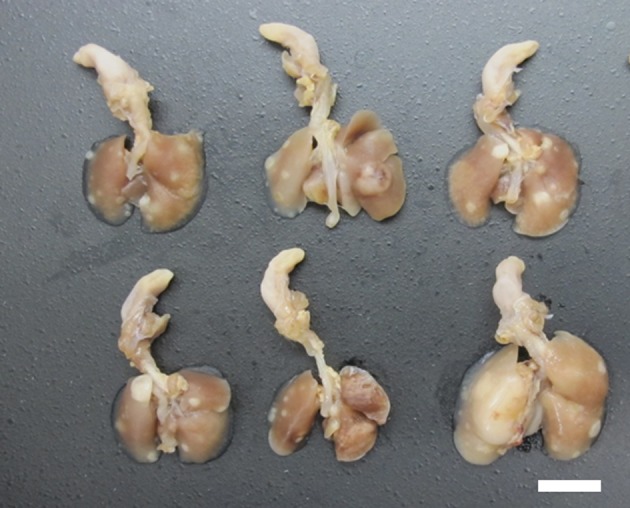
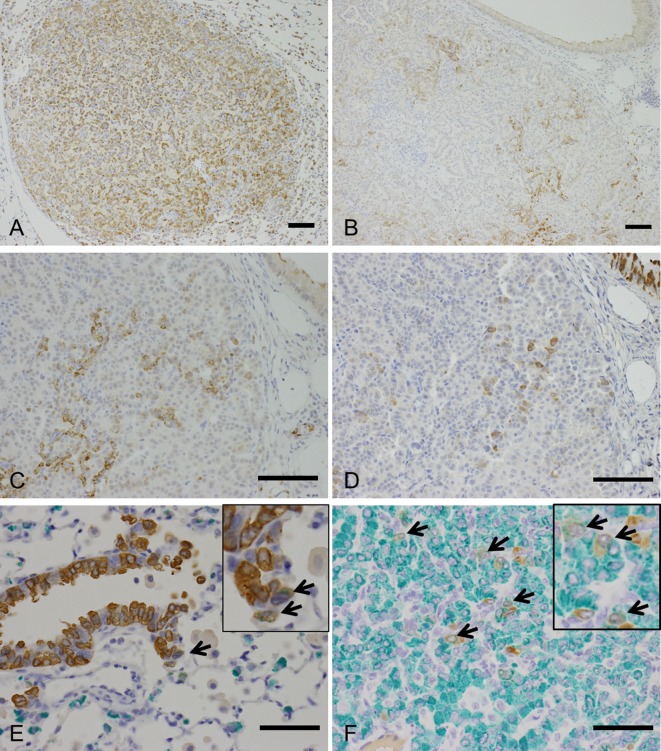
The purpose of this study was to define the histopathological characteristics of pulmonary neoplastic lesions, especially focusing on the origin of tumor cells, in urethane-treated Tg rasH2 mice. Bronchiolar-alveolar adenomas/adenocarcinomas were observed in the lungs from all of the urethane-treated animals. Immunohistochemically, these tumors showed an alveolar epithelial type II (AE2) cell phenotype demonstrating positive staining of surfactant protein C (SP-C). Cells expressing Clara cell 10 (CC10), a Clara cell marker, were also observed in a scattered manner in some tumors. Several SP-C and CC10 double-positive cells were observed in these tumors. Most of the urethane-induced pulmonary tumors were considered to have an AE2 cell phenotype, but the presence of SP-C and CC10 double positive cells in the tumors of Tg rasH2 mice suggests that some tumors arose from bronchioalveolar stem cells, which are known to express both SP-C and CC10.
本研究的目的是确定经乌拉坦处理的Tg rasH2小鼠肺部肿瘤性病变的组织病理学特征,尤其关注肿瘤细胞的起源。在所有经乌拉坦处理的动物的肺中均观察到细支气管肺泡腺瘤/腺癌。免疫组织化学显示,这些肿瘤呈现肺泡II型上皮(AE2)细胞表型,表面活性蛋白C(SP-C)呈阳性染色。在一些肿瘤中还散在观察到表达克拉拉细胞标志物克拉拉细胞10(CC10)的细胞。在这些肿瘤中观察到多个SP-C和CC10双阳性细胞。大多数乌拉坦诱导的肺部肿瘤被认为具有AE2细胞表型,但在Tg rasH2小鼠的肿瘤中存在SP-C和CC10双阳性细胞表明,一些肿瘤起源于支气管肺泡干细胞,已知该细胞同时表达SP-C和CC10。