Stahl Thorsten, Falk Sandy, Rohrbeck Alice, Georgii Sebastian, Herzog Christin, Wiegand Alexander, Hotz Svenja, Boschek Bruce, Zorn Holger, Brunn Hubertus
Hessian State Laboratory, Am Versuchsfeld 11, 34128 Kassel, Germany.
Hessian State Laboratory, Glarusstr. 6, 65203 Wiesbaden, Germany.
Environ Sci Eur. 2017;29(1):18. doi: 10.1186/s12302-017-0118-9. Epub 2017 Apr 12.
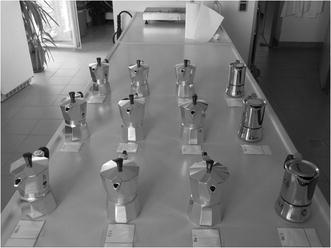
Drinking bottles and stove-top moka pots made of aluminum have become very popular. Storing drinks in bottles and preparing coffee in a moka pot may result in the migration of aluminum to the beverage.
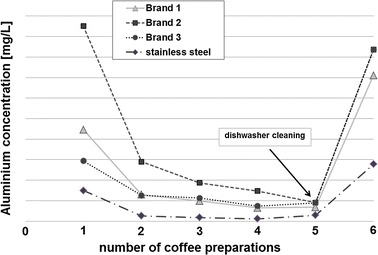
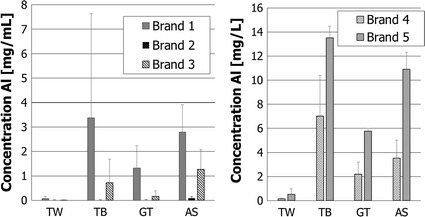
RESULTS/CONCLUSIONS: In a systematic study of aluminum drinking bottles, it has been shown that drinking a mixture of apple juice and mineral water in an aluminum bottle may reach 86.6% of the total weekly intake (TWI) for adults, and drinking tea from an aluminum bottle may exceed the TWI (145%) for a child weighing 15 kg. In contrast, preparing coffee in an aluminum moka pot results in a maximum of 4% to TWI, if an average of 3.17 L coffee is consumed per week, even if the pots are washed in the dishwasher, against the explicit instructions of the manufacturer.
由铝制成的饮料瓶和炉顶摩卡壶已变得非常流行。将饮料储存在瓶中以及用摩卡壶煮咖啡可能会导致铝迁移到饮品中。
结果/结论:在一项对铝制饮料瓶的系统性研究中,已表明在铝瓶中饮用苹果汁和矿泉水的混合饮料可能达到成年人每周总摄入量(TWI)的86.6%,而用铝瓶喝茶可能会超过一名15千克儿童的TWI(145%)。相比之下,即使按照制造商的明确说明在洗碗机中清洗摩卡壶,如果每周平均饮用3.17升咖啡,用铝制摩卡壶煮咖啡导致的铝摄入量最多占TWI的4%。