Gladyshev Eugene, Kleckner Nancy
Department of Molecular and Cellular Biology, Harvard University, Cambridge, Massachusetts, USA.
Nat Genet. 2017 Jun;49(6):887-894. doi: 10.1038/ng.3857. Epub 2017 May 1.
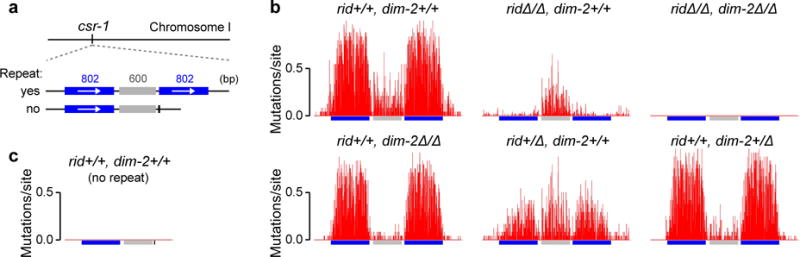
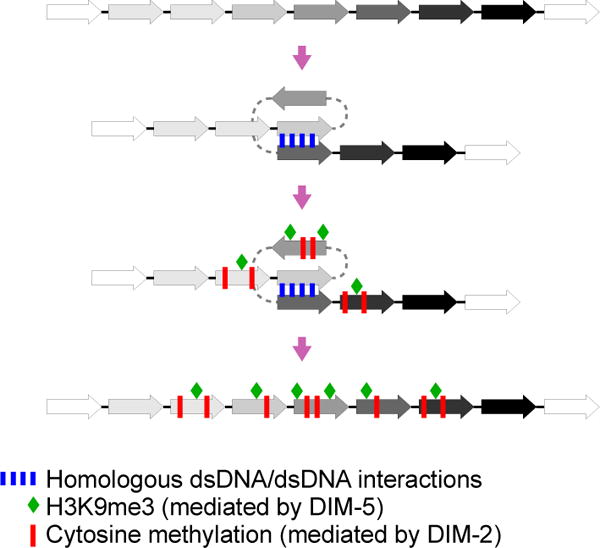
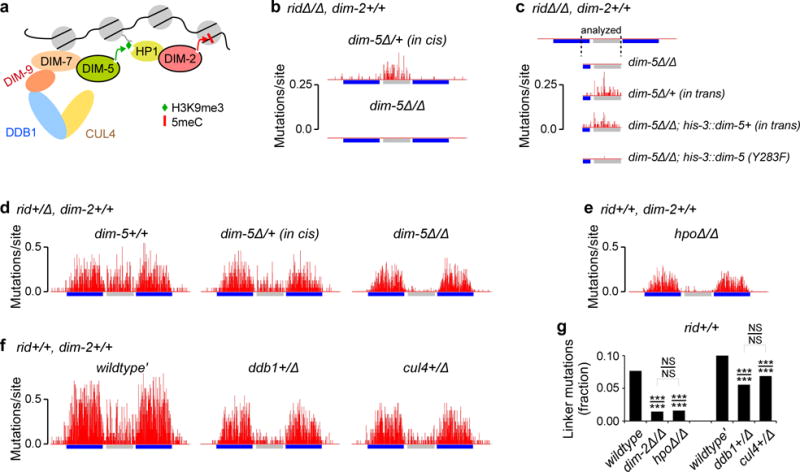
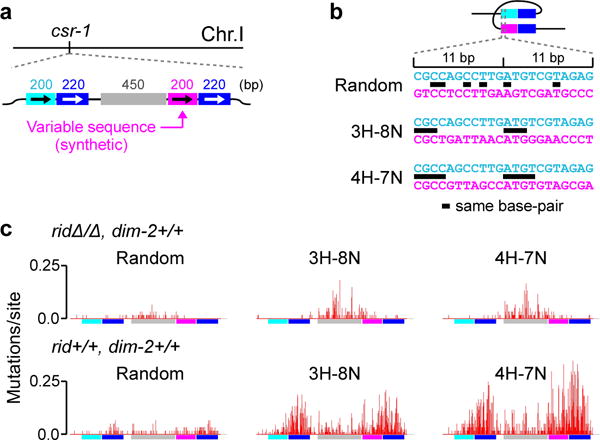
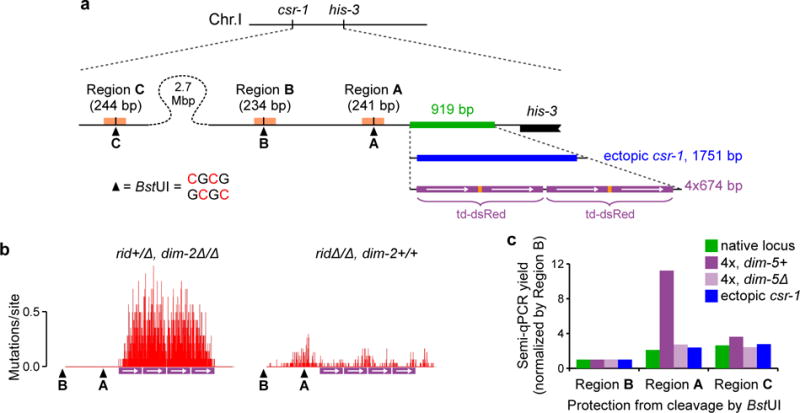
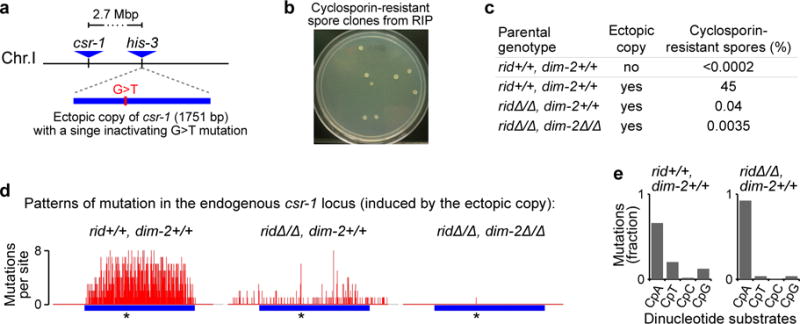
Most eukaryotic genomes contain substantial amounts of repetitive DNA organized in the form of constitutive heterochromatin and associated with repressive epigenetic modifications, such as H3K9me3 and C5 cytosine methylation (5mC). In the fungus Neurospora crassa, H3K9me3 and 5mC are catalyzed, respectively, by a conserved SUV39 histone methyltransferase, DIM-5, and a DNMT1-like cytosine methyltransferase, DIM-2. Here we show that DIM-2 can also mediate repeat-induced point mutation (RIP) of repetitive DNA in N. crassa. We further show that DIM-2-dependent RIP requires DIM-5, HP1, and other known heterochromatin factors, implying a role for a repeat-induced heterochromatin-related process. Our previous findings suggest that the mechanism of repeat recognition for RIP involves direct interactions between homologous double-stranded DNA (dsDNA) segments. We thus now propose that, in somatic cells, homologous dsDNA-dsDNA interactions between a small number of repeat copies can nucleate a transient heterochromatic state, which, on longer repeat arrays, may lead to the formation of constitutive heterochromatin.
大多数真核生物基因组包含大量以组成型异染色质形式存在的重复DNA,并与抑制性表观遗传修饰相关,如H3K9me3和C5胞嘧啶甲基化(5mC)。在真菌粗糙脉孢菌中,H3K9me3和5mC分别由保守的SUV39组蛋白甲基转移酶DIM-5和DNMT1样胞嘧啶甲基转移酶DIM-2催化。在此我们表明,DIM-2也能介导粗糙脉孢菌中重复DNA的重复序列诱导点突变(RIP)。我们进一步表明,依赖DIM-2的RIP需要DIM-5、HP1和其他已知的异染色质因子,这意味着重复序列诱导的异染色质相关过程发挥了作用。我们之前的研究结果表明,RIP的重复序列识别机制涉及同源双链DNA(dsDNA)片段之间的直接相互作用。因此我们现在提出,在体细胞中,少数重复拷贝之间的同源dsDNA-dsDNA相互作用可形成一个短暂的异染色质状态,在更长的重复序列阵列上,这可能导致组成型异染色质的形成。