Ekchaweng Kitiya, Evangelisti Edouard, Schornack Sebastian, Tian Miaoying, Churngchow Nunta
Department of Biochemistry, Faculty of Science, Prince of Songkla University, Hat Yai, Songkhla, Thailand.
Department of Plant and Environmental Protection Sciences, University of Hawaii at Manoa, Honolulu, Hawaii, United States of America.
PLoS One. 2017 May 1;12(5):e0175795. doi: 10.1371/journal.pone.0175795. eCollection 2017.
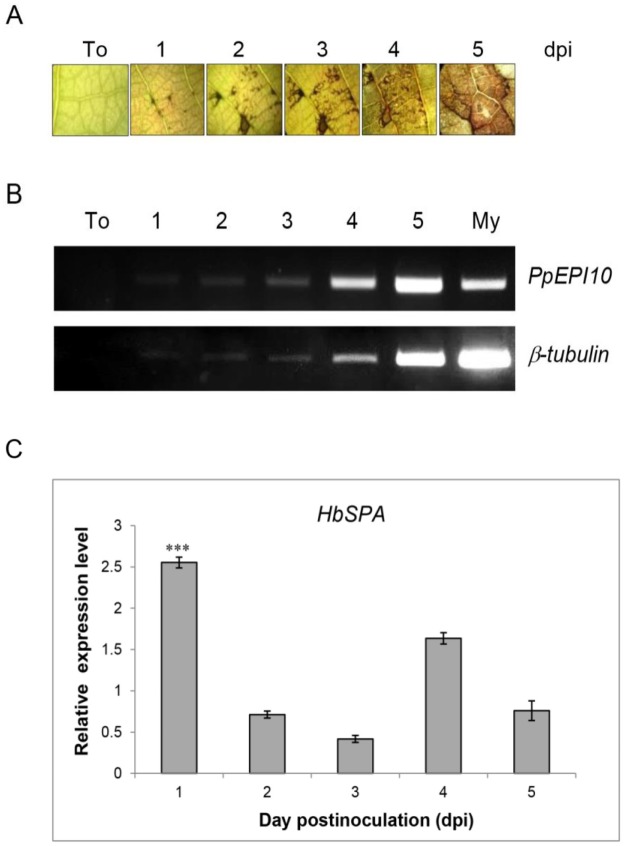
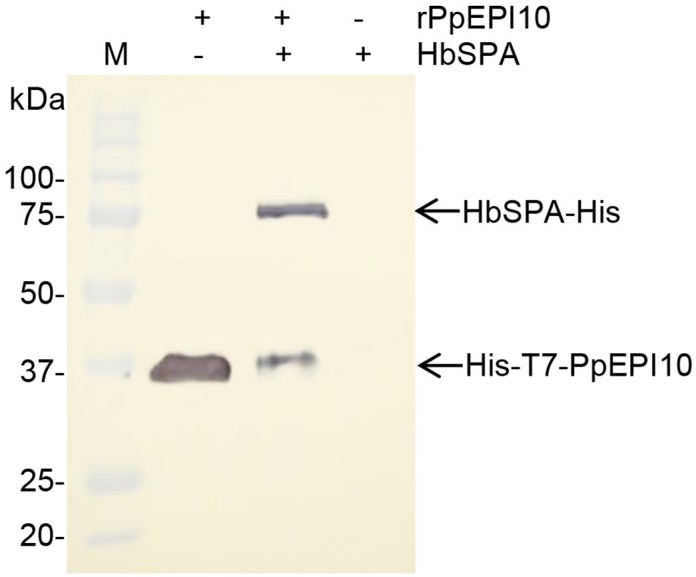
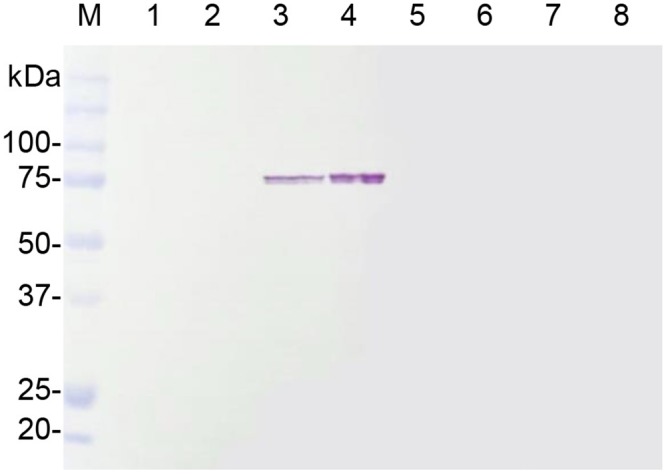
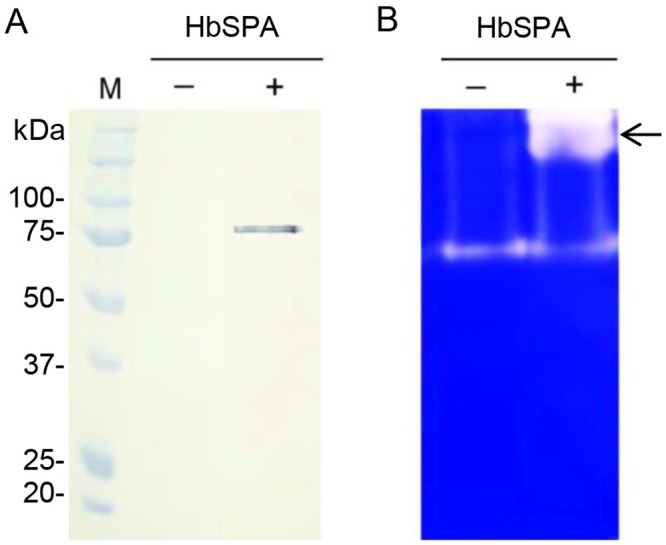
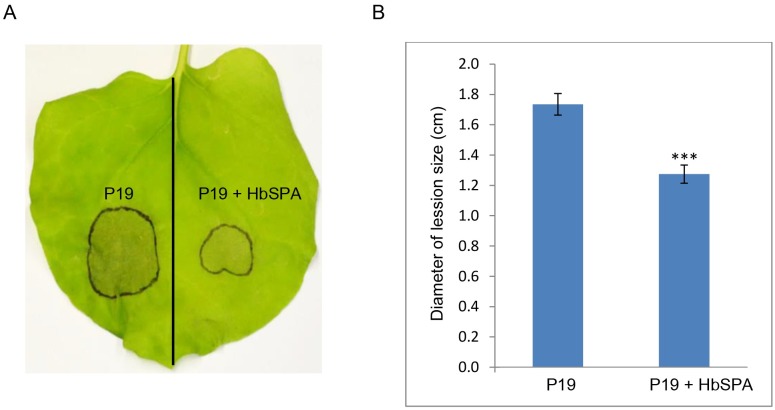
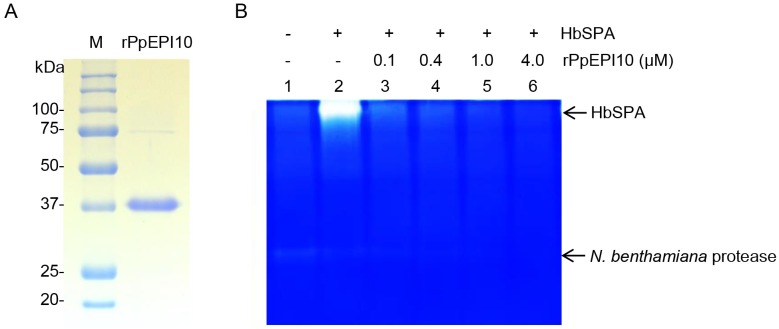
Rubber tree (Hevea brasiliensis Muell. Arg) is an important economic crop in Thailand. Leaf fall and black stripe diseases caused by the aggressive oomycete pathogen Phytophthora palmivora, cause deleterious damage on rubber tree growth leading to decrease of latex production. To gain insights into the molecular function of H. brasiliensis subtilisin-like serine proteases, the HbSPA, HbSPB, and HbSPC genes were transiently expressed in Nicotiana benthamiana via agroinfiltration. A functional protease encoded by HbSPA was successfully expressed in the apoplast of N. benthamiana leaves. Transient expression of HbSPA in N. benthamiana leaves enhanced resistance to P. palmivora, suggesting that HbSPA plays an important role in plant defense. P. palmivora Kazal-like extracellular protease inhibitor 10 (PpEPI10), an apoplastic effector, has been implicated in pathogenicity through the suppression of H. brasiliensis protease. Semi-quantitative RT-PCR revealed that the PpEPI10 gene was significantly up-regulated during colonization of rubber tree by P. palmivora. Concurrently, the HbSPA gene was highly expressed during infection. To investigate a possible interaction between HbSPA and PpEPI10, the recombinant PpEPI10 protein (rPpEPI10) was expressed in Escherichia coli and purified using affinity chromatography. In-gel zymogram and co-immunoprecipitation (co-IP) assays demonstrated that rPpEPI10 specifically inhibited and interacted with HbSPA. The targeting of HbSPA by PpEPI10 revealed a defense-counterdefense mechanism, which is mediated by plant protease and pathogen protease inhibitor, in H. brasiliensis-P. palmivora interactions.
橡胶树(巴西橡胶树穆勒氏种)是泰国一种重要的经济作物。由致病卵菌病原体棕榈疫霉引起的落叶病和黑条病,对橡胶树的生长造成有害损害,导致乳胶产量下降。为了深入了解巴西橡胶树枯草杆菌样丝氨酸蛋白酶的分子功能,通过农杆菌浸润法在本氏烟草中瞬时表达了HbSPA、HbSPB和HbSPC基因。由HbSPA编码的一种功能性蛋白酶在本氏烟草叶片的质外体中成功表达。HbSPA在本氏烟草叶片中的瞬时表达增强了对棕榈疫霉的抗性,表明HbSPA在植物防御中起重要作用。棕榈疫霉类Kazal型细胞外蛋白酶抑制剂10(PpEPI10)是一种质外体效应子,通过抑制巴西橡胶树蛋白酶参与致病性。半定量RT-PCR显示,在棕榈疫霉侵染橡胶树的过程中,PpEPI10基因显著上调。同时,HbSPA基因在感染过程中高表达。为了研究HbSPA与PpEPI10之间可能的相互作用,在大肠杆菌中表达了重组PpEPI10蛋白(rPpEPI10),并通过亲和层析进行纯化。凝胶内酶谱分析和免疫共沉淀(co-IP)试验表明,rPpEPI10特异性抑制HbSPA并与之相互作用。PpEPI10对HbSPA的靶向揭示了巴西橡胶树-棕榈疫霉相互作用中一种由植物蛋白酶和病原体蛋白酶抑制剂介导的防御-反防御机制。