de la Higuera Ignacio, Ferrer-Orta Cristina, de Ávila Ana I, Perales Celia, Sierra Macarena, Singh Kamalendra, Sarafianos Stefan G, Dehouck Yves, Bastolla Ugo, Verdaguer Nuria, Domingo Esteban
Centro de Biología Molecular "Severo Ochoa" (CSIC-UAM), Consejo Superior de Investigaciones Científicas (CSIC), Campus de Cantoblanco, Madrid, Spain.
Christopher S. Bond Life Sciences Center and Department of Molecular Microbiology & Immunology, School of Medicine, University of Missouri, Columbia, Missouri.
Genome Biol Evol. 2017 May 1;9(5):1212-1228. doi: 10.1093/gbe/evx075.
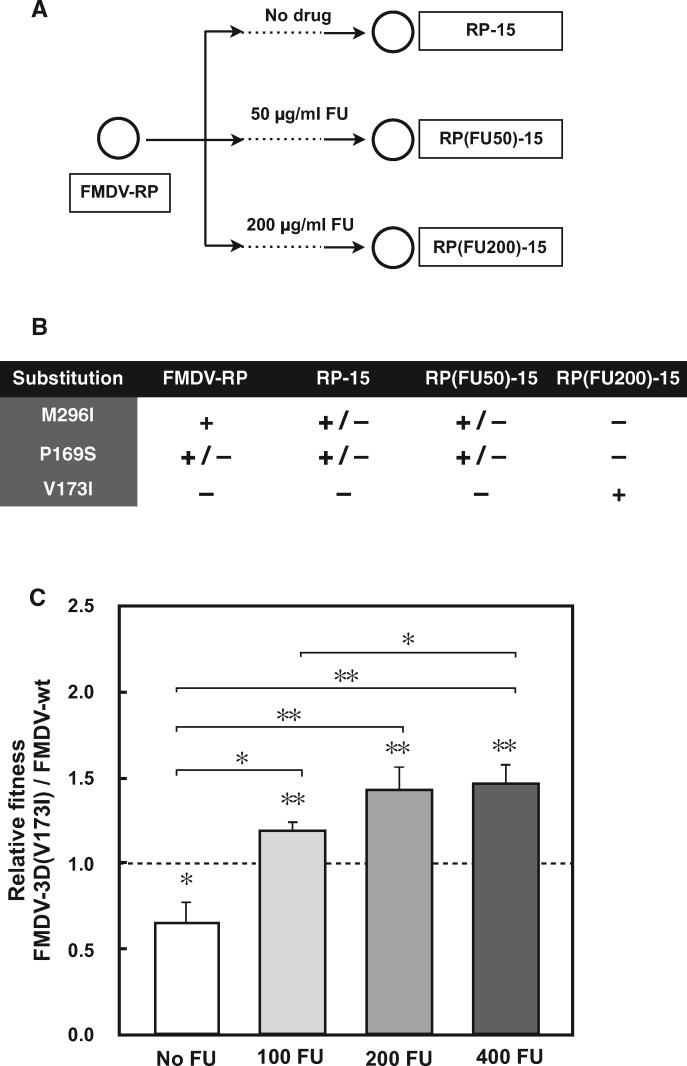
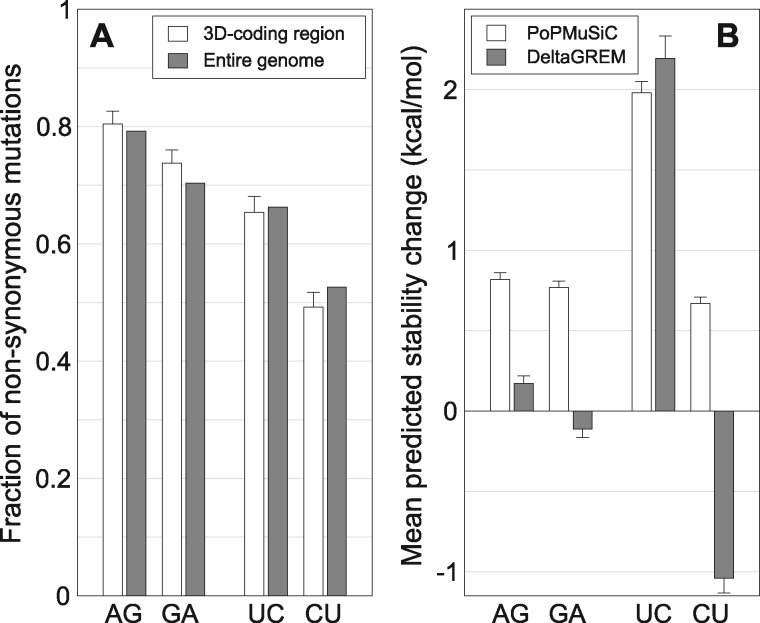
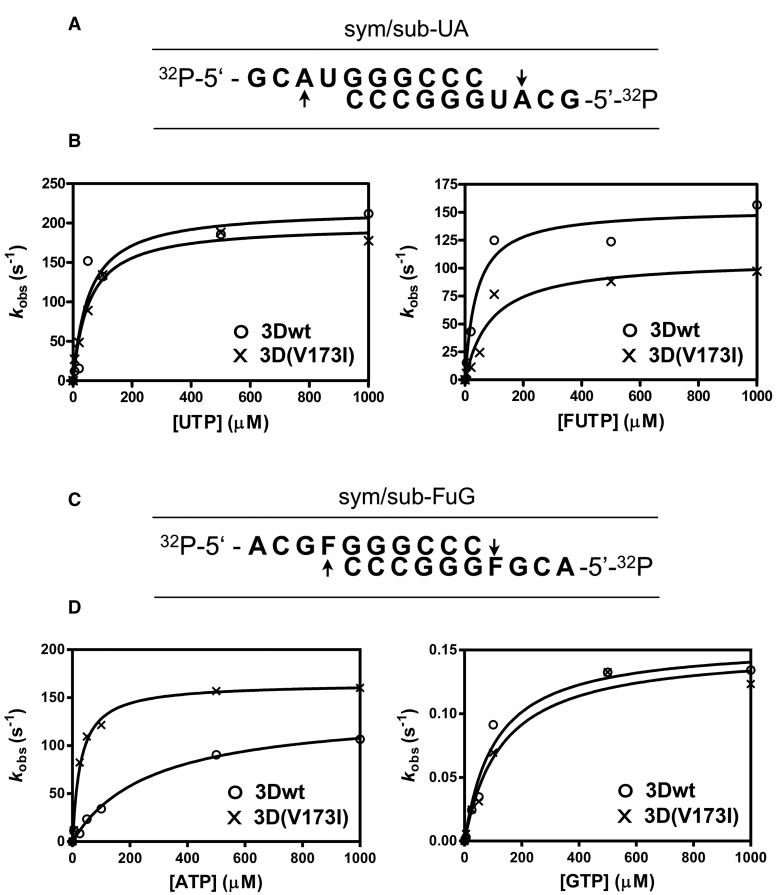
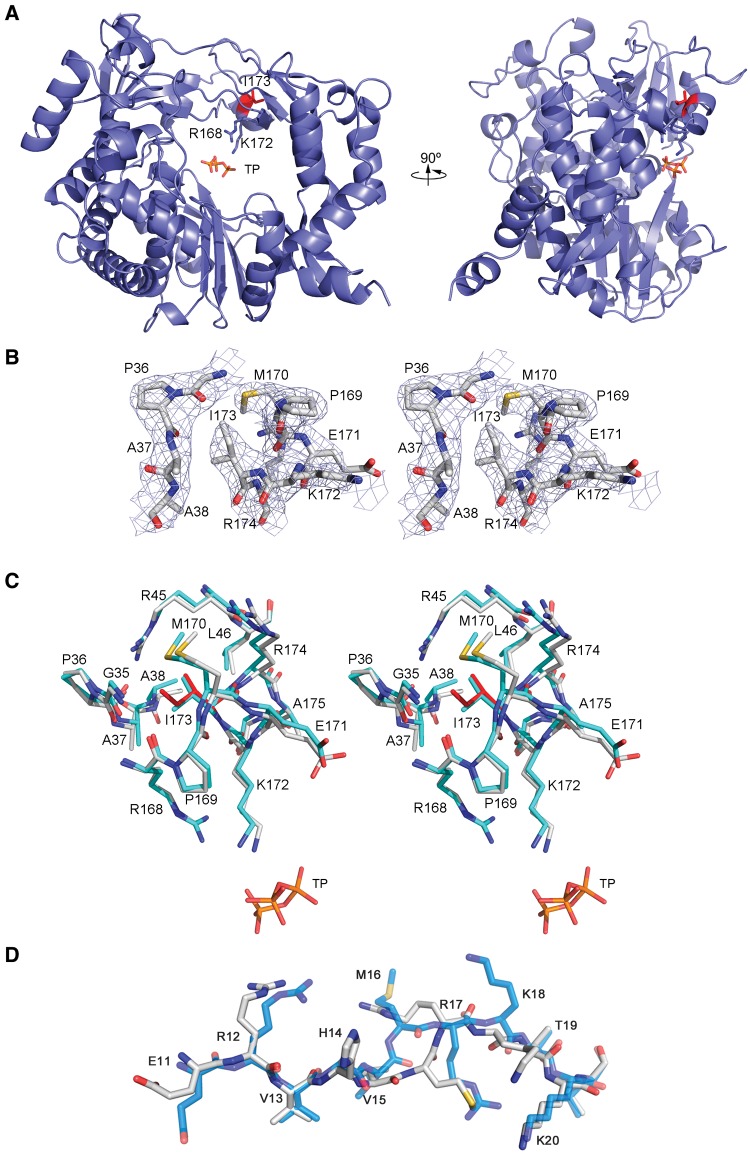
The selective pressures acting on viruses that replicate under enhanced mutation rates are largely unknown. Here, we describe resistance of foot-and-mouth disease virus to the mutagen 5-fluorouracil (FU) through a single polymerase substitution that prevents an excess of A to G and U to C transitions evoked by FU on the wild-type foot-and-mouth disease virus, while maintaining the same level of mutant spectrum complexity. The polymerase substitution inflicts upon the virus a fitness loss during replication in absence of FU but confers a fitness gain in presence of FU. The compensation of mutational bias was documented by in vitro nucleotide incorporation assays, and it was associated with structural modifications at the N-terminal region and motif B of the viral polymerase. Predictions of the effect of mutations that increase the frequency of G and C in the viral genome and encoded polymerase suggest multiple points in the virus life cycle where the mutational bias in favor of G and C may be detrimental. Application of predictive algorithms suggests adverse effects of the FU-directed mutational bias on protein stability. The results reinforce modulation of nucleotide incorporation as a lethal mutagenesis-escape mechanism (that permits eluding virus extinction despite replication in the presence of a mutagenic agent) and suggest that mutational bias can be a target of selection during virus replication.
作用于在增强突变率下复制的病毒的选择压力在很大程度上尚不清楚。在此,我们描述了口蹄疫病毒通过单个聚合酶替换对诱变剂5-氟尿嘧啶(FU)的抗性,该替换可防止野生型口蹄疫病毒上由FU引起的过量A到G和U到C的转换,同时保持相同水平的突变谱复杂性。该聚合酶替换在没有FU的情况下复制期间使病毒适应性降低,但在有FU的情况下赋予适应性增加。通过体外核苷酸掺入试验记录了突变偏向的补偿,并且它与病毒聚合酶N端区域和基序B的结构修饰有关。对增加病毒基因组和编码聚合酶中G和C频率的突变效应的预测表明,在病毒生命周期中有多个点,有利于G和C的突变偏向可能是有害的。预测算法的应用表明FU定向的突变偏向对蛋白质稳定性有不利影响。这些结果强化了核苷酸掺入的调节作为一种致死诱变逃逸机制(尽管在诱变剂存在下进行复制,但仍能避免病毒灭绝),并表明突变偏向可以成为病毒复制过程中选择的目标。