Liu Xi, Meltzer Stephen J
Department of Pathology, First Affiliated Hospital of Xi' an Jiaotong University, Xi' an, Shaanxi, China.
Division of Gastroenterology, Department of Medicine, and Department of Oncology, Sidney Kimmel Comprehensive Cancer Center, Johns Hopkins University, School of Medicine, Baltimore, Maryland.
Cell Mol Gastroenterol Hepatol. 2017 Feb 20;3(3):348-358. doi: 10.1016/j.jcmgh.2017.02.003. eCollection 2017 May.
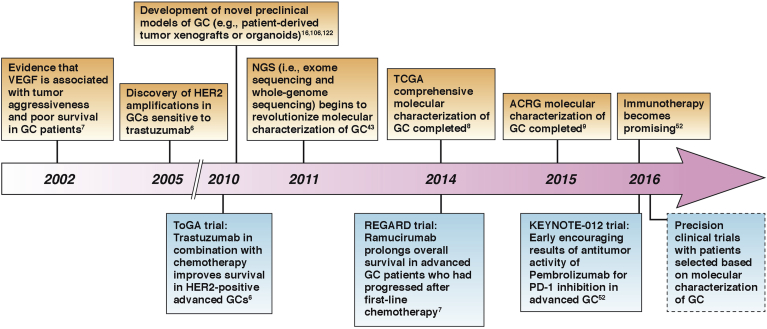
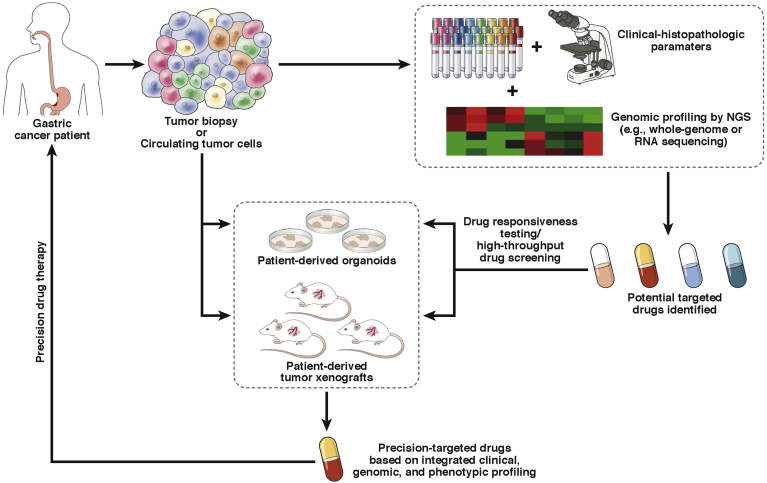
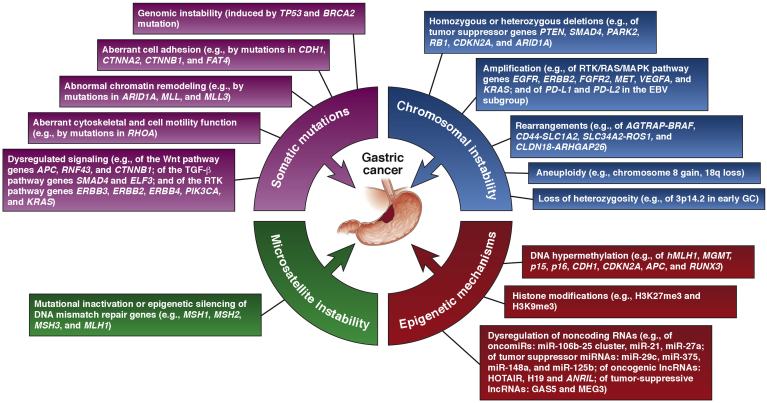
Gastric cancer (GC) remains the third most common cause of cancer death worldwide, with limited therapeutic strategies available. With the advent of next-generation sequencing and new preclinical model technologies, our understanding of its pathogenesis and molecular alterations continues to be revolutionized. Recently, the genomic landscape of GC has been delineated. Molecular characterization and novel therapeutic targets of each molecular subtype have been identified. At the same time, patient-derived tumor xenografts and organoids now comprise effective tools for genetic evolution studies, biomarker identification, drug screening, and preclinical evaluation of personalized medicine strategies for GC patients. These advances are making it feasible to integrate clinical, genome-based and phenotype-based diagnostic and therapeutic methods and apply them to individual GC patients in the era of precision medicine.
胃癌(GC)仍是全球癌症死亡的第三大常见原因,可用的治疗策略有限。随着下一代测序和新的临床前模型技术的出现,我们对其发病机制和分子改变的理解不断发生变革。最近,胃癌的基因组图谱已被描绘出来。每种分子亚型的分子特征和新的治疗靶点已被确定。与此同时,患者来源的肿瘤异种移植模型和类器官现在成为了用于基因进化研究、生物标志物鉴定、药物筛选以及对胃癌患者个性化医疗策略进行临床前评估的有效工具。这些进展使得在精准医学时代整合基于临床、基因组和表型的诊断和治疗方法并将其应用于个体胃癌患者成为可能。