Arguello Amy A, Wang Rong, Lyons Carey M, Higginbotham Jessica A, Hodges Matthew A, Fuchs Rita A
Department of Psychology, Michigan State University, East Lansing, MI, 48824, USA.
Integrative Physiology and Neuroscience, College of Veterinary Medicine, Washington State University, P.O. Box 647620, Pullman, WA, 99164-7620, USA.
Psychopharmacology (Berl). 2017 Aug;234(16):2431-2441. doi: 10.1007/s00213-017-4632-7. Epub 2017 May 2.
Environmental stimulus control over drug relapse requires the retrieval of context-response-cocaine associations, maintained in long-term memory through active reconsolidation processes. Identifying the neural substrates of these phenomena is important from a drug addiction treatment perspective.
The present study evaluated whether the agranular insular cortex (AI) plays a role in drug context-induced cocaine-seeking behavior and cocaine memory reconsolidation.
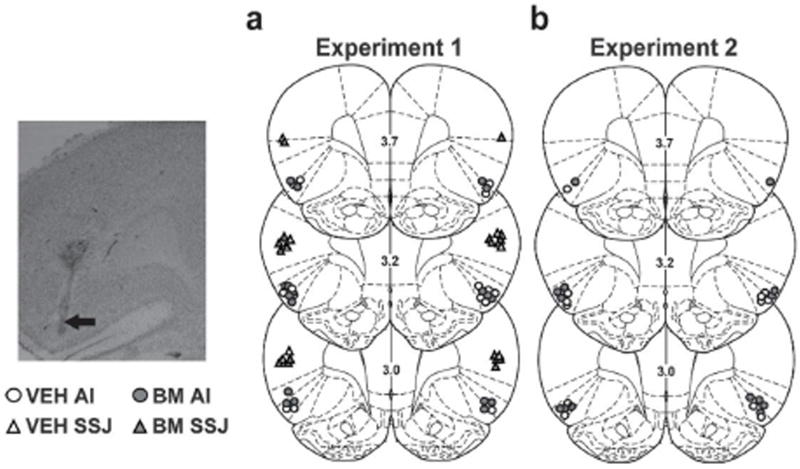
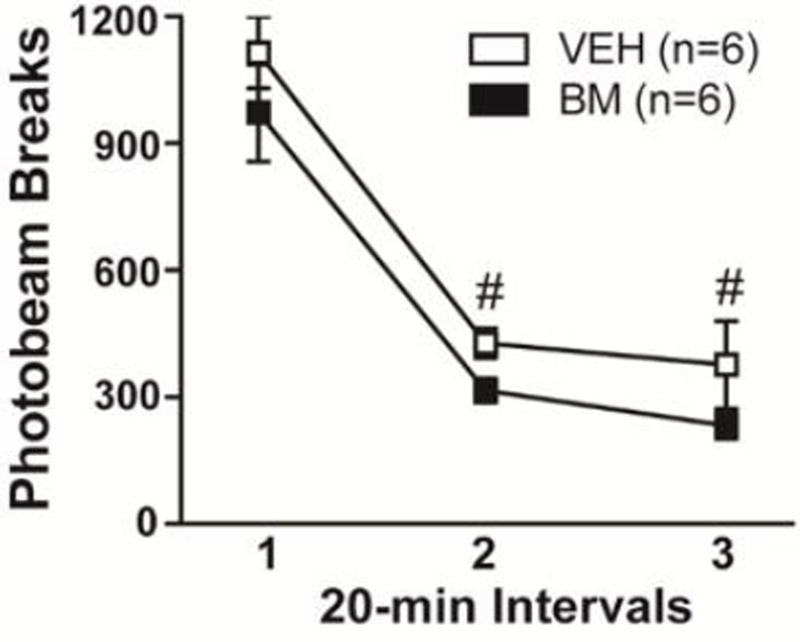
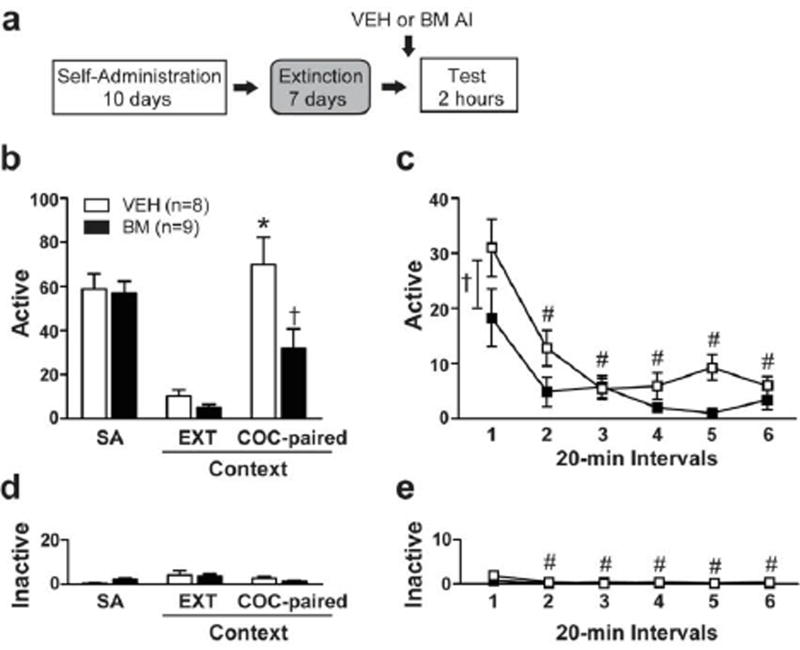
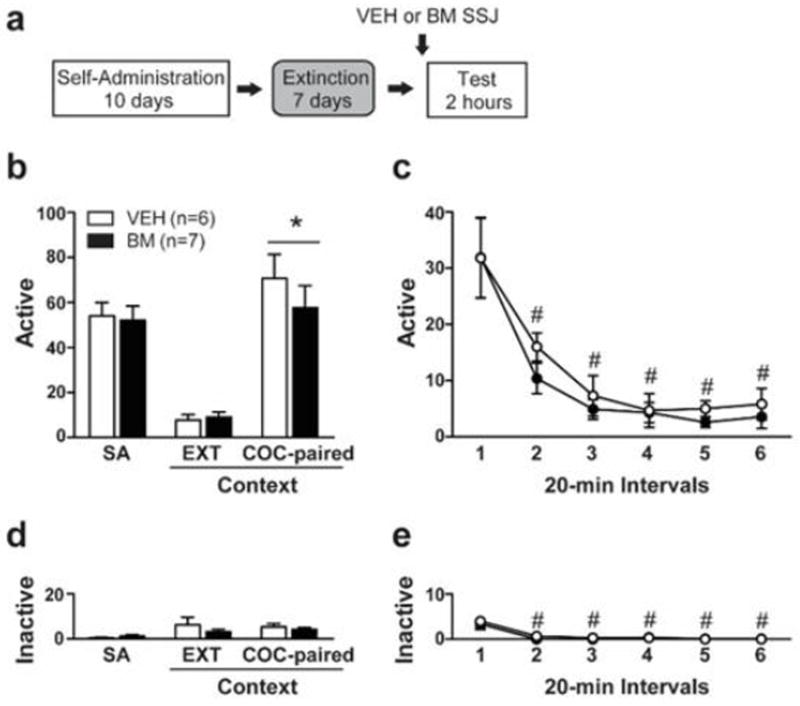
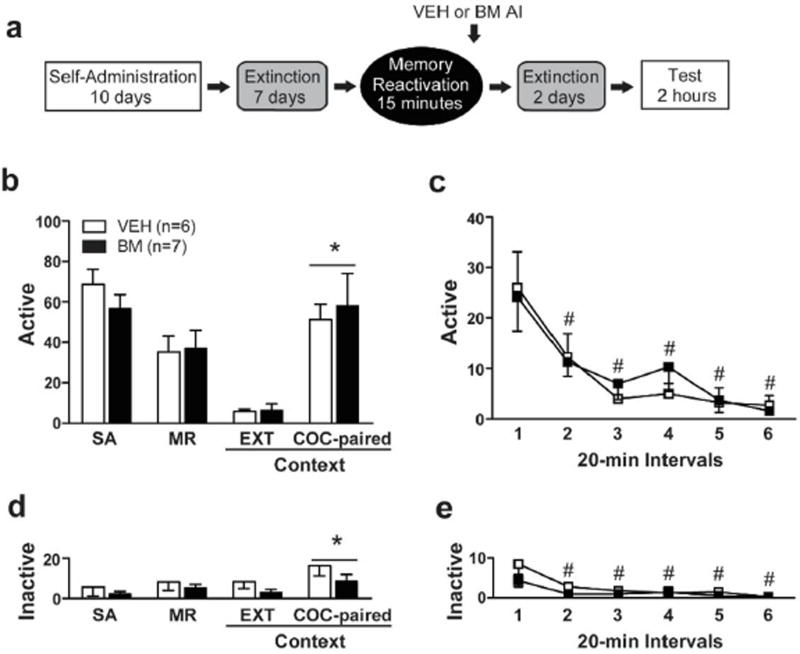
Rats were trained to lever press for cocaine infusions in a distinctive context, followed by extinction training in a different context. Rats in experiment 1 received bilateral microinfusions of vehicle or a GABA agonist cocktail (baclofen and muscimol (BM)) into the AI or the overlying somatosensory cortex (SSJ, anatomical control region) immediately before a test of drug-seeking behavior (i.e., non-reinforced lever presses) in the previously cocaine-paired context. The effects of these manipulations on locomotor activity were also assessed in a novel context. Rats in experiment 2 received vehicle or BM into the AI after a 15-min reexposure to the cocaine-paired context, intended to reactivate context-response-cocaine memories and initiate their reconsolidation. The effects of these manipulations on drug context-induced cocaine-seeking behavior were assessed 72 h later.
BM-induced pharmacological inactivation of the AI, but not the SSJ, attenuated drug context-induced reinstatement of cocaine-seeking behavior without altering locomotor activity. Conversely, AI inactivation after memory reactivation failed to impair subsequent drug-seeking behavior and thus cocaine memory reconsolidation.
These findings suggest that the AI is a critical element of the neural circuitry that mediates contextual control over cocaine-seeking behavior.
环境刺激对药物复发的控制需要检索情境-反应-可卡因关联,这种关联通过主动再巩固过程维持在长期记忆中。从药物成瘾治疗的角度来看,确定这些现象的神经基础很重要。
本研究评估了无颗粒岛叶皮质(AI)是否在药物情境诱导的可卡因寻求行为和可卡因记忆再巩固中起作用。
训练大鼠在独特的情境中按压杠杆以获取可卡因注射,随后在不同的情境中进行消退训练。实验1中的大鼠在对先前与可卡因配对的情境中的药物寻求行为测试(即非强化杠杆按压)之前,立即接受双侧微量注射溶媒或GABA激动剂混合物(巴氯芬和蝇蕈醇(BM))到AI或覆盖的体感皮质(SSJ,解剖学对照区域)。还在新情境中评估了这些操作对运动活动的影响。实验2中的大鼠在重新暴露于与可卡因配对的情境15分钟后接受溶媒或BM注射到AI中,旨在重新激活情境-反应-可卡因记忆并启动其再巩固。72小时后评估这些操作对药物情境诱导的可卡因寻求行为的影响。
BM诱导的AI药理学失活,但不是SSJ,减弱了药物情境诱导的可卡因寻求行为的恢复,而不改变运动活动。相反,记忆重新激活后AI失活未能损害随后的药物寻求行为,因此也未能损害可卡因记忆再巩固。
这些发现表明,AI是介导对可卡因寻求行为的情境控制的神经回路的关键要素。