Thompson J P, Granoff A, Willis D B
Department of Virology and Molecular Biology, St. Jude Children's Research Hospital, Memphis, Tennessee 38101-0318.
J Virol. 1988 Dec;62(12):4680-5. doi: 10.1128/JVI.62.12.4680-4685.1988.
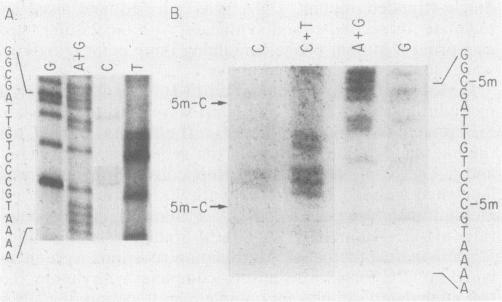
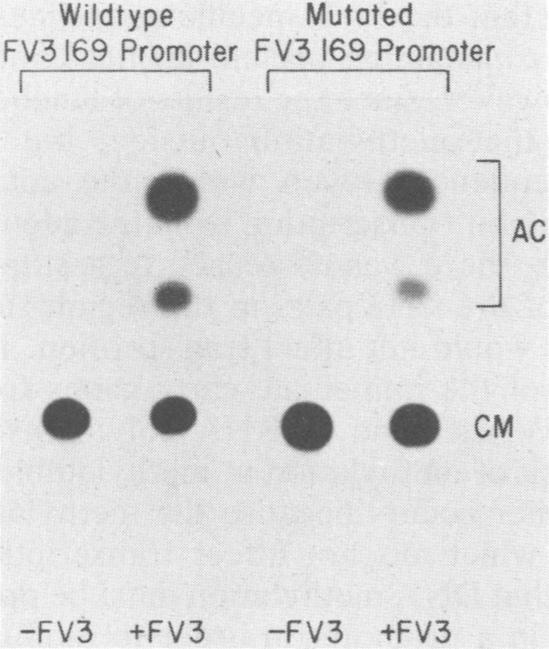
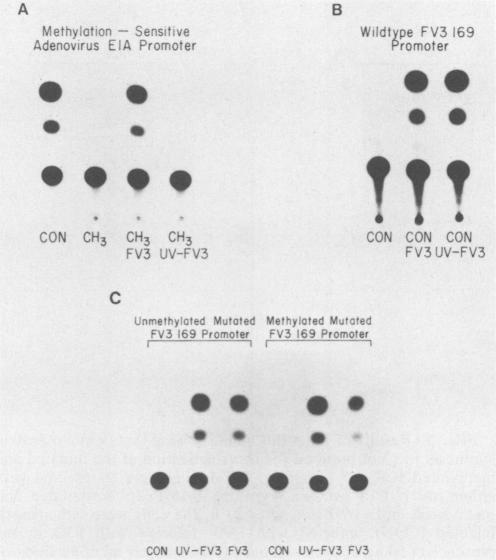
Methylation of critical sites within the promoter region of eucaryotic genes has been shown to inhibit transcription by RNA polymerase II. However, although the large DNA virus frog virus 3 (FV3) has a highly methylated genome, it uses host RNA polymerase II for at least the immediate-early stage of transcription. We have previously shown that an FV3-induced trans-acting protein allows transcription from adenovirus promoters inactivated by methylation. Since FV3 immediate-early genes are transcribed in the absence of de novo protein synthesis, it appears that the virus-induced trans-acting protein that allows transcription from methylated templates is not required for transcription of the immediate-early FV3 genes, possibly because they are not methylated in critical regulatory sequences. In this study, we used site-directed mutagenesis to alter the three CpG dinucleotide sequences in the promoter region of an immediate-early FV3 gene and thereby created sites recognized by bacterial methylases. Transient-expression assays demonstrated that neither the mutations nor methylation of the mutated sites inhibited transcription from the FV3 promoter in FV3-infected cells. These findings support the hypothesis that the immediate-early genes of FV3 do not contain methylatable sites in regions critical for transcription. The function of the virus-induced trans-acting protein that can override the inhibitory effect of methylation may therefore be to facilitate the transcription of methylated delayed-early or late FV3 genes.
真核基因启动子区域内关键位点的甲基化已被证明会抑制RNA聚合酶II的转录。然而,尽管大型DNA病毒蛙病毒3(FV3)具有高度甲基化的基因组,但它至少在转录的早期阶段使用宿主RNA聚合酶II。我们之前已经表明,FV3诱导的反式作用蛋白允许从因甲基化而失活的腺病毒启动子进行转录。由于FV3早期基因在没有从头合成蛋白质的情况下被转录,因此似乎允许从甲基化模板进行转录的病毒诱导反式作用蛋白对于FV3早期基因的转录不是必需的,这可能是因为它们在关键调控序列中没有被甲基化。在本研究中,我们使用定点诱变来改变FV3一个早期基因启动子区域中的三个CpG二核苷酸序列,从而产生细菌甲基化酶识别的位点。瞬时表达分析表明,突变以及突变位点的甲基化均未抑制FV3感染细胞中FV3启动子的转录。这些发现支持了这样的假设,即FV3的早期基因在对转录至关重要的区域不包含可甲基化位点。因此,能够克服甲基化抑制作用的病毒诱导反式作用蛋白的功能可能是促进FV3甲基化的延迟早期或晚期基因的转录。