Goorha R
J Virol. 1981 Jan;37(1):496-9. doi: 10.1128/JVI.37.1.496-499.1981.
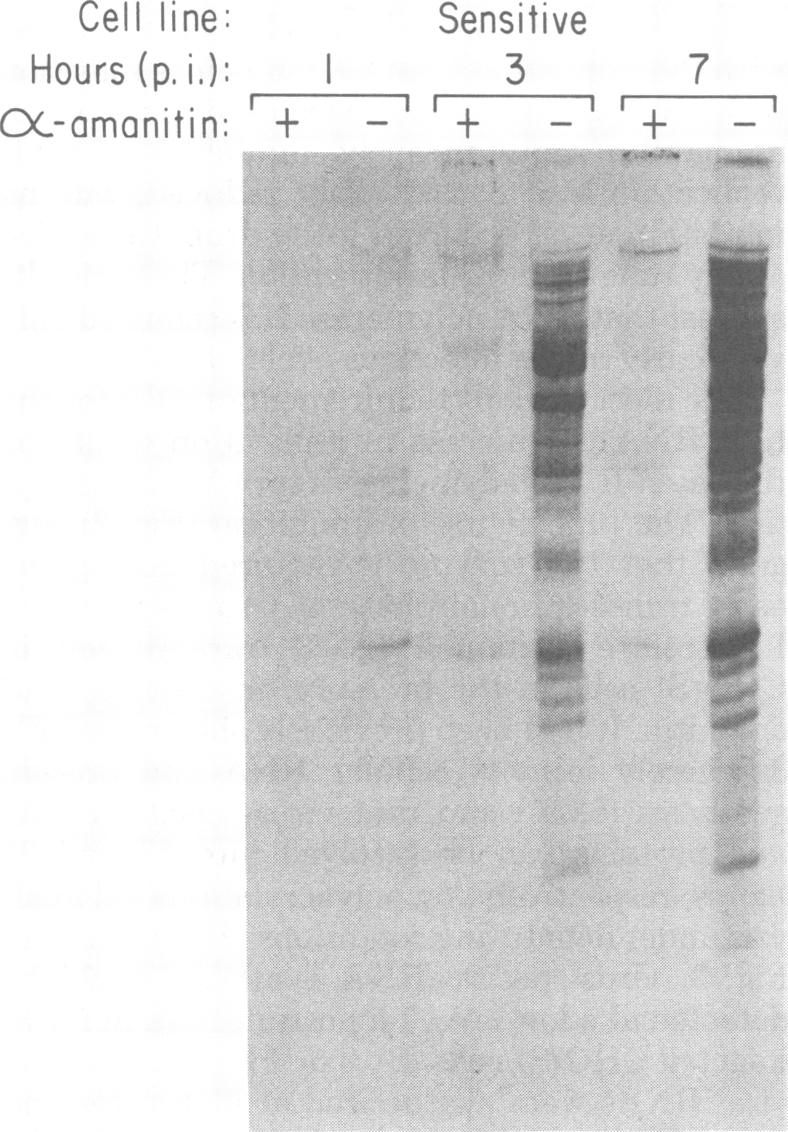
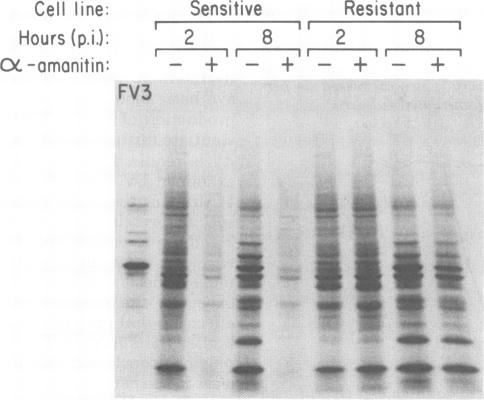
The involvement of host cell RNA polymerase II in the replication of frog virus 3 (FV 3) was examined in alpha-amanitin-sensitive or -resistant Chinese hamster ovary (CHO) cells in the presence and absence of alpha-amanitin. In the presence of alpha-amanitin, FV 3 replicated normally in resistant CHO cells but failed to do so in sensitive CHO cells. Synthesis of virus-specific RNAs and proteins was inhibited in sensitive cells infected in the presence of alpha-amanitin, but in alpha-amanitin-resistant cells, as expected, virus-specific protein synthesis and, by implication, virus-specific RNA synthesis were not affected by the presence of the drug. Inhibition of FV 3 replication was maximum when alpha-amanitin was added to sensitive CHO cells before virus adsorption, but the drug had no effect on virus replication if added after the adsorption. These data indicate that host RNA polymerase II was required for early transcription of the FV 3 genome and confirm a nuclear requirement for FV 3 RNA synthesis (R. Goorha et al., Virology 82:34-52, 1978).
在存在和不存在α-鹅膏蕈碱的情况下,利用对α-鹅膏蕈碱敏感或抗性的中国仓鼠卵巢(CHO)细胞,研究了宿主细胞RNA聚合酶II在蛙病毒3(FV 3)复制中的作用。在存在α-鹅膏蕈碱的情况下,FV 3在抗性CHO细胞中正常复制,但在敏感CHO细胞中则不能。在α-鹅膏蕈碱存在下感染的敏感细胞中,病毒特异性RNA和蛋白质的合成受到抑制,但在α-鹅膏蕈碱抗性细胞中,正如预期的那样,病毒特异性蛋白质合成以及由此推断的病毒特异性RNA合成不受该药物存在的影响。当在病毒吸附前将α-鹅膏蕈碱添加到敏感CHO细胞中时,FV 3复制的抑制作用最大,但如果在吸附后添加该药物,则对病毒复制没有影响。这些数据表明宿主RNA聚合酶II是FV 3基因组早期转录所必需的,并证实了FV 3 RNA合成需要细胞核(R. Goorha等人,《病毒学》82:34 - 52,1978)。