Farana Roman, Jandacka Daniel, Uchytil Jaroslav, Zahradnik David, Irwin Gareth
Department of Human Movement Studies, Human Motion Diagnostic Center, University of Ostrava, Czech Republic.
Sport Biomechanics Research Group, Cardiff School of Sport, Cardiff Metropolitan University, Cardiff, UK.
J Hum Kinet. 2017 Mar 12;56:51-59. doi: 10.1515/hukin-2017-0022. eCollection 2017 Feb.
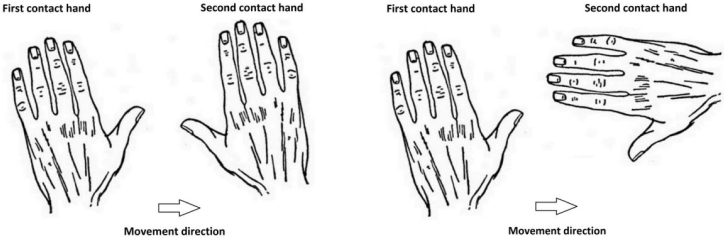
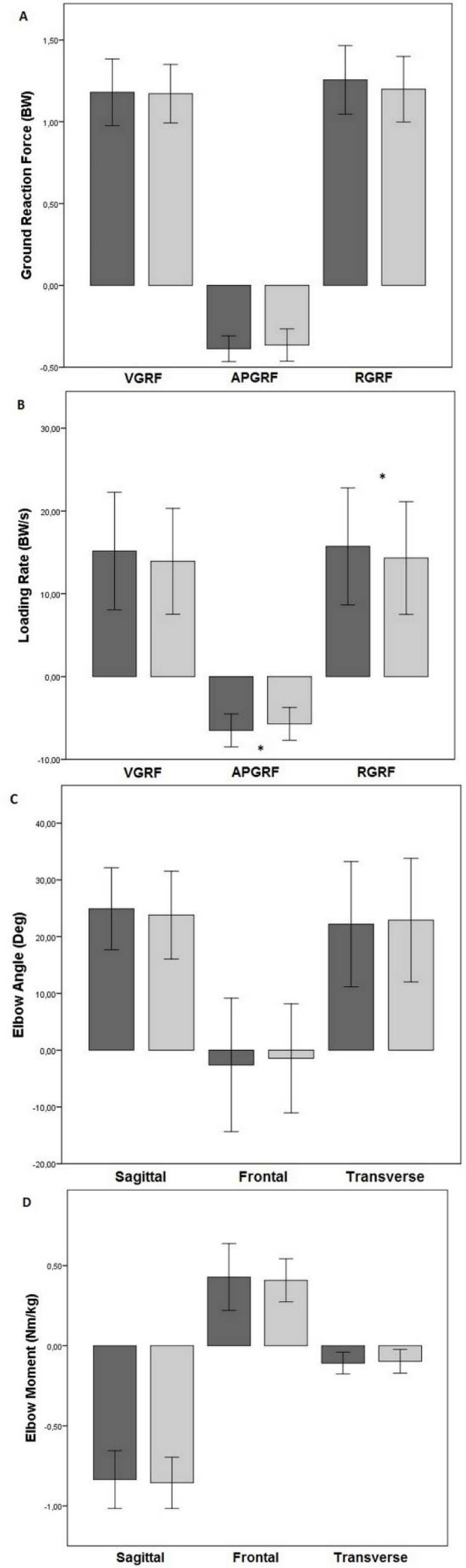
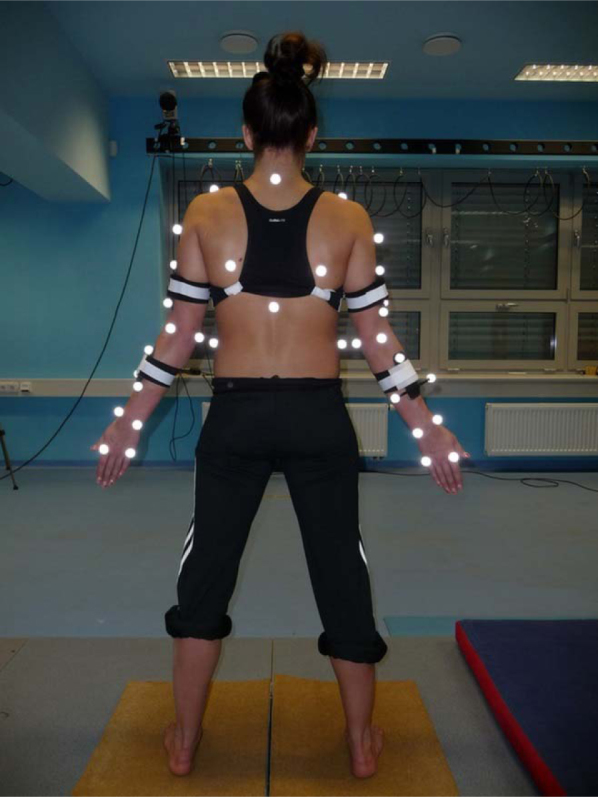
The importance of technique selection on elbow injury risk has been identified for the key round off skill in female gymnastics, with a focus on the second contact limb. The aim of this study was to shift the focus to the first contact limb and investigate the biomechanical injury risk during parallel and T-shape round-off (RO) techniques. Seven international-level female gymnasts performed 10 trials of the RO to back-handspring with parallel and T-shape hand positions. Synchronized kinematic (3D motion analysis system; 247 Hz) and kinetic (two force plates; 1235 Hz) data were collected for each trial. The t-test with effect size statistics determined differences between the two techniques. No significant differences were found for vertical, anterior posterior and resultant ground reaction force, elbow joint kinematics and kinetics. Specifically, the results highlighted that change in technique in RO skills did not influence first contact limb elbow joint mechanics and therefore, injury risk. The findings of the present study suggest the injury potential of this skill is focused on the second limb during the parallel technique of this fundamental gymnastic skill.
对于女子体操中的关键团身翻技术,技术选择对肘部受伤风险的重要性已得到确认,重点在于第二次接触的肢体。本研究的目的是将重点转移到第一次接触的肢体,并调查在并腿和丁字步团身翻(RO)技术过程中的生物力学损伤风险。七名国际水平的女子体操运动员以并腿和丁字步手型进行了10次团身翻接后手翻的试验。每次试验均收集了同步运动学(3D运动分析系统;247Hz)和动力学(两个测力台;1235Hz)数据。采用带有效应量统计的t检验来确定两种技术之间的差异。在垂直、前后和合成地面反作用力、肘关节运动学和动力学方面未发现显著差异。具体而言,结果突出表明,团身翻技术的改变不会影响第一次接触肢体的肘关节力学,因此也不会影响受伤风险。本研究结果表明,在这项基本体操技能的并腿技术中,该技能的受伤可能性集中在第二条肢体上。