Bio-Sciences R&D Division, TCS Innovation Labs, Tata Consultancy Services LimitedPune, India.
Department of Chemical Engineering, Indian Institute of Technology BombayMumbai, India.
Front Cell Infect Microbiol. 2017 Apr 19;7:128. doi: 10.3389/fcimb.2017.00128. eCollection 2017.
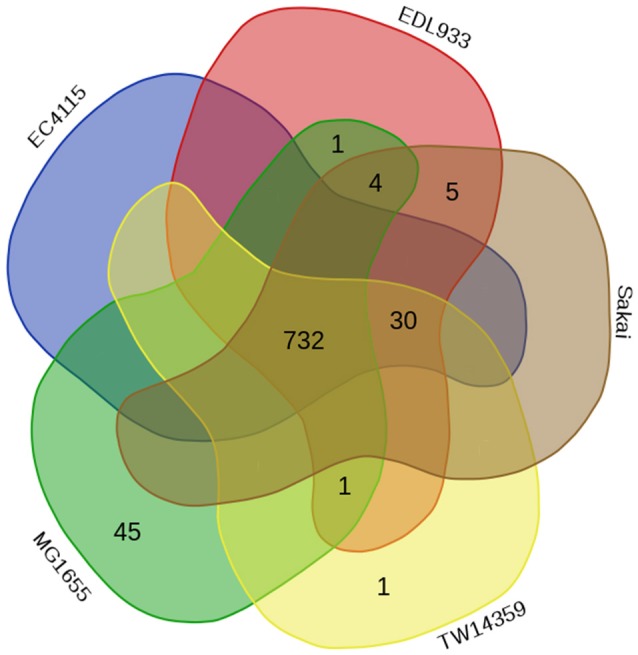
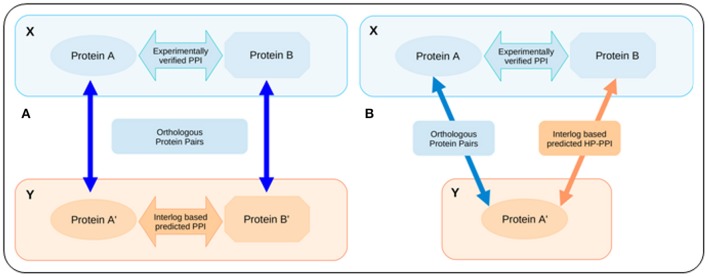
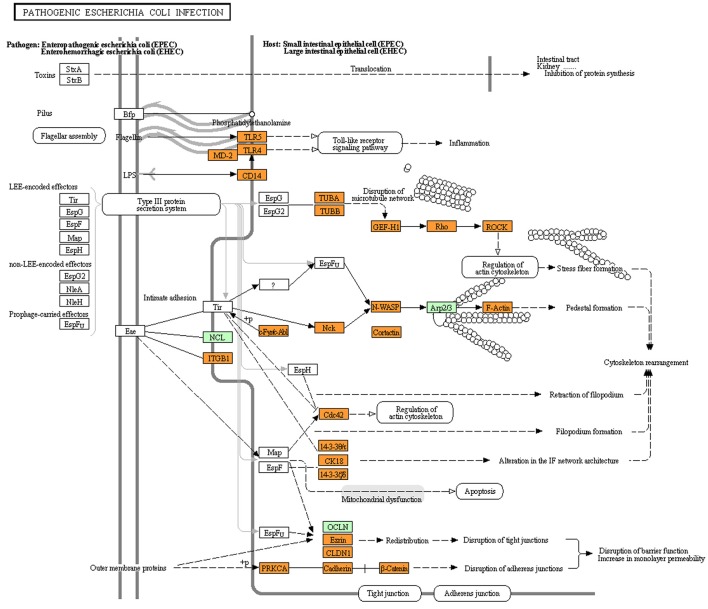
Serotype O157:H7, an enterohemorrhagic (EHEC), is known to cause gastrointestinal and systemic illnesses ranging from diarrhea and hemorrhagic colitis to potentially fatal hemolytic uremic syndrome. Specific genetic factors like , and genes are known to play roles in EHEC pathogenesis. However, these factors are not specific to EHEC and their presence in several non-pathogenic strains indicates that additional factors are involved in pathogenicity. We propose a comprehensive effort to screen for such potential genetic elements, through investigation of biomolecular interactions between and their host. In this work, an investigation of the protein-protein interactions (PPIs) between human cells and four EHEC strains (viz., EDL933, Sakai, EC4115, and TW14359) was performed in order to understand the virulence and host-colonization strategies of these strains. Potential host-pathogen interactions (HPIs) between human cells and the "non-pathogenic" strain MG1655 were also probed to evaluate whether and how the variations in the genomes could translate into altered virulence and host-colonization capabilities of the studied bacterial strains. Results indicate that a small subset of HPIs are unique to the studied pathogens and can be implicated in virulence. This subset of interactions involved proteins like YhdW, ChuT, EivG, and HlyA. These proteins have previously been reported to be involved in bacterial virulence. In addition, clear differences in lineage and clade-specific HPI profiles could be identified. Furthermore, available gene expression profiles of the HPI-proteins were utilized to estimate the proportion of proteins which may be involved in interactions. We hypothesized that a cumulative score of the ratios of bound:unbound proteins (involved in HPIs) would indicate the extent of colonization. Thus, we designed the Host Colonization Index (HCI) measure to determine the host colonization potential of the strains. Pathogenic strains of were observed to have higher HCIs as compared to a non-pathogenic laboratory strain. However, no significant differences among the HCIs of the two pathogenic groups were observed. Overall, our findings are expected to provide additional insights into EHEC pathogenesis and are likely to aid in designing alternate preventive and therapeutic strategies.
血清型 O157:H7,一种肠出血性(EHEC),已知会引起从腹泻和出血性结肠炎到潜在致命性溶血性尿毒综合征等胃肠道和全身性疾病。像 fliC、flhD 和 tir 基因等特定遗传因素已知在 EHEC 发病机制中发挥作用。然而,这些因素并非 EHEC 所特有,它们在几种非致病性菌株中的存在表明,其他因素也参与了致病性。我们建议通过研究宿主与 的生物分子相互作用,全面筛选这些潜在的遗传因素。在这项工作中,我们研究了人类细胞与四种 EHEC 菌株(即 EDL933、Sakai、EC4115 和 TW14359)之间的蛋白质-蛋白质相互作用(PPIs),以了解这些菌株的毒力和宿主定植策略。我们还探测了人类细胞与“非致病性”菌株 MG1655 之间的潜在宿主-病原体相互作用(HPIs),以评估基因组中的变异是否以及如何转化为研究细菌菌株的毒力和宿主定植能力的变化。结果表明,一小部分 HPIs 是研究病原体所特有的,可以暗示其毒力。这组相互作用涉及 YhdW、ChuT、EivG 和 HlyA 等蛋白。这些蛋白先前已被报道与细菌毒力有关。此外,还可以清楚地识别出谱系和支系特异性 HPI 谱的差异。此外,还利用 HPI 蛋白的可用基因表达谱来估计可能参与相互作用的蛋白比例。我们假设,结合/未结合蛋白(参与 HPIs)的比值累积分数将指示定植程度。因此,我们设计了宿主定植指数(HCI)来衡量 菌株的宿主定植潜力。与非致病性实验室菌株相比,观察到致病性 菌株的 HCI 更高。然而,两个致病性群体的 HCI 之间没有观察到显著差异。总的来说,我们的研究结果预计将为 EHEC 发病机制提供更多的见解,并可能有助于设计替代的预防和治疗策略。