Rodriguez Cruz Sandra I, Phillips Marjorie A, Kültz Dietmar, Rice Robert H
Forensic Science Program, University of California, Davis, California, United States of America.
Department of Environmental Toxicology, University of California, Davis, California, United States of America.
PLoS One. 2017 May 4;12(5):e0177016. doi: 10.1371/journal.pone.0177016. eCollection 2017.
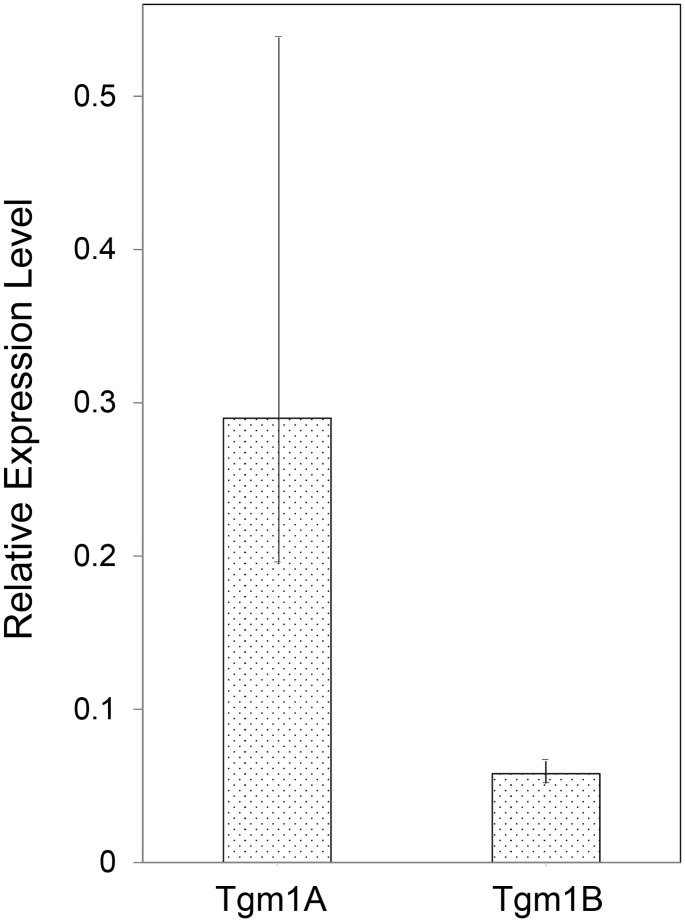
Among the adaptations of aquatic species during evolution of terrestrial tetrapods was the development of an epidermis preventing desiccation. In present day mammals, keratinocytes of the epidermis, using a membrane-bound transglutaminase (Tgm1), accomplish this function by synthesizing a scaffold of cross-linked protein to which a lipid envelope is attached. This study characterizes the abilities of two homologous transglutaminase isozymes in the teleost fish tilapia to form cross-linked protein structures and their expression in certain tissues. Results indicate they are capable of membrane localization and of generating cellular structures resistant to detergent solubilization. They are both expressed in epithelial cells of the lip, buccal cavity and tips of gill filaments. Adaptation of transglutaminase use in evolution of terrestrial keratinocytes evidently involved refinements in tissue expression, access to suitable substrate proteins and activation of cross-linking during terminal differentiation.
在陆生四足动物进化过程中,水生物种的适应性变化之一是发展出一种防止脱水的表皮。在现代哺乳动物中,表皮的角质形成细胞利用一种膜结合转谷氨酰胺酶(Tgm1),通过合成一种附着有脂质包膜的交联蛋白支架来实现这一功能。本研究描述了硬骨鱼罗非鱼中两种同源转谷氨酰胺酶同工酶形成交联蛋白结构的能力及其在某些组织中的表达。结果表明,它们能够定位于细胞膜,并能生成抗去污剂溶解的细胞结构。它们在嘴唇、口腔和鳃丝尖端的上皮细胞中均有表达。在陆生角质形成细胞的进化过程中,转谷氨酰胺酶使用的适应性变化显然涉及组织表达的优化、获得合适的底物蛋白以及终末分化过程中交联的激活。