Griffiths Stephen R, Rowland Jessica A, Briscoe Natalie J, Lentini Pia E, Handasyde Kathrine A, Lumsden Linda F, Robert Kylie A
Department of Ecology, Environment and Evolution, La Trobe University, Bundoora, Victoria, Australia.
School of BioSciences, The University of Melbourne, Parkville, Victoria, Australia.
PLoS One. 2017 May 4;12(5):e0176951. doi: 10.1371/journal.pone.0176951. eCollection 2017.
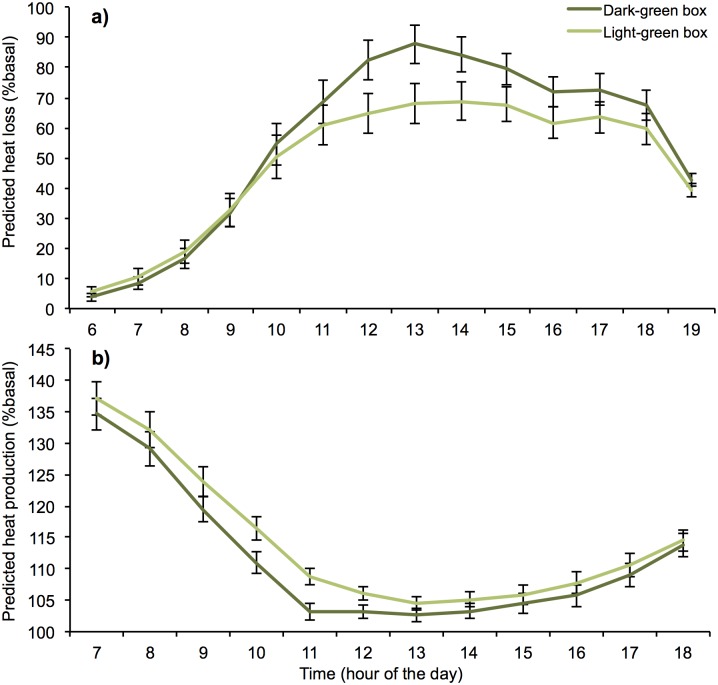
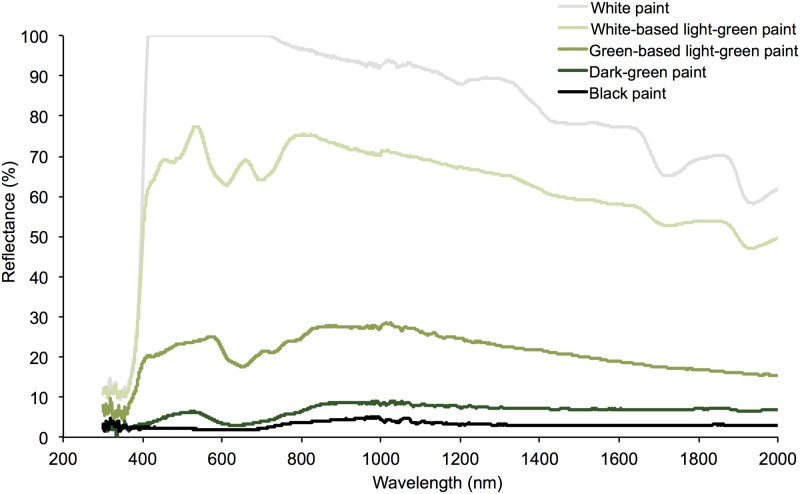
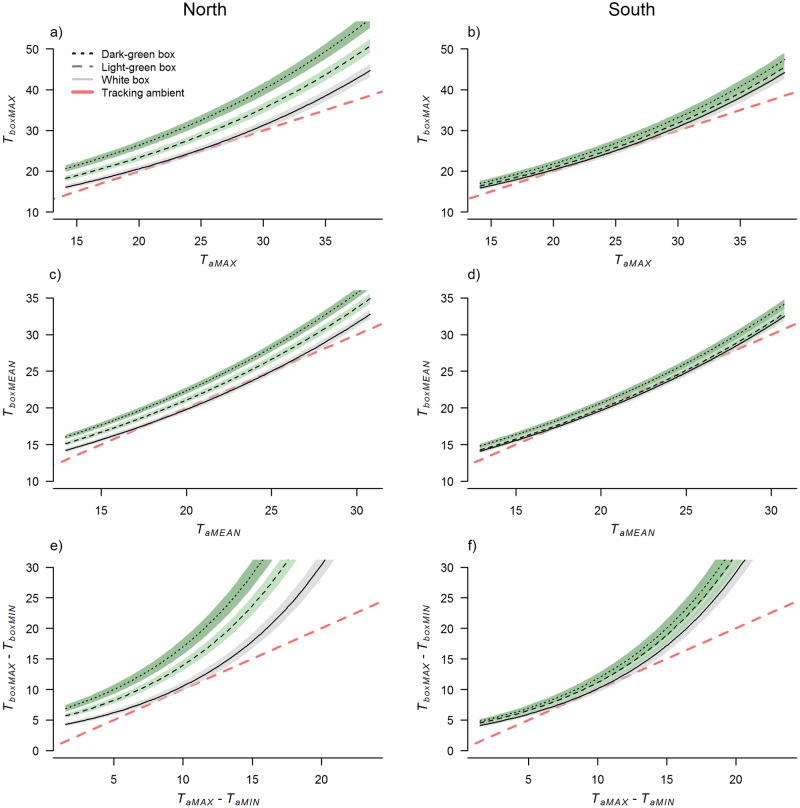
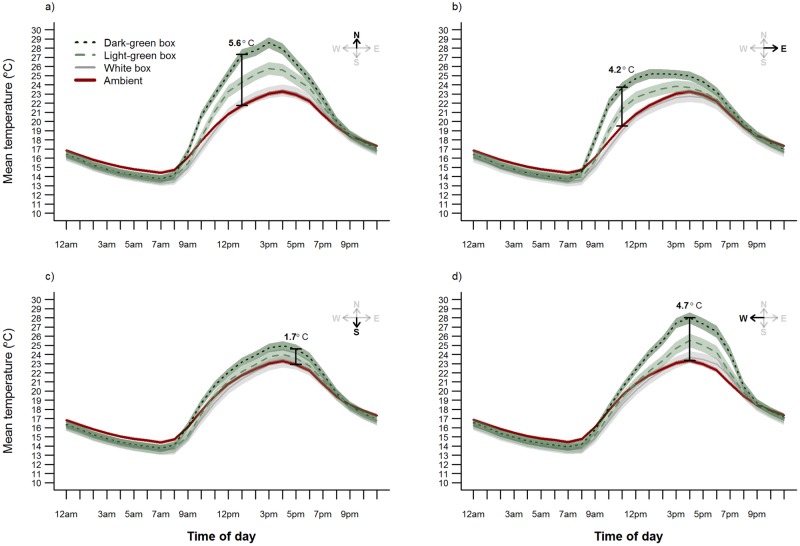
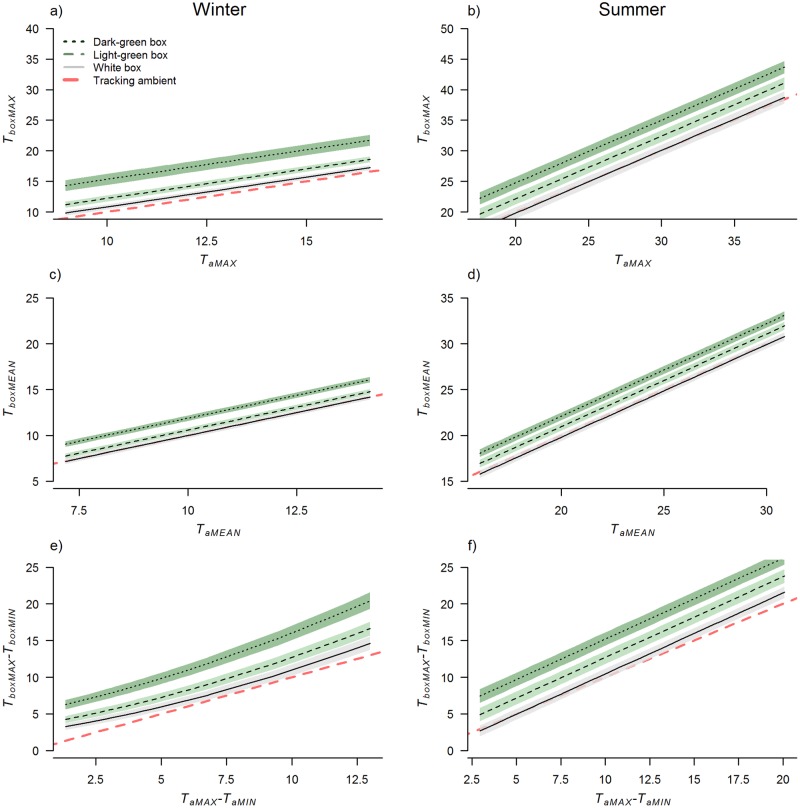
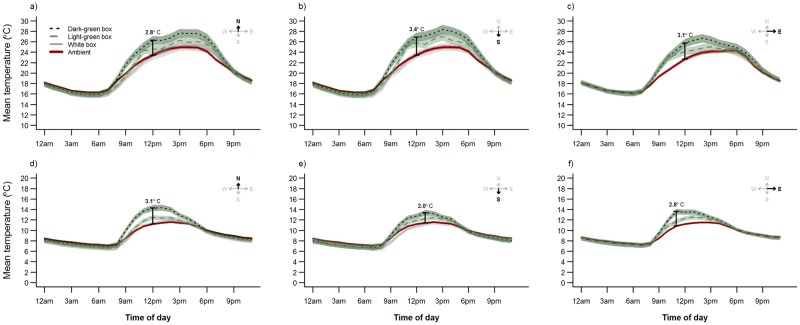
Thermal properties of tree hollows play a major role in survival and reproduction of hollow-dependent fauna. Artificial hollows (nest boxes) are increasingly being used to supplement the loss of natural hollows; however, the factors that drive nest box thermal profiles have received surprisingly little attention. We investigated how differences in surface reflectance influenced temperature profiles of nest boxes painted three different colors (dark-green, light-green, and white: total solar reflectance 5.9%, 64.4%, and 90.3% respectively) using boxes designed for three groups of mammals: insectivorous bats, marsupial gliders and brushtail possums. Across the three different box designs, dark-green (low reflectance) boxes experienced the highest average and maximum daytime temperatures, had the greatest magnitude of variation in daytime temperatures within the box, and were consistently substantially warmer than light-green boxes (medium reflectance), white boxes (high reflectance), and ambient air temperatures. Results from biophysical model simulations demonstrated that variation in diurnal temperature profiles generated by painting boxes either high or low reflectance colors could have significant ecophysiological consequences for animals occupying boxes, with animals in dark-green boxes at high risk of acute heat-stress and dehydration during extreme heat events. Conversely in cold weather, our modelling indicated that there are higher cumulative energy costs for mammals, particularly smaller animals, occupying light-green boxes. Given their widespread use as a conservation tool, we suggest that before boxes are installed, consideration should be given to the effect of color on nest box temperature profiles, and the resultant thermal suitability of boxes for wildlife, particularly during extremes in weather. Managers of nest box programs should consider using several different colors and installing boxes across a range of both orientations and shade profiles (i.e., levels of canopy cover), to ensure target animals have access to artificial hollows with a broad range of thermal profiles, and can therefore choose boxes with optimal thermal conditions across different seasons.
树洞的热特性对依赖树洞生存的动物的存活和繁殖起着重要作用。人工树洞(巢箱)正越来越多地被用于补充自然树洞的损失;然而,驱动巢箱热状况的因素却出人意料地很少受到关注。我们使用为三类哺乳动物设计的巢箱,研究了表面反射率的差异如何影响涂有三种不同颜色(深绿色、浅绿色和白色:总太阳反射率分别为5.9%、64.4%和90.3%)的巢箱的温度状况。在三种不同的箱型设计中,深绿色(低反射率)的巢箱白天平均温度和最高温度最高,箱内白天温度变化幅度最大,并且始终比浅绿色箱(中等反射率)、白色箱(高反射率)和环境空气温度明显更高。生物物理模型模拟结果表明,将巢箱涂成高反射率或低反射率颜色所产生的昼夜温度状况变化,可能会对占据巢箱的动物产生重大的生态生理影响,在极端高温事件期间,深绿色巢箱中的动物面临急性热应激和脱水的高风险。相反,在寒冷天气下,我们的模型表明,占据浅绿色巢箱的哺乳动物,尤其是较小的动物,累积能量成本更高。鉴于巢箱作为一种保护工具被广泛使用,我们建议在安装巢箱之前,应考虑颜色对巢箱温度状况的影响,以及由此产生的巢箱对野生动物的热适宜性,特别是在极端天气期间。巢箱项目的管理者应考虑使用几种不同颜色,并在一系列不同方位和树荫状况(即树冠覆盖水平)下安装巢箱,以确保目标动物能够使用具有广泛热状况的人工树洞,从而能够在不同季节选择热条件最佳的巢箱。