Avelar Silvania, van der Voort Tessa S, Eglinton Timothy I
Geological Institute, ETH Zurich, Sonneggstr. 5, 8092, Zurich, Switzerland.
Marine Chemistry & Geochemistry Department, Woods Hole Oceanographic Institution, Woods Hole, MA, 02543, USA.
Carbon Balance Manag. 2017 Dec;12(1):10. doi: 10.1186/s13021-017-0077-x. Epub 2017 May 10.
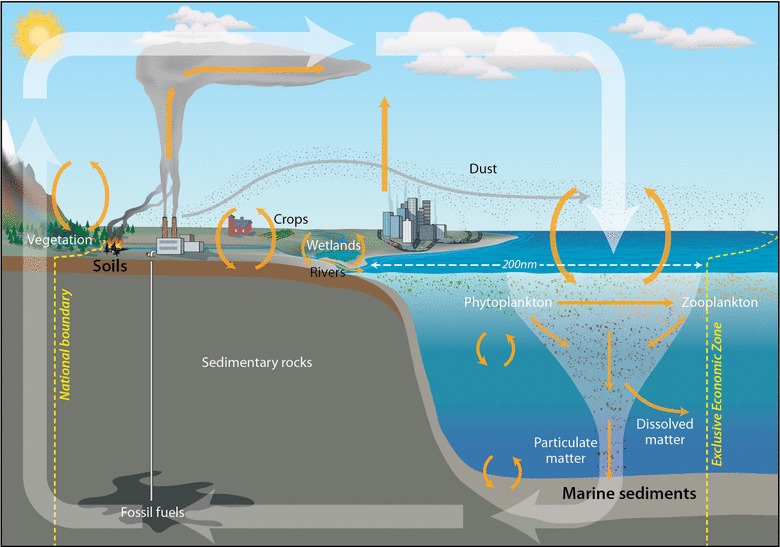
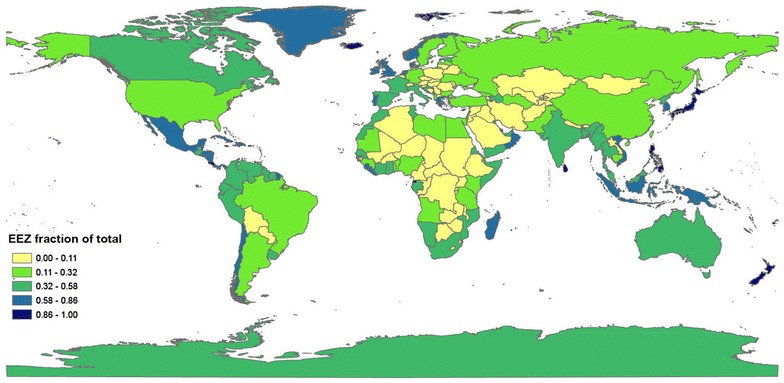
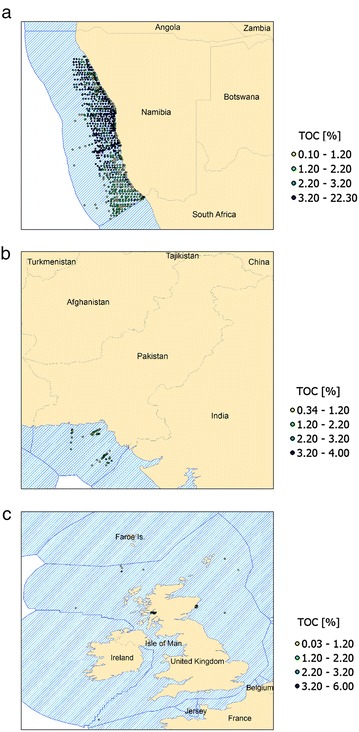
Determining national carbon stocks is essential in the framework of ongoing climate change mitigation actions. Presently, assessment of carbon stocks in the context of greenhouse gas (GHG)-reporting on a nation-by-nation basis focuses on the terrestrial realm, i.e., carbon held in living plant biomass and soils, and on potential changes in these stocks in response to anthropogenic activities. However, while the ocean and underlying sediments store substantial quantities of carbon, this pool is presently not considered in the context of national inventories. The ongoing disturbances to both terrestrial and marine ecosystems as a consequence of food production, pollution, climate change and other factors, as well as alteration of linkages and C-exchange between continental and oceanic realms, highlight the need for a better understanding of the quantity and vulnerability of carbon stocks in both systems. We present a preliminary comparison of the stocks of organic carbon held in continental margin sediments within the Exclusive Economic Zone of maritime nations with those in their soils. Our study focuses on Namibia, where there is a wealth of marine sediment data, and draws comparisons with sediment data from two other countries with different characteristics, which are Pakistan and the United Kingdom.
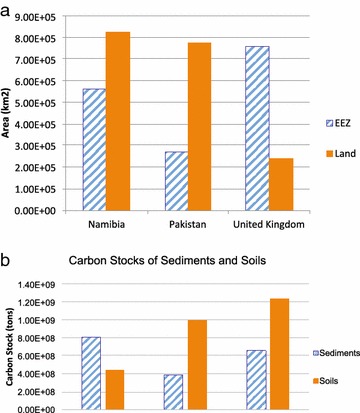
Results indicate that marine sediment carbon stocks in maritime nations can be similar in magnitude to those of soils. Therefore, if human activities in these areas are managed, carbon stocks in the oceanic realm-particularly over continental margins-could be considered as part of national GHG inventories.
This study shows that marine sediment organic carbon stocks can be equal in size or exceed terrestrial carbon stocks of maritime nations. This provides motivation both for improved assessment of sedimentary carbon inventories and for reevaluation of the way that carbon stocks are assessed and valued. The latter carries potential implications for the management of human activities on coastal environments and for their GHG inventories.
在当前的气候变化减缓行动框架中,确定国家碳储量至关重要。目前,在逐个国家进行温室气体(GHG)报告的背景下,碳储量评估主要集中在陆地领域,即活植物生物量和土壤中储存的碳,以及这些储量因人为活动而可能发生的变化。然而,尽管海洋及其下伏沉积物储存了大量碳,但目前在国家清单的背景下并未考虑这一碳库。由于粮食生产、污染、气候变化和其他因素,陆地和海洋生态系统持续受到干扰,以及大陆和海洋领域之间联系和碳交换的改变,凸显了更好地了解这两个系统中碳储量的数量和脆弱性的必要性。我们对海洋国家专属经济区内大陆边缘沉积物中有机碳储量与土壤中的有机碳储量进行了初步比较。我们的研究聚焦于纳米比亚,该国拥有丰富的海洋沉积物数据,并与另外两个具有不同特征的国家(巴基斯坦和英国)的沉积物数据进行了比较。
结果表明,海洋国家的海洋沉积物碳储量在数量上可能与土壤碳储量相似。因此,如果对这些地区的人类活动进行管理,海洋领域(特别是大陆边缘)的碳储量可被视为国家温室气体清单的一部分。
本研究表明,海洋沉积物有机碳储量可能与海洋国家的陆地碳储量相当或超过陆地碳储量。这为改进沉积碳清单评估以及重新评估碳储量的评估和估值方式提供了动力。后者对沿海环境人类活动管理及其温室气体清单具有潜在影响。