Chemical Engineering and Materials Science, University of Minnesota-Twin Cities, Minneapolis, Minnesota 55455, USA.
Department of Energy, Environmental, and Chemical Engineering, Washington University, St Louis, Missouri 63130, USA.
Nat Commun. 2017 May 5;8:15167. doi: 10.1038/ncomms15167.
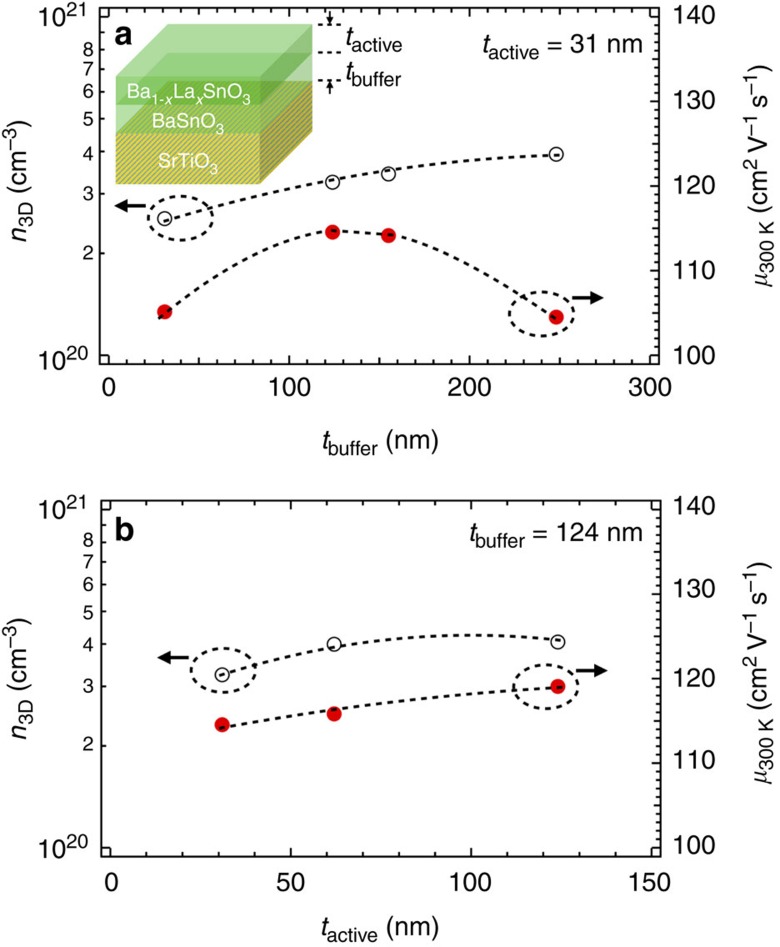
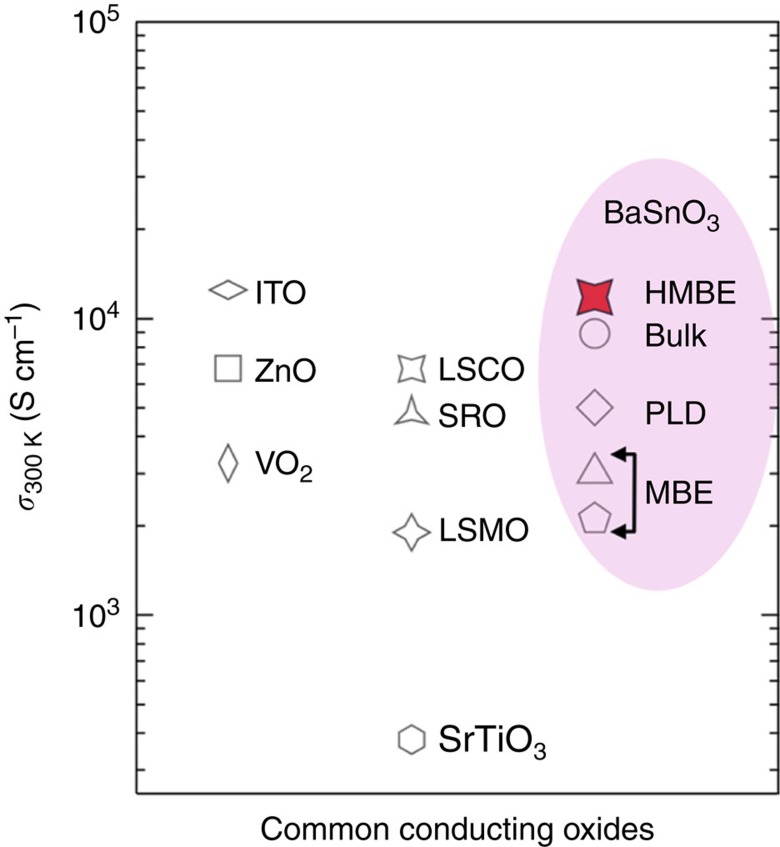
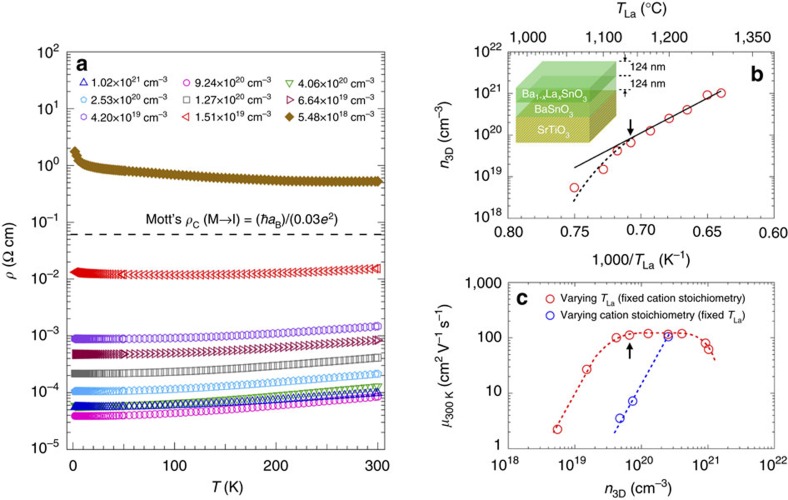
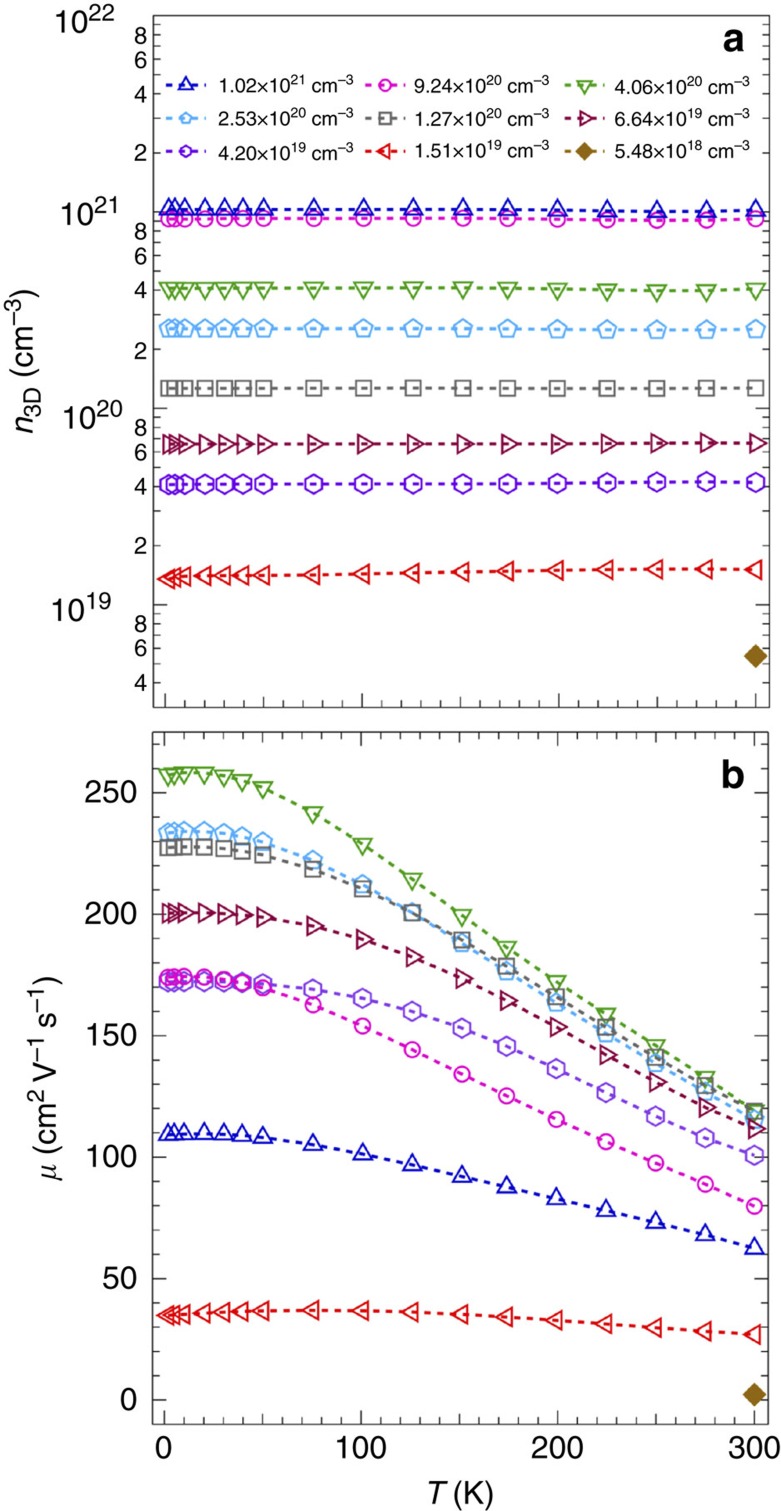
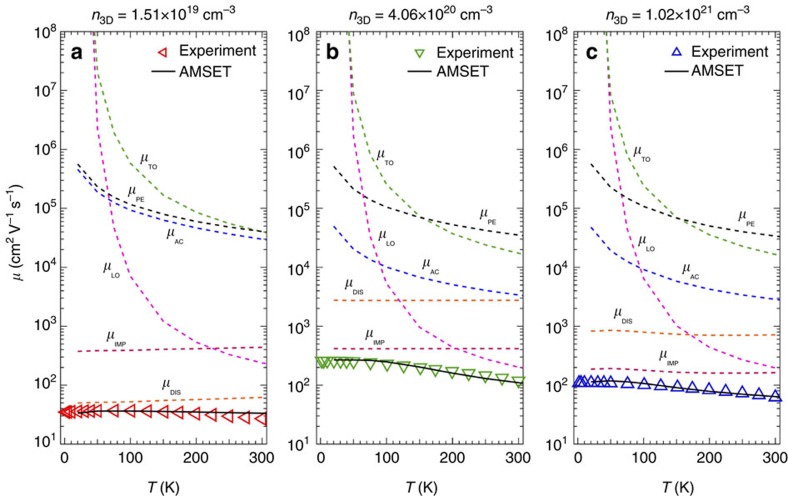
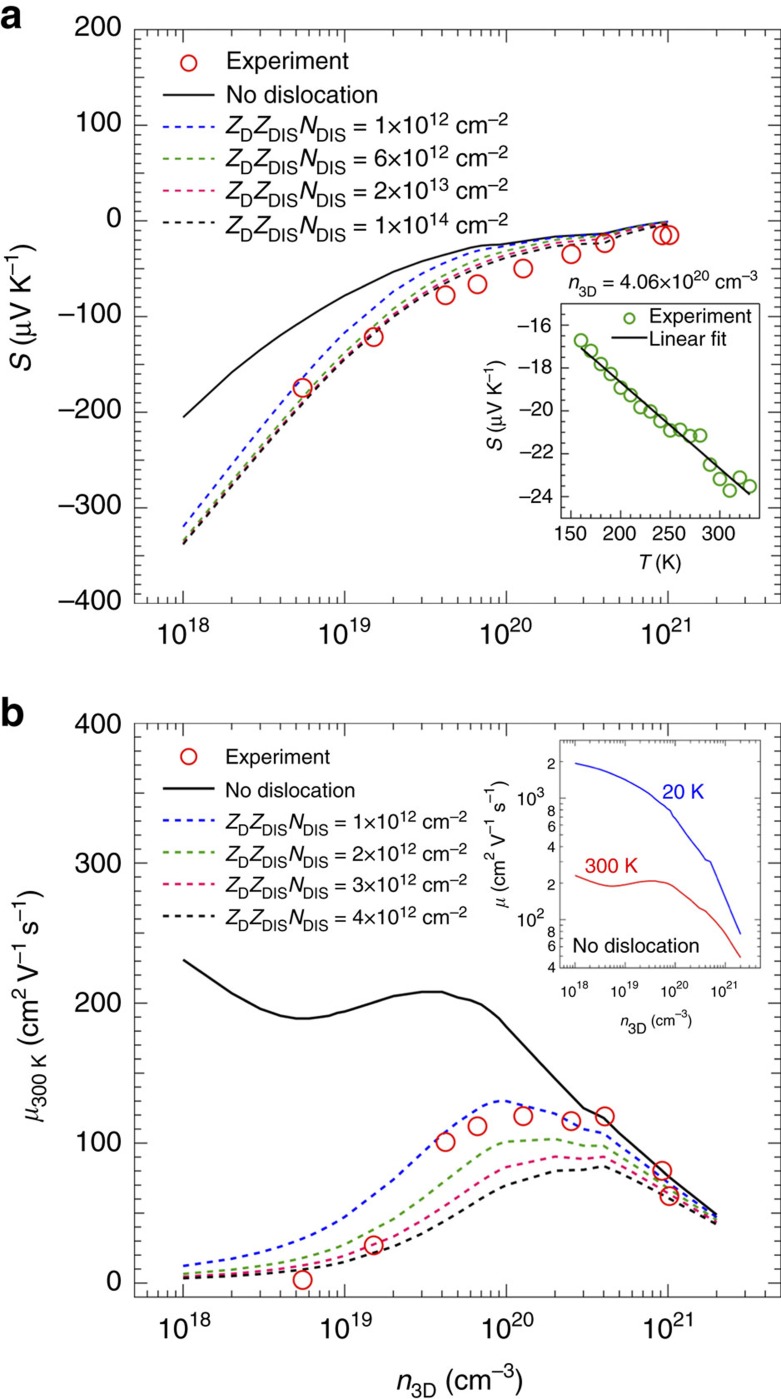
Wide bandgap perovskite oxides with high room temperature conductivities and structural compatibility with a diverse family of organic/inorganic perovskite materials are of significant interest as transparent conductors and as active components in power electronics. Such materials must also possess high room temperature mobility to minimize power consumption and to enable high-frequency applications. Here, we report n-type BaSnO films grown using hybrid molecular beam epitaxy with room temperature conductivity exceeding 10 S cm. Significantly, these films show room temperature mobilities up to 120 cm V s even at carrier concentrations above 3 × 10 cm together with a wide bandgap (3 eV). We examine the mobility-limiting scattering mechanisms by calculating temperature-dependent mobility, and Seebeck coefficient using the Boltzmann transport framework and ab-initio calculations. These results place perovskite oxide semiconductors for the first time on par with the highly successful III-N system, thereby bringing all-transparent, high-power oxide electronics operating at room temperature a step closer to reality.
宽带隙钙钛矿氧化物具有高的室温电导率和与各种有机/无机钙钛矿材料的结构兼容性,作为透明导体和在电力电子学中的有源元件具有重要意义。这些材料还必须具有高的室温迁移率,以最小化功耗并实现高频应用。在这里,我们报告了使用杂化分子束外延生长的 n 型 BaSnO 薄膜,其室温电导率超过 10 S cm。值得注意的是,这些薄膜在载流子浓度高于 3×10 cm 时,室温迁移率高达 120 cm V s ,同时具有宽的能带隙(3 eV)。我们通过使用玻尔兹曼输运框架和从头计算来计算温度相关的迁移率和 Seebeck 系数,来研究限制迁移率的散射机制。这些结果首次使钙钛矿氧化物半导体与非常成功的 III-N 系统相媲美,从而使全透明、高功率氧化物电子学在室温下的应用更接近现实。