Sinturel Flore, Gerber Alan, Mauvoisin Daniel, Wang Jingkui, Gatfield David, Stubblefield Jeremy J, Green Carla B, Gachon Frédéric, Schibler Ueli
Department of Molecular Biology, Sciences III, University of Geneva, iGE3, 1211 Geneva, Switzerland.
Institute of Bioengineering, School of Life Sciences, Ecole Polytechnique Fédérale de Lausanne, 1015 Lausanne, Switzerland; Department of Diabetes and Circadian Rhythms, Nestlé Institute of Health Sciences, 1015 Lausanne, Switzerland.
Cell. 2017 May 4;169(4):651-663.e14. doi: 10.1016/j.cell.2017.04.015.
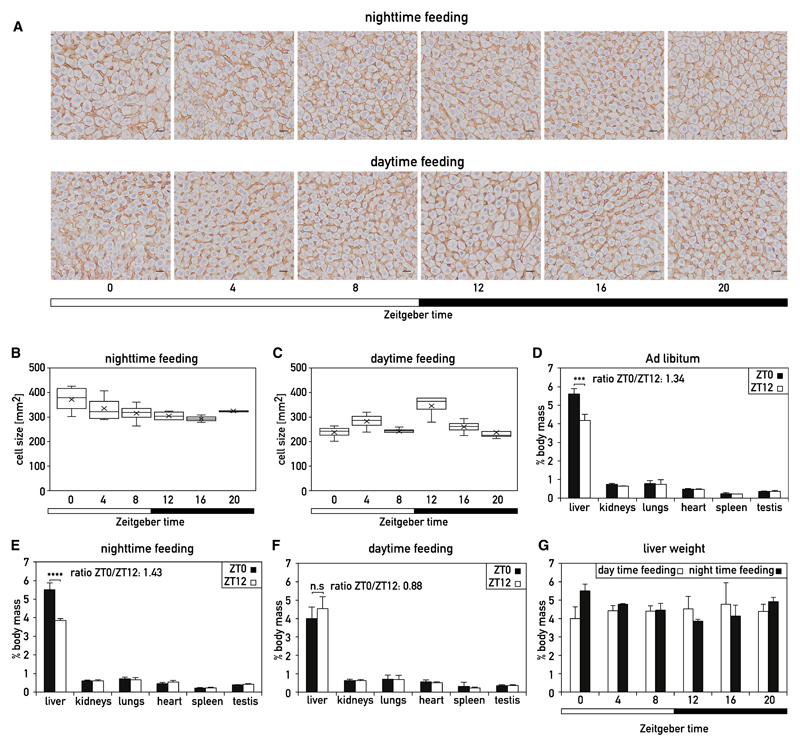
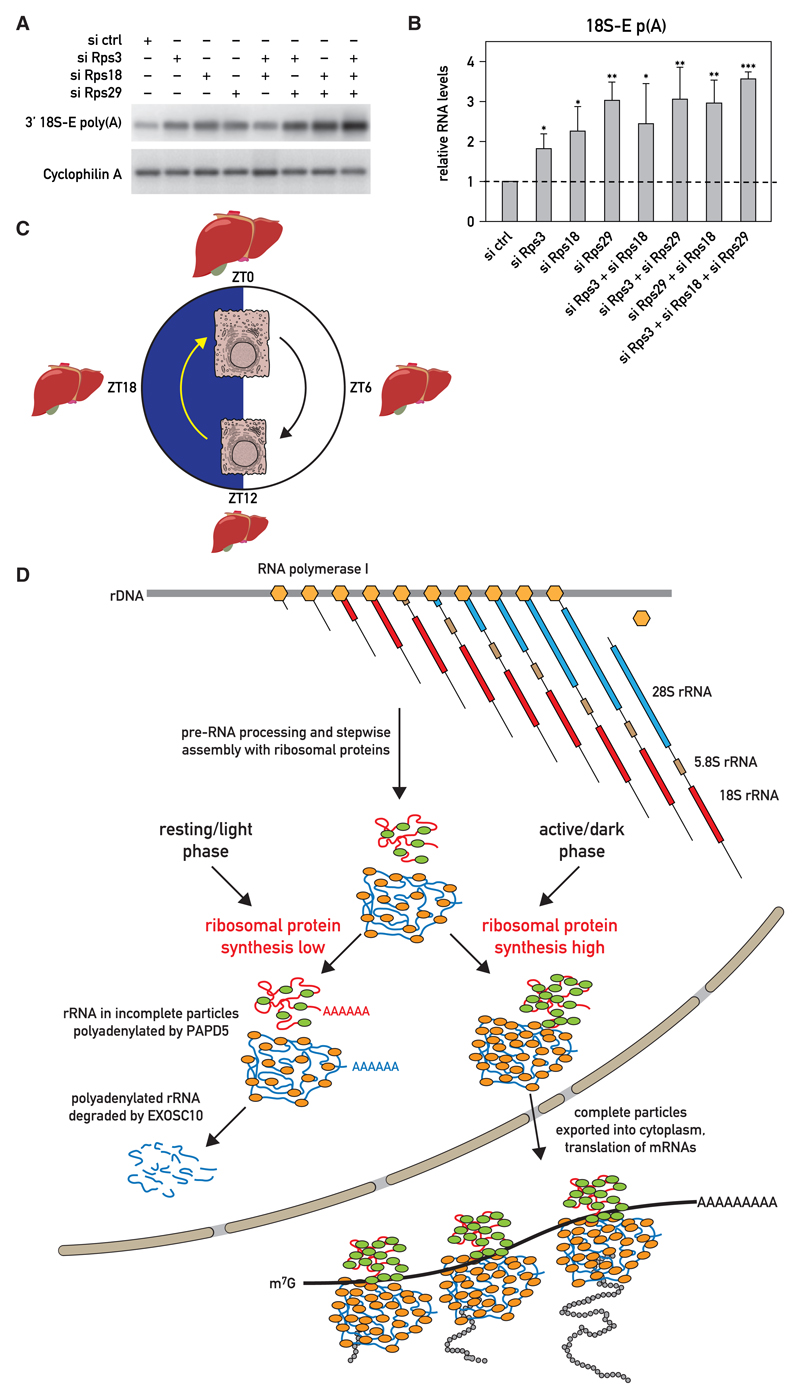
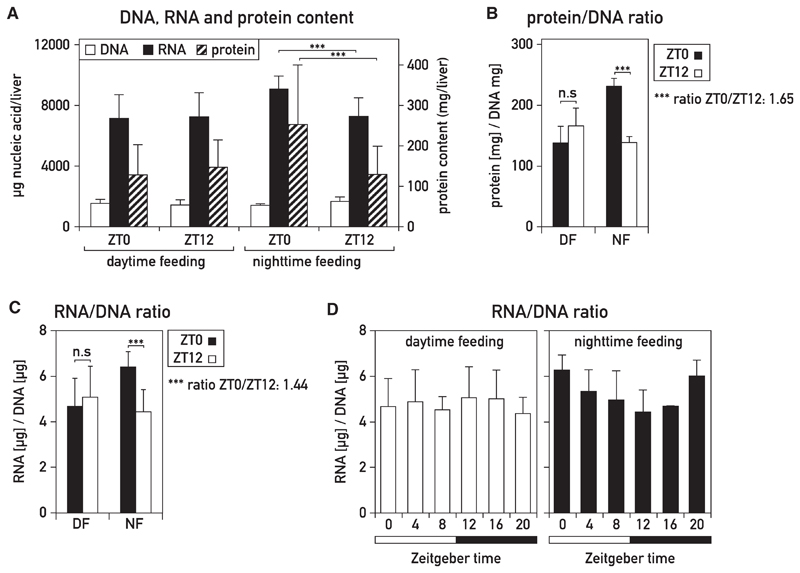
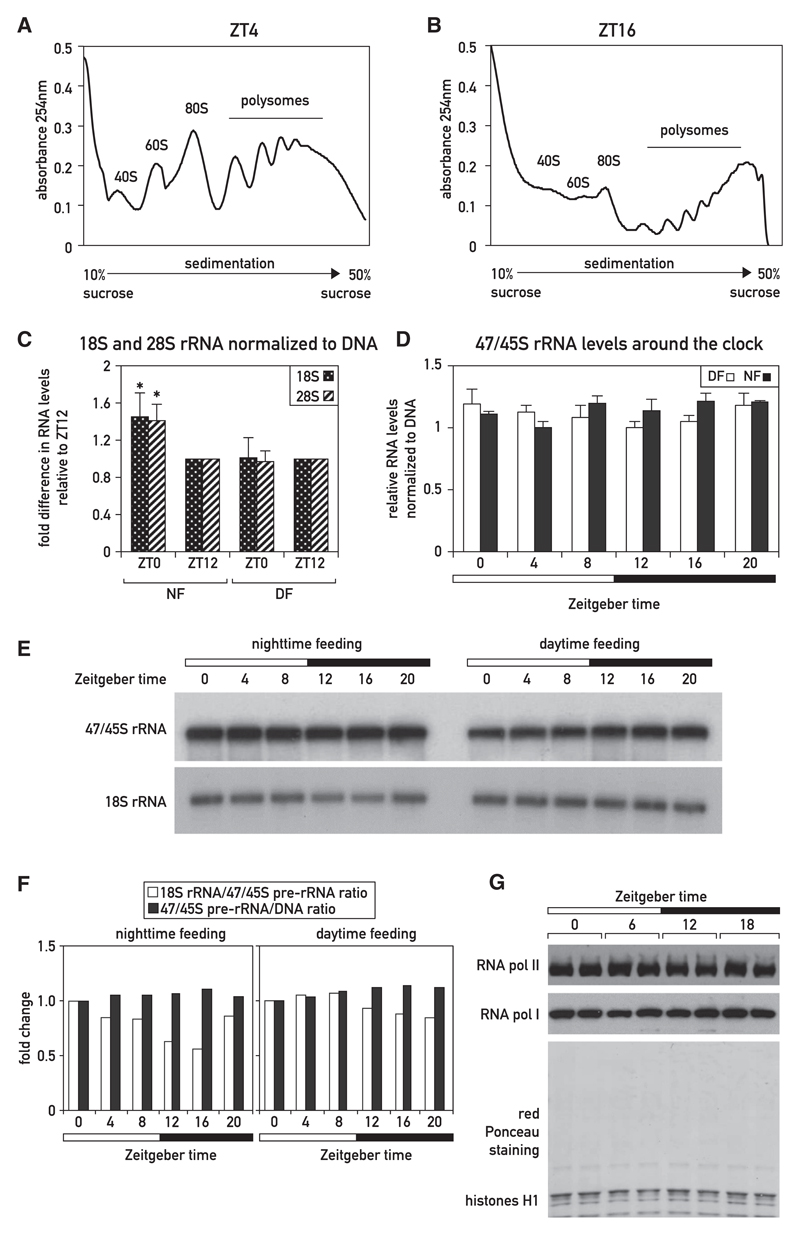
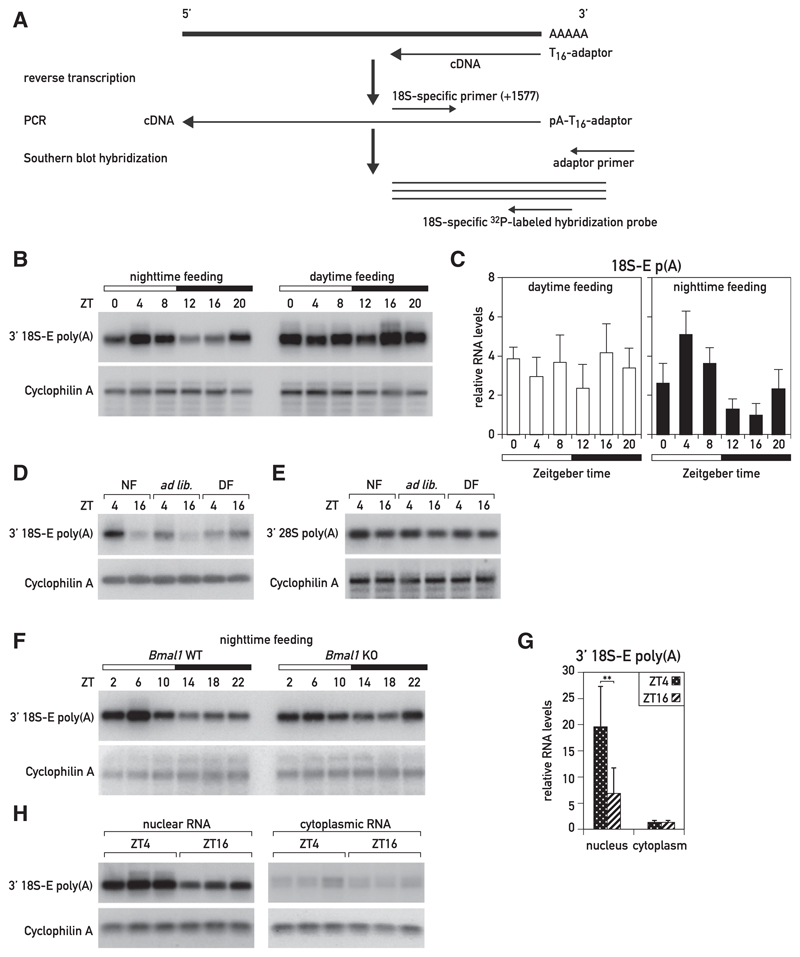
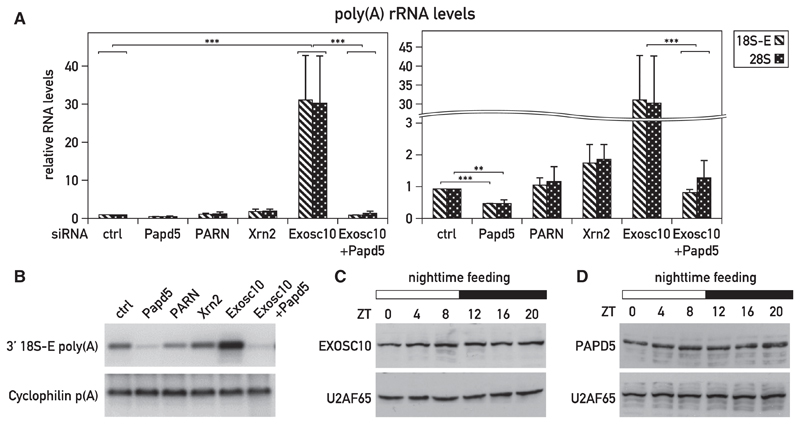
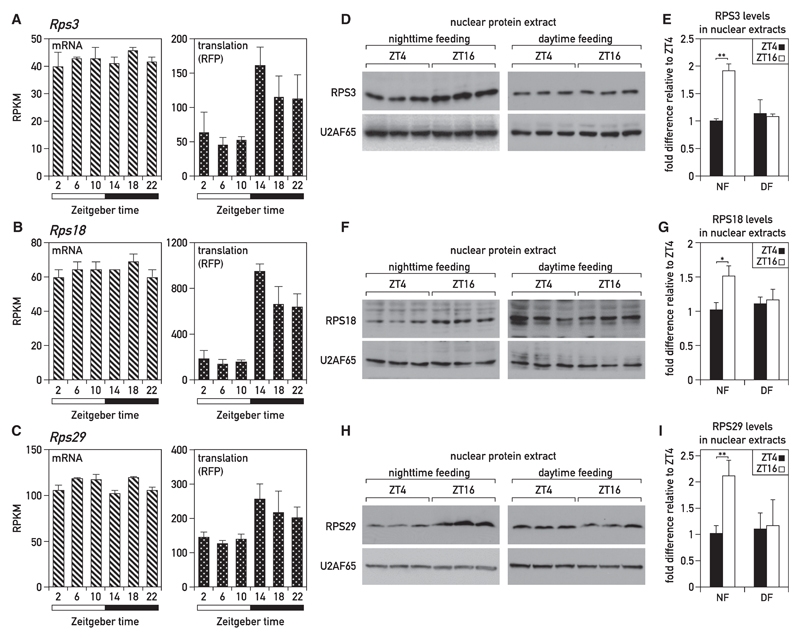
The liver plays a pivotal role in metabolism and xenobiotic detoxification, processes that must be particularly efficient when animals are active and feed. A major question is how the liver adapts to these diurnal changes in physiology. Here, we show that, in mice, liver mass, hepatocyte size, and protein levels follow a daily rhythm, whose amplitude depends on both feeding-fasting and light-dark cycles. Correlative evidence suggests that the daily oscillation in global protein accumulation depends on a similar fluctuation in ribosome number. Whereas rRNA genes are transcribed at similar rates throughout the day, some newly synthesized rRNAs are polyadenylated and degraded in the nucleus in a robustly diurnal fashion with a phase opposite to that of ribosomal protein synthesis. Based on studies with cultured fibroblasts, we propose that rRNAs not packaged into complete ribosomal subunits are polyadenylated by the poly(A) polymerase PAPD5 and degraded by the nuclear exosome.
肝脏在新陈代谢和外源性物质解毒过程中发挥着关键作用,当动物活跃并进食时,这些过程必须特别高效。一个主要问题是肝脏如何适应这些生理上的昼夜变化。在这里,我们表明,在小鼠中,肝脏质量、肝细胞大小和蛋白质水平遵循每日节律,其幅度取决于进食-禁食和光-暗周期。相关证据表明,全球蛋白质积累的每日振荡取决于核糖体数量的类似波动。虽然rRNA基因在一天中以相似的速率转录,但一些新合成的rRNA在细胞核中以强烈的昼夜方式进行多聚腺苷酸化和降解,其相位与核糖体蛋白质合成的相位相反。基于对培养成纤维细胞的研究,我们提出未包装成完整核糖体亚基的rRNA被多聚(A)聚合酶PAPD5进行多聚腺苷酸化,并被核外泌体降解。