
改编近期生活变化问卷(RLCQ)以测量居住在巴基斯坦一个特大城市的成年人的应激性生活事件。
Adaptation of the Recent Life Changes Questionnaire (RLCQ) to measure stressful life events in adults residing in an urban megapolis in Pakistan.
作者信息
Artani Azmina, Bhamani Shireen Shehzad, Azam Iqbal, AbdulSultan Moiz, Khoja Adeel, Kamal Ayeesha K
机构信息
Stroke Service, The International Cerebrovascular Translational Clinical Research Training Program (Fogarty International Center, National Institutes of Health) and Aga Khan University, Karachi, Pakistan.
Aga Khan University School of Nursing & Midwifery, Karachi, Pakistan.
出版信息
BMC Psychiatry. 2017 May 5;17(1):169. doi: 10.1186/s12888-017-1315-1.
BACKGROUND
Contextually relevant stressful life events are integral to the quantification of stress. None such measures have been adapted for the Pakistani population.
METHODS
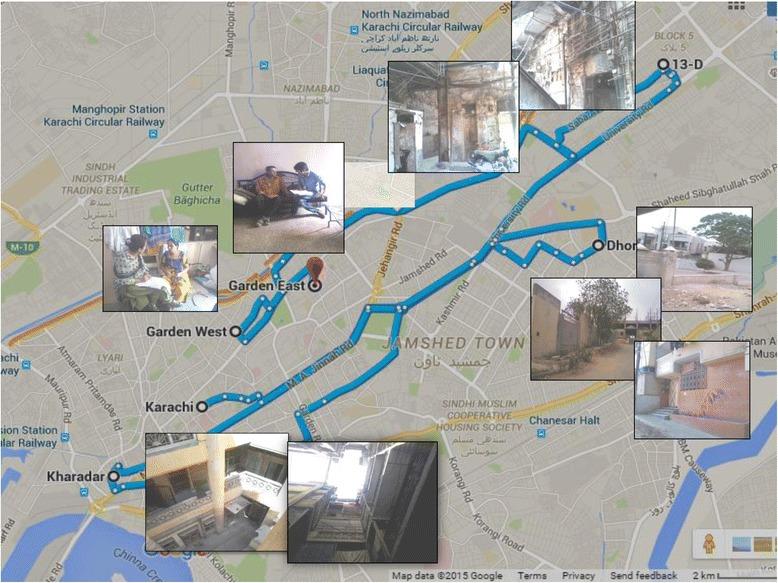
The RLCQ developed by Richard Rahe measures stress of an individual through recording the experience of life changing events. We used qualitative methodology in order to identify contextually relevant stressors in an open ended format, using serial in-depth interviews until thematic saturation of reported stressful life events was achieved. In our next phase of adaptation, our objective was to scale each item on the questionnaire, so as to weigh each of these identified events, in terms of severity of stress. This scaling exercise was performed on 200 random participants residing in the four communities of Karachi namely Kharadar, Dhorajee, Gulshan and Garden. For analysis of the scaled tool, exploratory factor analysis was used to inform structuring. Finally, to complete the process of adaption, content and face validity exercises were performed. Content validity by subject expert review and face validity was performed by translation and back translation of the adapted RLCQ. This yielded our final adapted tool.
RESULTS
Stressful life events emerging from the qualitative phase of the study reflect daily life stressors arising from the unstable socio-political environment. Some such events were public harassment, robbery/theft, missed life opportunities due to nepotism, extortion and threats, being a victim of state sponsored brutality, lack of electricity, water, sanitation, fuel, destruction due to natural disasters and direct or media based exposure to suicide bombing in the city. Personal or societal based relevant stressors included male child preference, having an unmarried middle aged daughter, lack of empowerment and respect reported by females. The finally adapted RLCQ incorporated "Environmental Stress" as a new category.
CONCLUSION
The processes of qualitative methodology, in depth interview, community based scaling and face and content validity yielded an adapted RLCQ that represents contextually relevant life stress for adults residing in urban Pakistan.
TRIAL REGISTRATION
Clinicaltrials.gov NCT02356263 . Registered January 28, 2015. (Observational Study Only).
背景
与情境相关的应激性生活事件是应激量化的重要组成部分。目前尚无适用于巴基斯坦人群的此类测量方法。
方法
理查德·拉赫开发的生活变化与应激量表(RLCQ)通过记录生活变化事件的经历来测量个体的应激水平。我们采用定性方法,以开放式格式识别与情境相关的应激源,进行系列深入访谈,直至所报告的应激性生活事件达到主题饱和。在适应的下一阶段,我们的目标是对问卷中的每个项目进行评分,以便根据应激的严重程度对这些已识别的事件进行权衡。这项评分工作在居住在卡拉奇四个社区(即卡拉达拉、多拉吉、古尔山和花园)的200名随机参与者中进行。为了分析评分后的工具,使用探索性因素分析来指导结构构建。最后,为完成适应过程,进行了内容效度和表面效度检验。通过专家评审进行内容效度检验,通过对改编后的RLCQ进行翻译和回译来进行表面效度检验。这产生了我们最终改编的工具。
结果
研究定性阶段出现的应激性生活事件反映了不稳定的社会政治环境所产生的日常生活应激源。其中一些事件包括公众骚扰、抢劫/盗窃、因裙带关系错过生活机会、敲诈勒索和威胁、成为国家支持的暴行的受害者、电力、水、卫生设施、燃料短缺、自然灾害造成的破坏以及在城市中直接或通过媒体接触自杀式爆炸。个人或基于社会的相关应激源包括重男轻女、有未婚中年女儿、女性报告缺乏赋权和尊重。最终改编的RLCQ纳入了“环境应激”这一新类别。
结论
定性方法、深入访谈、基于社区的评分以及表面效度和内容效度检验的过程产生了一个改编后的RLCQ,它代表了居住在巴基斯坦城市的成年人与情境相关的生活应激。
试验注册
Clinicaltrials.gov NCT02356263。于2015年1月28日注册。(仅观察性研究)

 Zotero 插件