Division of Gastroenterology and Hepatology, Indiana University School of Medicine, Indianapolis, Indiana, USA; Department of Medicine, Indiana University School of Medicine, Indianapolis, Indiana, USA; Department of Biomedical Informatics, Regenstrief Institute, LLC. Indianapolis, Indiana, USA.
Division of Gastroenterology and Hepatology, Indiana University School of Medicine, Indianapolis, Indiana, USA; Department of Medicine, Indiana University School of Medicine, Indianapolis, Indiana, USA.
Gastrointest Endosc. 2018 Jan;87(1):164-173.e2. doi: 10.1016/j.gie.2017.04.030. Epub 2017 May 3.
Natural language processing (NLP) is an information retrieval technique that has been shown to accurately identify quality measures for colonoscopy. There are no systematic methods by which to track adherence to quality measures for ERCP, the highest risk endoscopic procedure widely used in practice. Our aim was to demonstrate the feasibility of using NLP to measure adherence to ERCP quality indicators across individual providers.
ERCPs performed by 6 providers at a single institution from 2006 to 2014 were identified. Quality measures were defined using society guidelines and from expert opinion, and then extracted using a combination of NLP and data mining (eg, ICD9-CM codes). Validation for each quality measure was performed by manual record review. Quality measures were grouped into preprocedure (5), intraprocedure (6), and postprocedure (2). NLP was evaluated using measures of precision and accuracy.
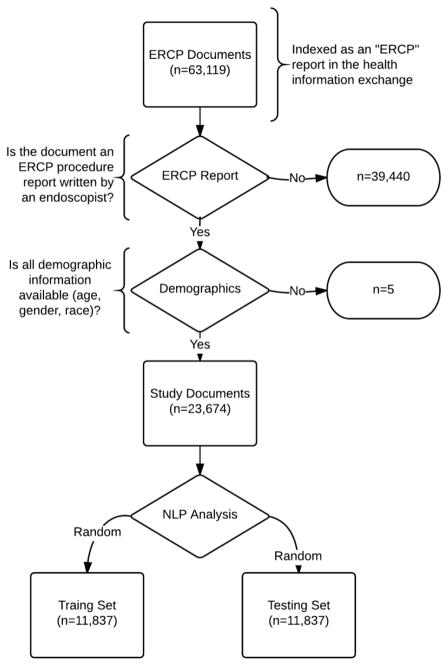
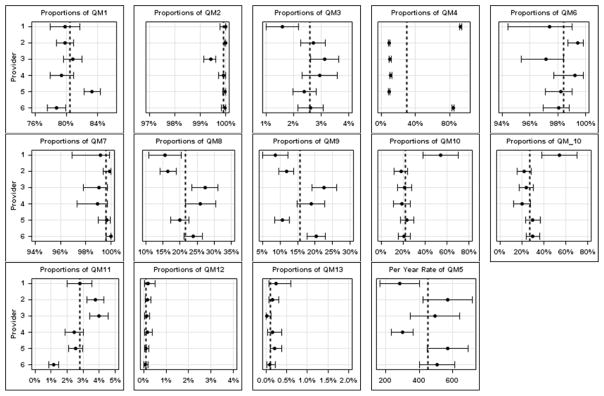
A total of 23,674 ERCPs were analyzed (average patient age, 52.9 ± 17.8 years, 14,113 were women [59.6%]). Among 13 quality measures, precision of NLP ranged from 84% to 100% with intraprocedure measures having lower precision (84% for precut sphincterotomy). Accuracy of NLP ranged from 90% to 100% with intraprocedure measures having lower accuracy (90% for pancreatic stent placement).
NLP in conjunction with data mining facilitates individualized tracking of ERCP providers for quality metrics without the need for manual medical record review. Incorporation of these tools across multiple centers may permit tracking of ERCP quality measures through national registries.
自然语言处理(NLP)是一种信息检索技术,已被证明可准确识别结肠镜检查的质量指标。目前尚无系统的方法可以跟踪经内镜逆行胰胆管造影术(ERCP)质量指标的依从性,而 ERCP 是一种在实践中广泛应用的风险最高的内镜检查。我们的目的是展示使用 NLP 来衡量个别提供者对 ERCP 质量指标的依从性的可行性。
确定了 2006 年至 2014 年间在一家机构由 6 名医生进行的 ERCP。使用协会指南和专家意见定义了质量指标,然后使用 NLP 和数据挖掘(例如 ICD9-CM 代码)相结合的方法提取质量指标。通过手动记录审查对每个质量指标进行验证。质量指标分为术前(5 项)、术中(6 项)和术后(2 项)。使用精密度和准确性来评估 NLP。
共分析了 23674 例 ERCP(患者平均年龄为 52.9±17.8 岁,女性 14113 例[59.6%])。在 13 项质量指标中,NLP 的精密度范围为 84%至 100%,术中指标的精密度较低(预切开括约肌切开术为 84%)。NLP 的准确性范围为 90%至 100%,术中指标的准确性较低(胰腺支架放置为 90%)。
NLP 与数据挖掘相结合,可以在无需手动医疗记录审查的情况下,方便地对 ERCP 提供者进行质量指标的个体化跟踪。在多个中心采用这些工具可能允许通过国家登记处跟踪 ERCP 质量指标。