Nishiyama Y, Yamamoto N, Takahash K, Shimada N
Laboratory of Virology, Nagoya University School of Medicine, Japan.
Antimicrob Agents Chemother. 1988 Jul;32(7):1053-6. doi: 10.1128/AAC.32.7.1053.
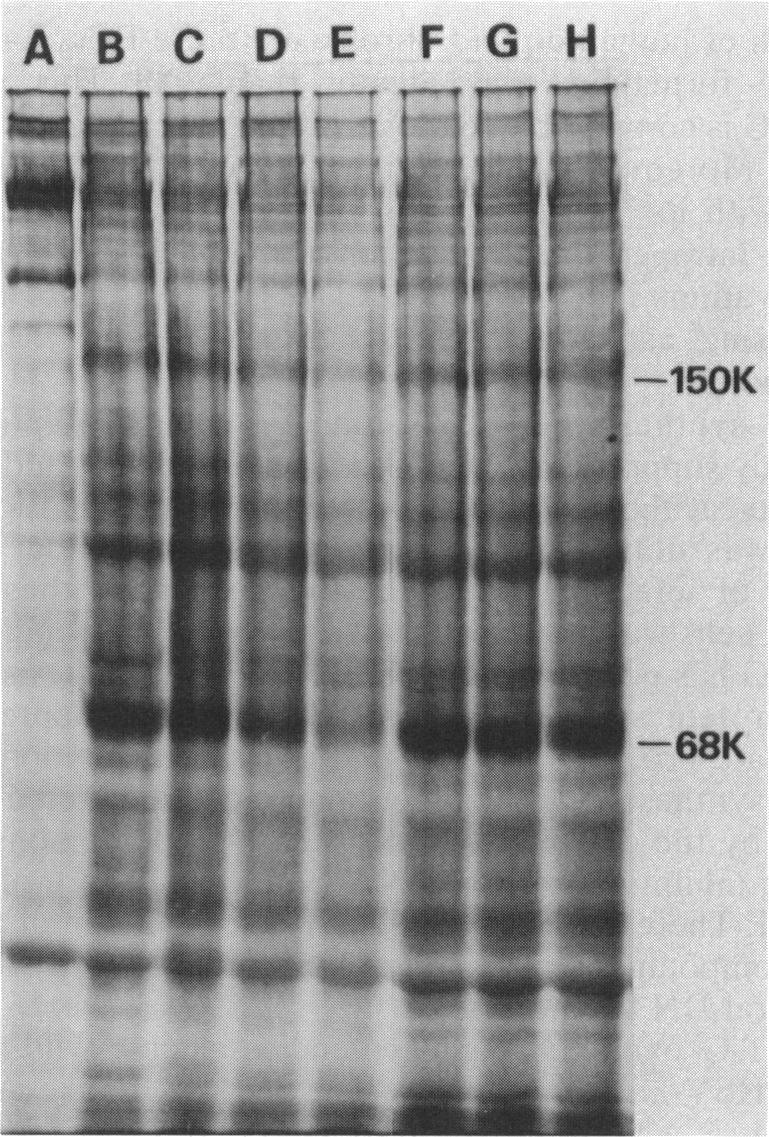
A novel nucleoside with an oxetanosyl-N-glycoside has been recently isolated from a culture filtrate from Bacillus megaterium and named oxetanocin A (N. Shimada, S. Hasegawa, T. Harada, T. Tomisawa, A. Fujii, and T. Takita, J. Antibiot. 39:1623-1625, 1986). In this study, we evaluated the antiherpesvirus activity of oxetanocin A and its derivatives and found that 9-(2-deoxy-2-hydroxymethyl-beta-D-erythro-oxetanosyl)guanine (OXT-G) was very potent and selective in inhibiting the replication of human cytomegalovirus (HCMV) in vitro. The median effective concentration for HCMV strain AD169 was 1.0 microgram/ml, and that for herpes simplex virus type 2 strain 186 was 3.5 micrograms/ml. The selectivity index, based on the ratio of the median inhibitory concentration for cell growth of human diploid fibroblasts to the median effective concentration for HCMV plaque formation, was more than 300. The synthesis of HCMV-induced late polypeptides such as the 150,000-molecular-weight capsid and the 68,000-molecular-weight major matrix proteins was strongly suppressed when OXT-G (5 micrograms/ml) was added to the cultures at the beginning of infection. At this concentration of OXT-G, the amount of HCMV DNA detected in the drug-treated infected cells was less than 1/10 of that detected in the infected control cells. The results suggest that the mode of action of OXT-G is inhibition of viral replication by impairing the viral DNA synthesis.
最近从巨大芽孢杆菌的培养滤液中分离出一种带有氧杂环丁烷基-N-糖苷的新型核苷,并将其命名为氧杂环丁菌素A(N. 岛田、S. 长谷川、T. 原田、T. 富泽、A. 藤井和T. 泷田,《抗生素杂志》39:1623 - 1625,1986年)。在本研究中,我们评估了氧杂环丁菌素A及其衍生物的抗疱疹病毒活性,发现9-(2-脱氧-2-羟甲基-β-D-赤式-氧杂环丁烷基)鸟嘌呤(OXT-G)在体外对人巨细胞病毒(HCMV)的复制具有很强的抑制作用且具有选择性。HCMV AD169株的半数有效浓度为1.0微克/毫升,单纯疱疹病毒2型186株的半数有效浓度为3.5微克/毫升。基于人二倍体成纤维细胞生长的半数抑制浓度与HCMV空斑形成的半数有效浓度之比的选择性指数超过300。在感染开始时向培养物中加入OXT-G(5微克/毫升),HCMV诱导的晚期多肽如150,000分子量的衣壳蛋白和68,000分子量的主要基质蛋白的合成受到强烈抑制。在此OXT-G浓度下,在药物处理的感染细胞中检测到的HCMV DNA量不到感染对照细胞中检测到量的1/10。结果表明,OXT-G的作用方式是通过损害病毒DNA合成来抑制病毒复制。