Tsoneva Desislava, Minev Boris, Frentzen Alexa, Zhang Qian, Wege Anja K, Szalay Aladar A
Department of Biochemistry, Biocenter, University of Wuerzburg, 97074 Wuerzburg, Germany.
Department of Radiation Medicine and Applied Sciences, Rebecca & John Moores Comprehensive Cancer Center, University of California, San Diego, CA 92093, USA.
Mol Ther Oncolytics. 2017 Mar 21;5:41-61. doi: 10.1016/j.omto.2017.03.001. eCollection 2017 Jun 16.
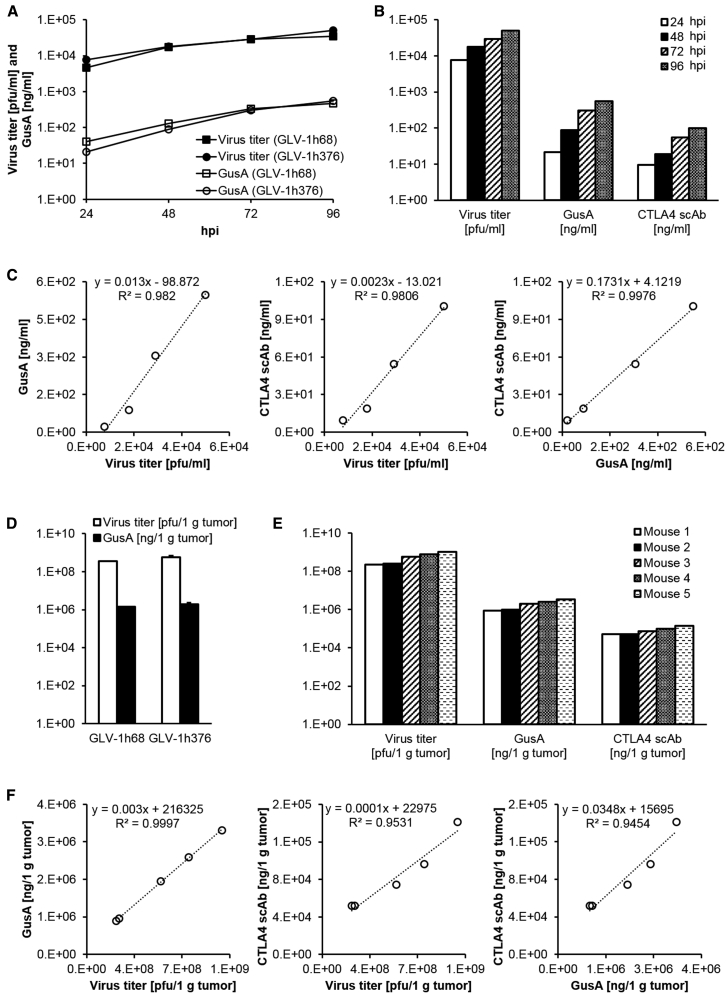
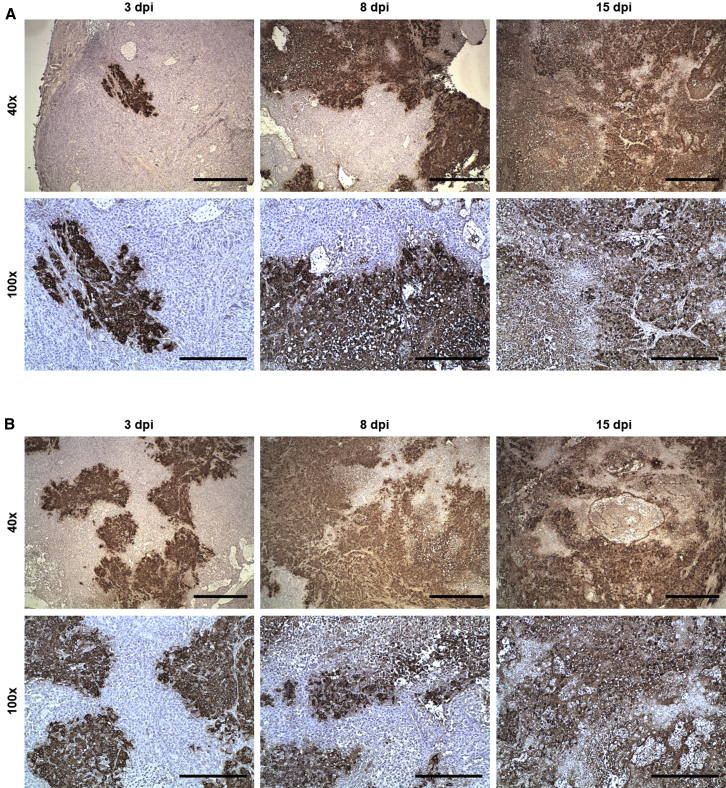
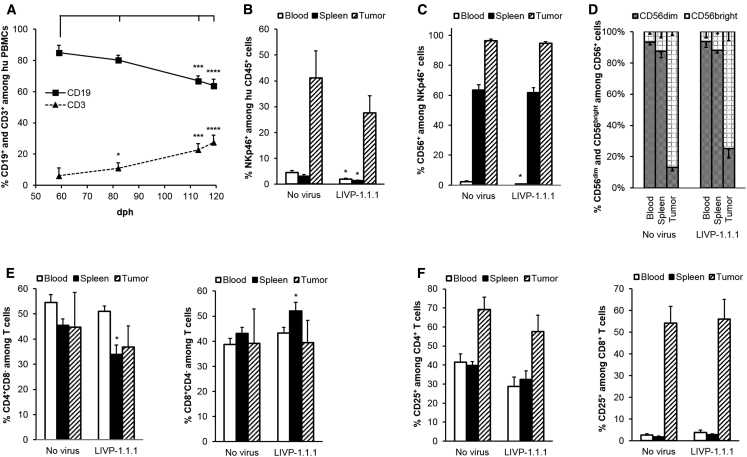
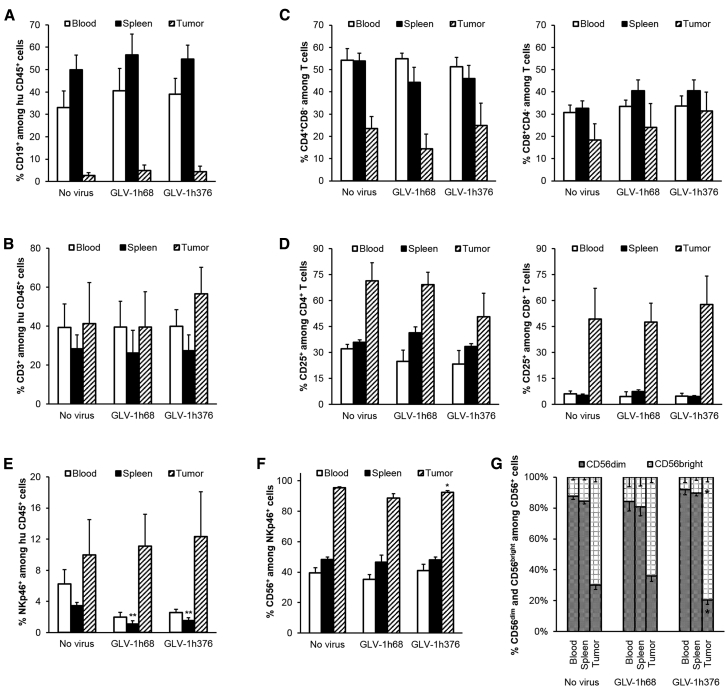
Oncolytic vaccinia virus (VACV) therapy is an alternative cancer treatment modality that mediates targeted tumor destruction through a tumor-selective replication and an induction of anti-tumor immunity. We developed a humanized tumor mouse model with subcutaneous human tumors to analyze the interactions of VACV with the developing tumors and human immune system. A successful systemic reconstitution with human immune cells including functional T cells as well as development of tumors infiltrated with human T and natural killer (NK) cells was observed. We also demonstrated successful in vivo colonization of such tumors with systemically administered VACVs. Further, a new recombinant GLV-1h376 VACV encoding for a secreted human CTLA4-blocking single-chain antibody (CTLA4 scAb) was tested. Surprisingly, although proving CTLA4 scAb's in vitro binding ability and functionality in cell culture, beside the significant increase of CD56 NK cell subset, GLV-1h376 was not able to increase cytotoxic T or overall NK cell levels at the tumor site. Importantly, the virus-encoded β-glucuronidase as a measure of viral titer and CTLA4 scAb amount was demonstrated. Therefore, studies in our "patient-like" humanized tumor mouse model allow the exploration of newly designed therapy strategies considering the complex relationships between the developing tumor, the oncolytic virus, and the human immune system.
溶瘤牛痘病毒(VACV)疗法是一种替代性癌症治疗方式,它通过肿瘤选择性复制和诱导抗肿瘤免疫来介导靶向肿瘤破坏。我们开发了一种带有皮下人肿瘤的人源化肿瘤小鼠模型,以分析VACV与发育中的肿瘤及人体免疫系统之间的相互作用。观察到用人免疫细胞包括功能性T细胞进行全身重建成功,以及肿瘤中浸润有人T细胞和自然杀伤(NK)细胞的情况。我们还证明了全身给药的VACV能在这类肿瘤中成功进行体内定植。此外,还测试了一种新的重组GLV-1h376 VACV,其编码一种分泌型人CTLA4阻断单链抗体(CTLA4 scAb)。令人惊讶的是,尽管在细胞培养中证明了CTLA4 scAb的体外结合能力和功能,但除了CD56 NK细胞亚群显著增加外,GLV-1h376无法提高肿瘤部位的细胞毒性T细胞或总体NK细胞水平。重要的是,证明了病毒编码的β-葡萄糖醛酸酶可作为病毒滴度和CTLA4 scAb量的指标。因此,在我们的“类患者”人源化肿瘤小鼠模型中的研究能够探索考虑发育中的肿瘤、溶瘤病毒和人体免疫系统之间复杂关系的新设计治疗策略。