Hötte Katharina, Smyrek Isabell, Starzinski-Powitz Anna, Stelzer Ernst H K
Physical Biology/Physikalische Biologie (IZN, FB 15), Buchmann Institute for Molecular Life Sciences (BMLS), Cluster of Excellence Frankfurt - Macromolecular Complexes (CEF - MC), Goethe Universität - Frankfurt am Main (Campus Riedberg), Max-von-Laue-Straße 15, Frankfurt am Main D-60438, Germany.
Institute of Cell Biology and Neuroscience, Department of Molecular Cell Biology and Human Genetics, Goethe Universität - Frankfurt am Main (Campus Riedberg), Max-von-Laue-Straße 13, Frankfurt am Main D-60438, Germany.
Biol Open. 2017 Jun 15;6(6):723-731. doi: 10.1242/bio.022335.
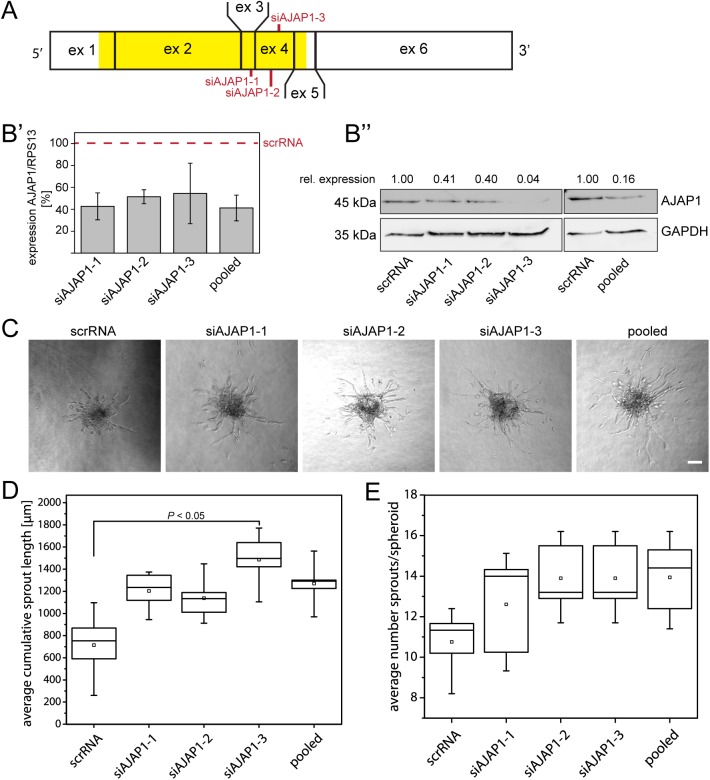
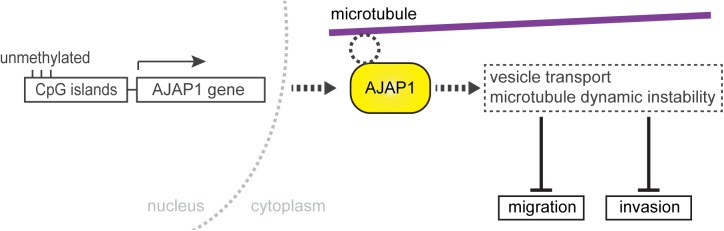
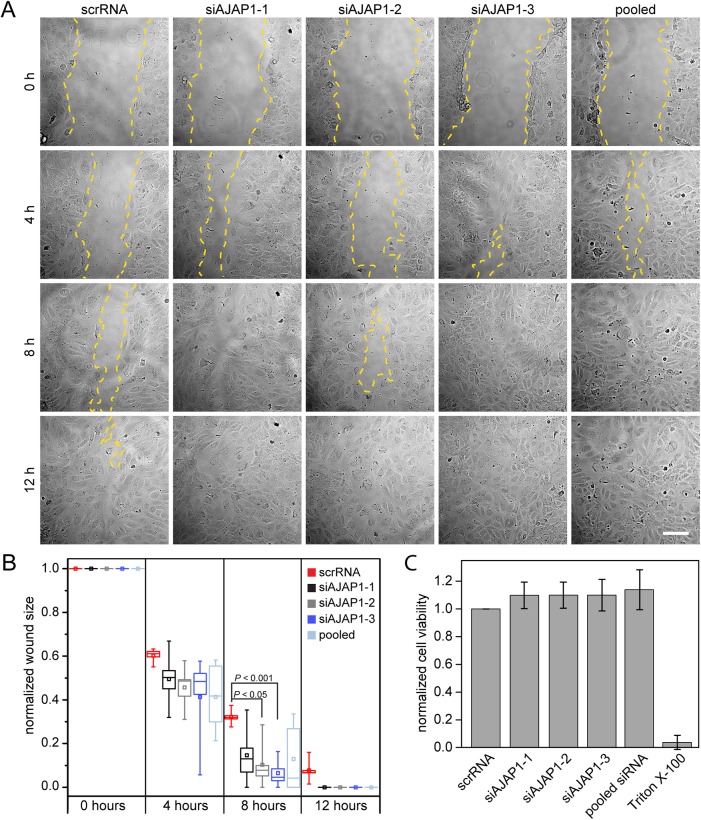
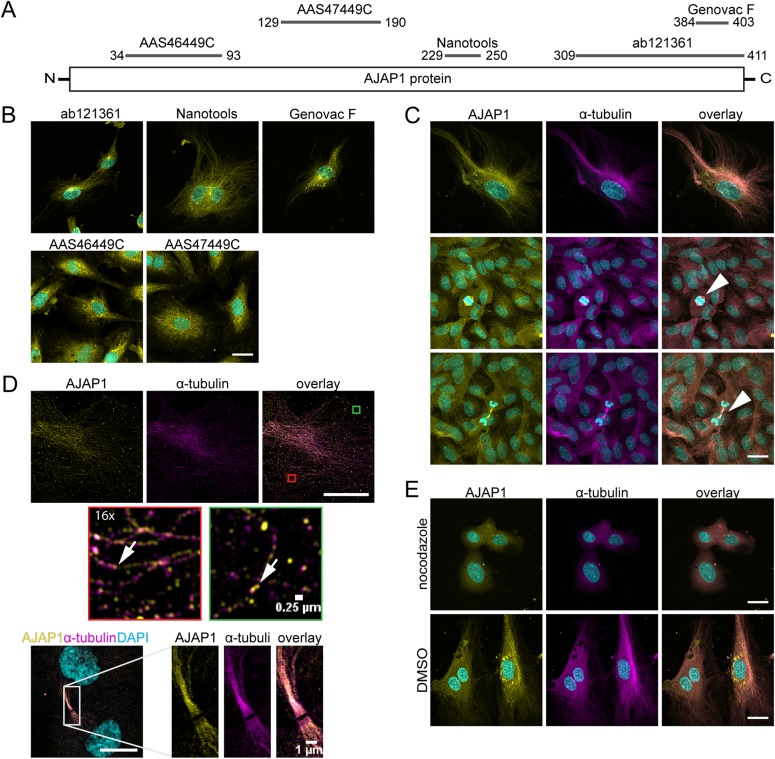
The adherens junction associated protein 1 (AJAP1, aka shrew-1) is presumably a type-I transmembrane protein localizing and interacting with the E-cadherin-catenin complex. In various tumors, AJAP1 expression is reduced or lost, including hepatocellular and esophageal squamous cell carcinoma, and glial-derived tumors. The aberrant expression of AJAP1 is associated with alterations in cell migration, invasion, increased tumor growth, and tumor vascularization, suggesting AJAP1 as a putative tumor suppressor. We show that AJAP1 attenuates sprouting angiogenesis by reducing endothelial migration and invasion capacities. Further, we show for the first time that endogenous AJAP1 is associated with the microtubule cytoskeleton. This linkage is independent from cell confluency and stable during angiogenic sprouting Our work suggests that AJAP1 is a putative negative regulator of angiogenesis, reducing cell migration and invasion by interfering with the microtubule network. Based on our results and those of other authors, we suggest AJAP1 as a novel tumor suppressor and diagnostic marker.
黏附连接相关蛋白1(AJAP1,又名shrew-1)可能是一种I型跨膜蛋白,定位于E-钙黏蛋白-连环蛋白复合体并与其相互作用。在各种肿瘤中,AJAP1的表达降低或缺失,包括肝细胞癌、食管鳞状细胞癌和神经胶质来源的肿瘤。AJAP1的异常表达与细胞迁移、侵袭的改变、肿瘤生长增加以及肿瘤血管生成有关,提示AJAP1是一种假定的肿瘤抑制因子。我们发现AJAP1通过降低内皮细胞的迁移和侵袭能力来减弱芽生血管生成。此外,我们首次表明内源性AJAP1与微管细胞骨架相关。这种联系独立于细胞汇合状态,并且在血管生成芽生过程中保持稳定。我们的研究表明,AJAP1是一种假定的血管生成负调节因子,通过干扰微管网络来减少细胞迁移和侵袭。基于我们的研究结果以及其他作者的结果,我们认为AJAP1是一种新型的肿瘤抑制因子和诊断标志物。