Lee Fan-Yen, Chen Kuan-Hung, Wallace Christopher Glenn, Sung Pei-Hsun, Sheu Jiunn-Jye, Chung Sheng-Ying, Chen Yung-Lung, Lu Hung-I, Ko Sheung-Fat, Sun Cheuk-Kwan, Chiang Hsin-Ju, Chang Hsueh-Wen, Lee Mel S, Yip Hon-Kan
Division of Thoracic and Cardiovascular Surgery, Department of Surgery, Kaohsiung Chang Gung Memorial Hospital and Chang Gung University College of Medicine, Kaohsiung, Taiwan.
Department of Anesthesiology, Kaohsiung Chang Gung Memorial Hospital and Chang Gung University College of Medicine, Kaohsiung, Taiwan.
Oncotarget. 2017 Jul 11;8(28):45626-45642. doi: 10.18632/oncotarget.17320.
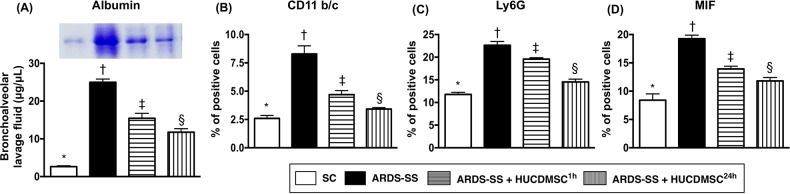
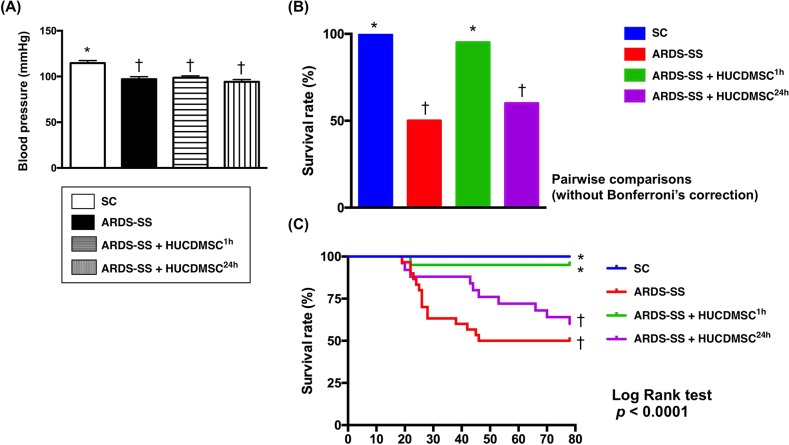
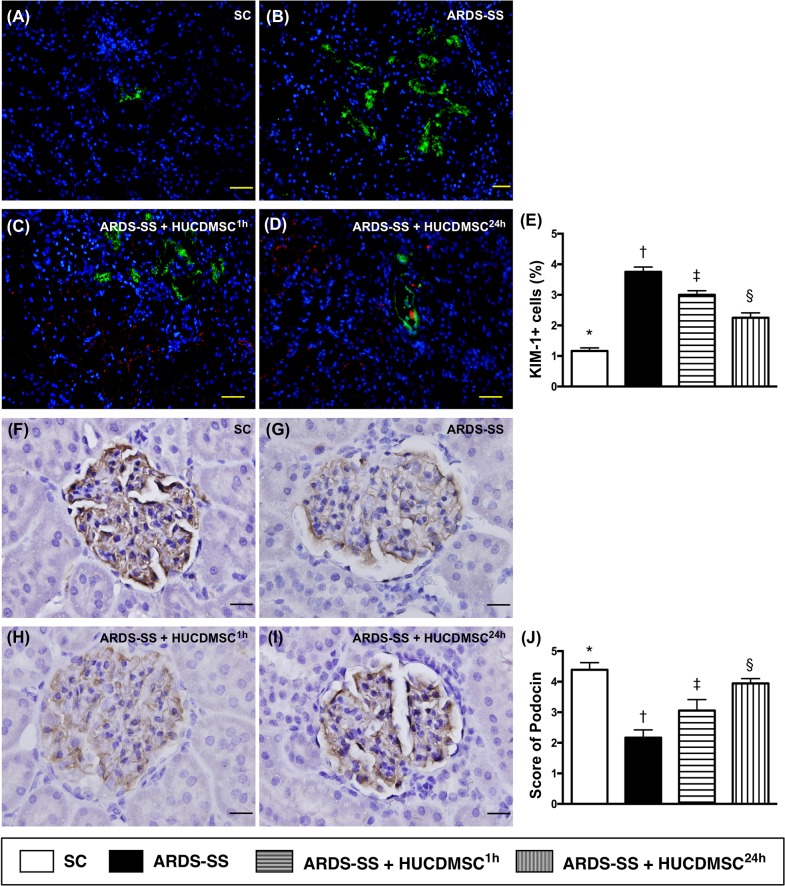
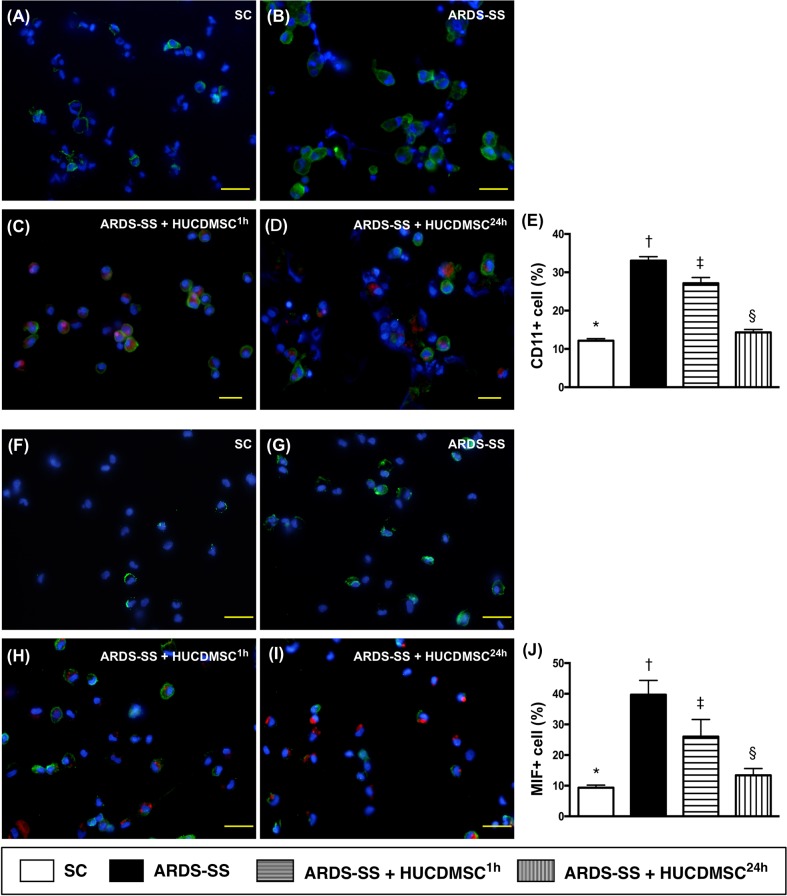
This study tested the hypothesis that xenogeneic human umbilical cord-derived mesenchymal stem cell (HUCDMSC) therapy would improve survival rates in rats with acute respiratory distress-syndrome (ARDS, induction by 48 h inhalation of 100% oxygen) and sepsis-syndrome (SS, induction by cecal-ligation and puncture) (ARDS-SS). Adult-male Sprague-Dawley rats were categorized into group 1 (sham-controls), group 2 (ARDS-SS), group 3 [ARDS-SS+HUCDMSC (1.2 ×10⁶ cells administered 1 h after SS-induction)], and group 4 [ARDS-SS+HUCDMSC (1.2 ×10⁶ cells administered 24 h after SS-induction)]. The mortality rate was higher in groups 2 and 4 than in groups 1 and 3 (all p<0.0001). The blood pressure after 28 h was lower in groups 2, 3 and 4 (p<0.0001) than in group 1. Albumin levels and percentages of inflammatory cells in broncho-alveolar lavage fluid, and the percentages of inflammatory and immune cells in circulation, were lowest in group 1, highest in group 2, and higher in group 3 than group 4 (all p<0.0001). The percentages of inflammatory cells in ascites and kidney parenchyma showed identical patterns, as did kidney injury scores (all p<0.0001). EarlyHUCDMSC therapy reduced rodent mortality after induced ARDS-SS.
异种人脐带间充质干细胞(HUCDMSC)疗法可提高急性呼吸窘迫综合征(ARDS,通过吸入100%氧气48小时诱导)和脓毒症综合征(SS,通过盲肠结扎和穿刺诱导)(ARDS - SS)大鼠的存活率。成年雄性Sprague - Dawley大鼠被分为1组(假手术对照组)、2组(ARDS - SS组)、3组[ARDS - SS + HUCDMSC(SS诱导后1小时给予1.2×10⁶个细胞)]和4组[ARDS - SS + HUCDMSC(SS诱导后24小时给予1.2×10⁶个细胞)]。2组和4组的死亡率高于1组和3组(所有p<0.0001)。28小时后的血压,2组、3组和4组低于1组(p<0.0001)。支气管肺泡灌洗液中的白蛋白水平和炎症细胞百分比,以及循环中的炎症和免疫细胞百分比,1组最低,2组最高,3组高于4组(所有p<0.0001)。腹水中和肾实质中的炎症细胞百分比呈现相同模式,肾损伤评分也是如此(所有p<0.0001)。早期HUCDMSC治疗可降低诱导性ARDS - SS后啮齿动物的死亡率。