• 文献检索
  • 文档翻译
  • 深度研究
  • 学术资讯
  • Suppr Zotero 插件Zotero 插件
  • 邀请有礼
  • 套餐&价格
  • 历史记录
应用&插件
Suppr Zotero 插件Zotero 插件浏览器插件Mac 客户端Windows 客户端微信小程序
定价
高级版会员购买积分包购买API积分包
服务
文献检索文档翻译深度研究API 文档MCP 服务
关于我们
关于 Suppr公司介绍联系我们用户协议隐私条款
关注我们

Suppr 超能文献

核心技术专利:CN118964589B侵权必究
粤ICP备2023148730 号-1Suppr @ 2026

文献检索

告别复杂PubMed语法,用中文像聊天一样搜索,搜遍4000万医学文献。AI智能推荐,让科研检索更轻松。

立即免费搜索

文件翻译

保留排版,准确专业,支持PDF/Word/PPT等文件格式,支持 12+语言互译。

免费翻译文档

深度研究

AI帮你快速写综述,25分钟生成高质量综述,智能提取关键信息,辅助科研写作。

立即免费体验

人脐带间充质干细胞治疗急性创伤性脑损伤后有效保护大鼠的脑结构和神经功能。

Human Umbilical Cord-Derived Mesenchymal Stem Cell Therapy Effectively Protected the Brain Architecture and Neurological Function in Rat After Acute Traumatic Brain Injury.

机构信息

Department of Anesthesiology, 63328Kaohsiung Chang Gung Memorial Hospital and Chang Gung University College of Medicine.

Department of Nursing, 63267Asia University, Taichung.

出版信息

Cell Transplant. 2020 Jan-Dec;29:963689720929313. doi: 10.1177/0963689720929313.

DOI:10.1177/0963689720929313
PMID:33169616
原文链接:https://pmc.ncbi.nlm.nih.gov/articles/PMC7784577/
Abstract

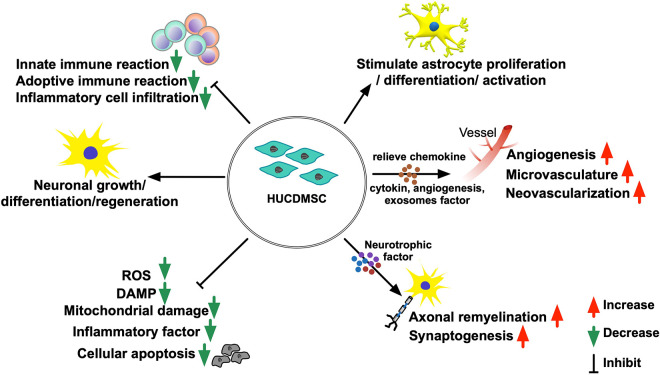
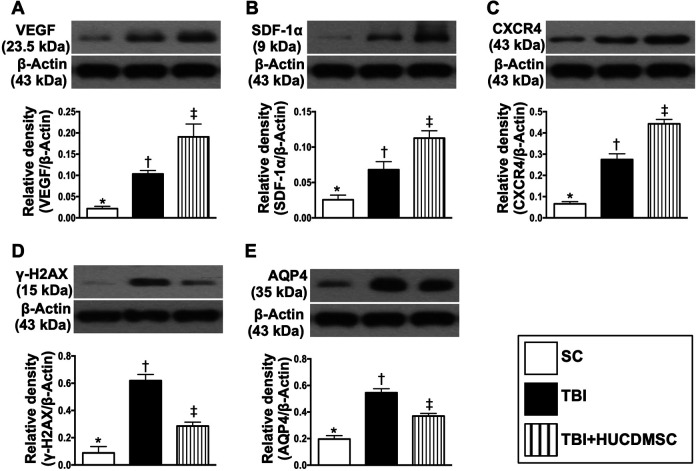
Intracranial hemorrhage from stroke and head trauma elicits a cascade of inflammatory and immune reactions detrimental to neurological integrity and function at cellular and molecular levels. This study tested the hypothesis that human umbilical cord-derived mesenchymal stem cell (HUCDMSC) therapy effectively protected the brain integrity and neurological function in rat after acute traumatic brain injury (TBI). Adult male Sprague-Dawley rats ( = 30) were equally divided into group 1 (sham-operated control), group 2 (TBI), and group 3 [TBI + HUCDMSC (1.2 × 10 cells/intravenous injection at 3 h after TBI)] and euthanized by day 28 after TBI procedure. The results of corner test and inclined plane test showed the neurological function was significantly progressively improved from days 3, 7, 14, and 28 in groups 1 and 3 than in group 2, and group 1 than in group 3 (all < 0.001). By day 28, brain magnetic resonance imaging brain ischemic volume was significantly increased in group 2 than in group 3 ( < 0.001). The protein expressions of apoptosis [mitochondrial-bax positive cells (Bax)/cleaved-caspase3/cleaved-poly(adenosine diphosphate (ADP)-ribose) polymerase], fibrosis (Smad3 positive cells (Smad3)/transforming growth factor-β), oxidative stress (NADPH Oxidase 1 (NOX-1)/NADPH Oxidase 2 (NOX-2)/oxidized-protein/cytochrome b-245 alpha chain (p22phox)), and brain-edema/deoxyribonucleic acid (DNA)-damaged biomarkers (Aquaporin-4/gamma H2A histone family member X ( (γ-H2AX)) displayed an identical pattern to neurological function among the three groups (all < 0.0001), whereas the protein expressions of angiogenesis biomarkers (vascular endothelial growth factor/stromal cell-derived factor-1α/C-X-C chemokine receptor type 4 (CXCR4)) significantly increased from groups 1 to 3 (all < 0.0001). The cellular expressions of inflammatory biomarkers (cluster of differentiation 14 (+) cells (CD14+)/glial fibrillary acidic protein positive cells (GFAP+)/ a member of a new family of EGF-TM7 molecules positive cells (F4/80+)) and DNA-damaged parameter (γ-H2AX) exhibited an identical pattern, whereas cellular expressions of neural integrity (hexaribonucleotide Binding Protein-3 positive cells (NeuN+)/nestin+/doublecortin+) exhibited an opposite pattern of neurological function among the three groups (all < 0.0001). Xenogeneic HUCDMSC therapy was safe and it significantly preserved neurological function and brain architecture in rat after TBI.

摘要

脑出血脑卒中源于创伤性颅脑损伤,在细胞和分子水平上引发一连串有害的炎症和免疫反应,破坏神经完整性和功能。本研究旨在检验人脐带间充质干细胞(HUCDMSC)治疗是否能有效保护大鼠急性创伤性脑损伤(TBI)后的脑完整性和神经功能。雄性成年 Sprague-Dawley 大鼠( = 30)等分为三组:1 组(假手术对照)、2 组(TBI)和 3 组(TBI+HUCDMSC[1.2×10 个细胞/静脉注射,TBI 后 3 小时]),并于 TBI 后 28 天处死。转角试验和斜板试验的结果显示,1 组和 3 组的神经功能从第 3、7、14 和 28 天开始,与 2 组相比,以及与 3 组相比,1 组的神经功能均显著逐渐改善(均<0.001)。28 天时,与 3 组相比,2 组的脑磁共振成像脑缺血体积明显增加(<0.001)。凋亡标志物[线粒体 Bax 阳性细胞(Bax)/cleaved-caspase3/cleaved-poly(adenosine diphosphate(ADP)-ribose)polymerase]、纤维化标志物[Smad3 阳性细胞(Smad3)/转化生长因子-β]、氧化应激标志物[NADPH Oxidase 1(NOX-1)/NADPH Oxidase 2(NOX-2)/氧化蛋白/cytochrome b-245 alpha chain(p22phox)]、脑水肿/脱氧核糖核酸(DNA)损伤生物标志物(水通道蛋白-4/γH2A 组蛋白家族成员 X((γ-H2AX))在三组中的表达模式与神经功能完全一致(均<0.0001),而血管生成生物标志物[血管内皮生长因子/基质细胞衍生因子-1α/C-X-C 趋化因子受体 4(CXCR4)]的蛋白表达从 1 组到 3 组明显增加(均<0.0001)。炎症标志物[CD14+细胞(CD14+)/胶质纤维酸性蛋白阳性细胞(GFAP+)/EGF-TM7 家族新成员 A 阳性细胞(F4/80+)]和 DNA 损伤参数(γ-H2AX)的细胞表达模式完全一致,而神经完整性标志物[六核苷酸结合蛋白-3 阳性细胞(NeuN+)/巢蛋白+/双皮质素+]的细胞表达模式与三组的神经功能呈相反模式(均<0.0001)。异种间充质干细胞治疗是安全的,它能显著改善 TBI 后大鼠的神经功能和脑结构。

https://cdn.ncbi.nlm.nih.gov/pmc/blobs/b689/7784577/414d2ed37dae/10.1177_0963689720929313-fig8.jpg
https://cdn.ncbi.nlm.nih.gov/pmc/blobs/b689/7784577/c9d2ad3d2fa1/10.1177_0963689720929313-fig1.jpg
https://cdn.ncbi.nlm.nih.gov/pmc/blobs/b689/7784577/fb4bcb2b3104/10.1177_0963689720929313-fig2.jpg
https://cdn.ncbi.nlm.nih.gov/pmc/blobs/b689/7784577/a100cb635f32/10.1177_0963689720929313-fig3.jpg
https://cdn.ncbi.nlm.nih.gov/pmc/blobs/b689/7784577/813420de6688/10.1177_0963689720929313-fig4.jpg
https://cdn.ncbi.nlm.nih.gov/pmc/blobs/b689/7784577/9d0faf3565af/10.1177_0963689720929313-fig5.jpg
https://cdn.ncbi.nlm.nih.gov/pmc/blobs/b689/7784577/67d5e9da3a4a/10.1177_0963689720929313-fig6.jpg
https://cdn.ncbi.nlm.nih.gov/pmc/blobs/b689/7784577/58b3b6ca0fa5/10.1177_0963689720929313-fig7.jpg
https://cdn.ncbi.nlm.nih.gov/pmc/blobs/b689/7784577/414d2ed37dae/10.1177_0963689720929313-fig8.jpg
https://cdn.ncbi.nlm.nih.gov/pmc/blobs/b689/7784577/c9d2ad3d2fa1/10.1177_0963689720929313-fig1.jpg
https://cdn.ncbi.nlm.nih.gov/pmc/blobs/b689/7784577/fb4bcb2b3104/10.1177_0963689720929313-fig2.jpg
https://cdn.ncbi.nlm.nih.gov/pmc/blobs/b689/7784577/a100cb635f32/10.1177_0963689720929313-fig3.jpg
https://cdn.ncbi.nlm.nih.gov/pmc/blobs/b689/7784577/813420de6688/10.1177_0963689720929313-fig4.jpg
https://cdn.ncbi.nlm.nih.gov/pmc/blobs/b689/7784577/9d0faf3565af/10.1177_0963689720929313-fig5.jpg
https://cdn.ncbi.nlm.nih.gov/pmc/blobs/b689/7784577/67d5e9da3a4a/10.1177_0963689720929313-fig6.jpg
https://cdn.ncbi.nlm.nih.gov/pmc/blobs/b689/7784577/58b3b6ca0fa5/10.1177_0963689720929313-fig7.jpg
https://cdn.ncbi.nlm.nih.gov/pmc/blobs/b689/7784577/414d2ed37dae/10.1177_0963689720929313-fig8.jpg

相似文献

1
Human Umbilical Cord-Derived Mesenchymal Stem Cell Therapy Effectively Protected the Brain Architecture and Neurological Function in Rat After Acute Traumatic Brain Injury.人脐带间充质干细胞治疗急性创伤性脑损伤后有效保护大鼠的脑结构和神经功能。
Cell Transplant. 2020 Jan-Dec;29:963689720929313. doi: 10.1177/0963689720929313.
2
Umbilical cord-derived MSC and hyperbaric oxygen therapy effectively protected the brain in rat after acute intracerebral haemorrhage.脐带间充质干细胞联合高压氧治疗有效保护急性脑出血大鼠的脑损伤。
J Cell Mol Med. 2021 Jun;25(12):5640-5654. doi: 10.1111/jcmm.16577. Epub 2021 May 2.
3
Dose-dependent benefits of iron-magnetic nanoparticle-coated human umbilical-derived mesenchymal stem cell treatment in rat intracranial hemorrhage model.铁磁纳米颗粒包被的人脐带间充质干细胞治疗对大鼠颅内出血模型的剂量依赖性获益。
Stem Cell Res Ther. 2022 Jun 21;13(1):265. doi: 10.1186/s13287-022-02939-4.
4
Intravenous administration of xenogenic adipose-derived mesenchymal stem cells (ADMSC) and ADMSC-derived exosomes markedly reduced brain infarct volume and preserved neurological function in rat after acute ischemic stroke.急性缺血性脑卒中后,静脉注射异种脂肪来源间充质干细胞(ADMSC)和ADMSC来源的外泌体可显著减少大鼠脑梗死体积并保留神经功能。
Oncotarget. 2016 Nov 15;7(46):74537-74556. doi: 10.18632/oncotarget.12902.
5
Early and Dose-Dependent Xenogeneic Mesenchymal Stem Cell Therapy Improved Outcomes in Acute Respiratory Distress Syndrome Rodent Through Ameliorating Inflammation, Oxidative Stress, and Immune Reaction.早期和剂量依赖性异种间充质干细胞治疗通过改善炎症、氧化应激和免疫反应改善急性呼吸窘迫综合征大鼠的预后。
Cell Transplant. 2023 Jan-Dec;32:9636897231190178. doi: 10.1177/09636897231190178.
6
Combined Therapy With Hyperbaric Oxygen and Melatonin Effectively Reduce Brain Infarct Volume and Preserve Neurological Function After Acute Ischemic Infarct in Rat.高压氧与褪黑素联合治疗可有效减少大鼠急性缺血性梗死后脑梗死体积并保护神经功能。
J Neuropathol Exp Neurol. 2019 Oct 1;78(10):949-960. doi: 10.1093/jnen/nlz076.
7
Intrarenal arterial administration of human umbilical cord-derived mesenchymal stem cells effectively preserved the residual renal function of diabetic kidney disease in rat.肾内动脉给予人脐带间充质干细胞有效保护了糖尿病肾病大鼠的残余肾功能。
Stem Cell Res Ther. 2022 May 7;13(1):186. doi: 10.1186/s13287-022-02857-5.
8
Xenogeneic and Allogeneic Mesenchymal Stem Cells Effectively Protect the Lung Against Ischemia-reperfusion Injury Through Downregulating the Inflammatory, Oxidative Stress, and Autophagic Signaling Pathways in Rat.异种和同种异体间充质干细胞通过下调大鼠肺缺血再灌注损伤中的炎症、氧化应激和自噬信号通路而有效保护肺。
Cell Transplant. 2020 Jan-Dec;29:963689720954140. doi: 10.1177/0963689720954140.
9
Prion Protein Overexpression in Adipose-Derived Mesenchymal Stem Cells (ADMSCs) Effectively Protected Rodent Kidney Against Ischemia-Reperfusion Injury Via Enhancing ATP/Mitochondrial Biogenesis-Role of ADMSC Rejuvenation and Proliferation.脂肪间充质干细胞(ADMSCs)中朊病毒蛋白的过表达通过增强 ATP/线粒体生物发生有效地保护了啮齿动物肾脏免受缺血再灌注损伤-ADMSC 年轻化和增殖的作用。
Cell Transplant. 2023 Jan-Dec;32:9636897231211067. doi: 10.1177/09636897231211067.
10
Adipose-derived mesenchymal stem cells markedly attenuate brain infarct size and improve neurological function in rats.脂肪间充质干细胞显著减轻大鼠脑梗死体积并改善神经功能。
J Transl Med. 2010 Jun 28;8:63. doi: 10.1186/1479-5876-8-63.

引用本文的文献

1
Constraint-induced movement therapy combined with mesenchymal stem cell transplantation promotes myelination and functional recovery by inhibiting PRKCD/MEK/ERK pathway in hemiplegic cerebral palsy rats.强制性运动疗法联合间充质干细胞移植通过抑制偏瘫型脑瘫大鼠的PRKCD/MEK/ERK通路促进髓鞘形成和功能恢复。
Stem Cell Res Ther. 2025 Aug 21;16(1):447. doi: 10.1186/s13287-025-04544-7.
2
Olfactory mucosa-mesenchymal stem cells with overexpressed Nrf2 modulate angiogenesis and exert anti-inflammation effect in an in vitro traumatic brain injury model.过表达Nrf2的嗅黏膜间充质干细胞在体外创伤性脑损伤模型中调节血管生成并发挥抗炎作用。
Eur J Med Res. 2025 Feb 5;30(1):80. doi: 10.1186/s40001-025-02344-6.
3

本文引用的文献

1
NT3 gene-modified bone mesenchymal stem cells improve neurological function recovery in mouse TBI model.NT3 基因修饰的骨髓间充质干细胞改善小鼠 TBI 模型的神经功能恢复。
Stem Cell Res Ther. 2019 Oct 24;10(1):311. doi: 10.1186/s13287-019-1428-1.
2
Transplantation of Mesenchymal Stem Cells Overexpressing Fibroblast Growth Factor 21 Facilitates Cognitive Recovery and Enhances Neurogenesis in a Mouse Model of Traumatic Brain Injury.成纤维细胞生长因子 21 过表达骨髓间充质干细胞促进创伤性脑损伤小鼠认知功能恢复和神经发生。
J Neurotrauma. 2020 Jan 1;37(1):14-26. doi: 10.1089/neu.2019.6422. Epub 2019 Aug 20.
3
Study on Umbilical Cord-Matrix Stem Cells Transplantation for Treatment of Acute Traumatic Brain Injury in Rats.
Ischemic Stroke: Pathophysiology and Evolving Treatment Approaches.
缺血性中风:病理生理学与不断发展的治疗方法
Neurosci Insights. 2024 Oct 22;19:26331055241292600. doi: 10.1177/26331055241292600. eCollection 2024.
4
Molecular Pathogenesis of Ischemic and Hemorrhagic Strokes: Background and Therapeutic Approaches.缺血性和出血性中风的分子发病机制:背景与治疗方法。
Int J Mol Sci. 2024 Jun 7;25(12):6297. doi: 10.3390/ijms25126297.
5
Biomaterials and tissue engineering in traumatic brain injury: novel perspectives on promoting neural regeneration.创伤性脑损伤中的生物材料与组织工程:促进神经再生的新视角
Neural Regen Res. 2024 Oct 1;19(10):2157-2174. doi: 10.4103/1673-5374.391179. Epub 2023 Dec 21.
6
The application of mesenchymal stem cells in the treatment of traumatic brain injury: Mechanisms, results, and problems.间充质干细胞在创伤性脑损伤治疗中的应用:机制、结果和问题。
Histol Histopathol. 2024 Sep;39(9):1109-1131. doi: 10.14670/HH-18-716. Epub 2024 Jan 29.
7
Stroke: Molecular mechanisms and therapies: Update on recent developments.中风:分子机制与治疗:最新进展综述。
Neurochem Int. 2023 Jan;162:105458. doi: 10.1016/j.neuint.2022.105458. Epub 2022 Nov 30.
8
Human umbilical cord mesenchymal stem cell-derived exosomes promote neurological function recovery in rat after traumatic brain injury by inhibiting the activation of microglia and astrocyte.人脐带间充质干细胞来源的外泌体通过抑制小胶质细胞和星形胶质细胞的激活促进创伤性脑损伤大鼠的神经功能恢复。
Regen Ther. 2022 Aug 28;21:282-287. doi: 10.1016/j.reth.2022.07.005. eCollection 2022 Dec.
9
Dose-dependent benefits of iron-magnetic nanoparticle-coated human umbilical-derived mesenchymal stem cell treatment in rat intracranial hemorrhage model.铁磁纳米颗粒包被的人脐带间充质干细胞治疗对大鼠颅内出血模型的剂量依赖性获益。
Stem Cell Res Ther. 2022 Jun 21;13(1):265. doi: 10.1186/s13287-022-02939-4.
10
Exosomes Derived From Mesenchymal Stem Cells: Novel Effects in the Treatment of Ischemic Stroke.间充质干细胞来源的外泌体:治疗缺血性中风的新作用
Front Neurosci. 2022 May 2;16:899887. doi: 10.3389/fnins.2022.899887. eCollection 2022.
脐带间充质干细胞移植治疗大鼠急性创伤性脑损伤的研究
Turk Neurosurg. 2019;29(5):750-758. doi: 10.5137/1019-5149.JTN.25463-18.2.
4
Therapeutic effects of adipose derived fresh stromal vascular fraction-containing stem cells versus cultured adipose derived mesenchymal stem cells on rescuing heart function in rat after acute myocardial infarction.脂肪源性含新鲜基质血管成分的干细胞与培养的脂肪源性间充质干细胞对急性心肌梗死后大鼠心脏功能挽救的治疗效果比较
Am J Transl Res. 2019 Jan 15;11(1):67-86. eCollection 2019.
5
Intra-Arterial Injection of Autologous Bone Marrow-Derived Mononuclear Cells in Ischemic Stroke Patients.缺血性中风患者自体骨髓来源单个核细胞的动脉内注射
Exp Clin Transplant. 2019 Jan;17(Suppl 1):239-241. doi: 10.6002/ect.MESOT2018.P102.
6
Intravenous Infusion of Umbilical Cord Blood-Derived Mesenchymal Stem Cells in Rheumatoid Arthritis: A Phase Ia Clinical Trial.静脉输注脐带血源间充质干细胞治疗类风湿关节炎:一项 Ia 期临床试验。
Stem Cells Transl Med. 2018 Sep;7(9):636-642. doi: 10.1002/sctm.18-0031. Epub 2018 Aug 15.
7
Therapeutic effects of adipose-derived mesenchymal stem cells against brain death-induced remote organ damage and post-heart transplant acute rejection.脂肪间充质干细胞对脑死亡诱导的远隔器官损伤及心脏移植后急性排斥反应的治疗作用
Oncotarget. 2017 Sep 30;8(65):108692-108711. doi: 10.18632/oncotarget.21433. eCollection 2017 Dec 12.
8
Intra-arterial transplantation of human bone marrow mesenchymal stem cells (hBMMSCs) improves behavioral deficits and alters gene expression in rodent stroke model.人骨髓间充质干细胞(hBMMSCs)动脉内移植可改善啮齿动物中风模型的行为缺陷并改变基因表达。
J Neurochem. 2017 Dec;143(6):722-735. doi: 10.1111/jnc.14241. Epub 2017 Dec 4.
9
Safety and Efficacy of the Intravenous Infusion of Umbilical Cord Mesenchymal Stem Cells in Patients With Heart Failure: A Phase 1/2 Randomized Controlled Trial (RIMECARD Trial [Randomized Clinical Trial of Intravenous Infusion Umbilical Cord Mesenchymal Stem Cells on Cardiopathy]).心力衰竭患者静脉输注脐带间充质干细胞的安全性和有效性:一项1/2期随机对照试验(RIMECARD试验[静脉输注脐带间充质干细胞治疗心脏病的随机临床试验])
Circ Res. 2017 Oct 27;121(10):1192-1204. doi: 10.1161/CIRCRESAHA.117.310712. Epub 2017 Sep 26.
10
Xenogeneic human umbilical cord-derived mesenchymal stem cells reduce mortality in rats with acute respiratory distress syndrome complicated by sepsis.异种人脐带间充质干细胞可降低急性呼吸窘迫综合征合并脓毒症大鼠的死亡率。
Oncotarget. 2017 Jul 11;8(28):45626-45642. doi: 10.18632/oncotarget.17320.