Adam Anne-Catrin, Lie Kai K, Moren Mari, Skjærven Kaja H
National Institute of Nutrition and Seafood Research (NIFES),PO Box 2029 Nordnes,NO-5817 Bergen,Norway.
Br J Nutr. 2017 Apr;117(8):1075-1085. doi: 10.1017/S0007114517000903. Epub 2017 May 9.
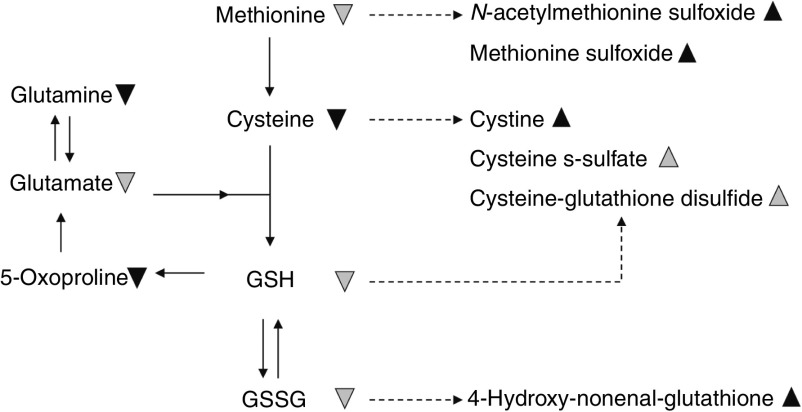
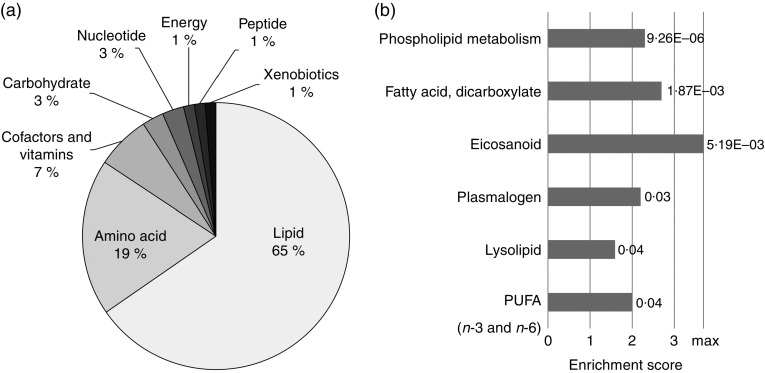
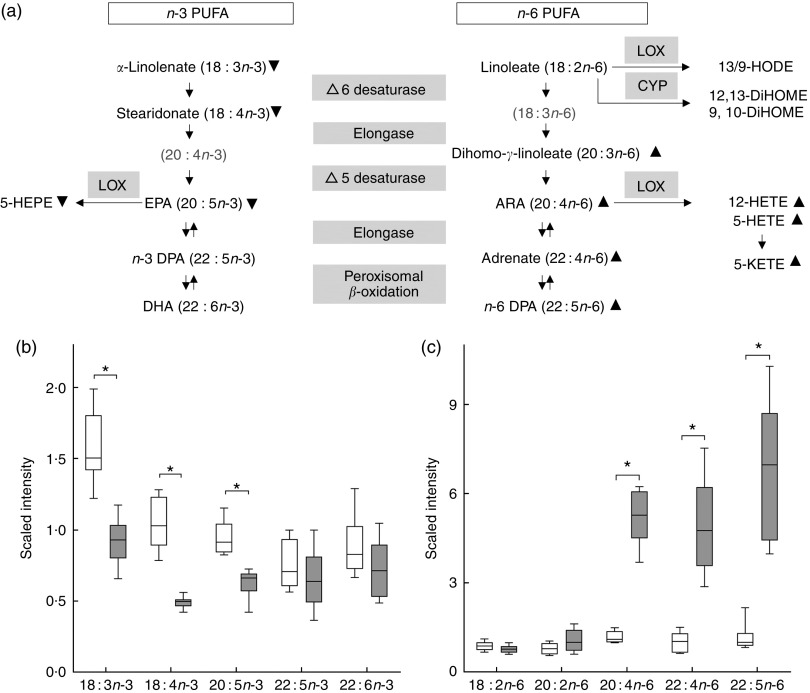
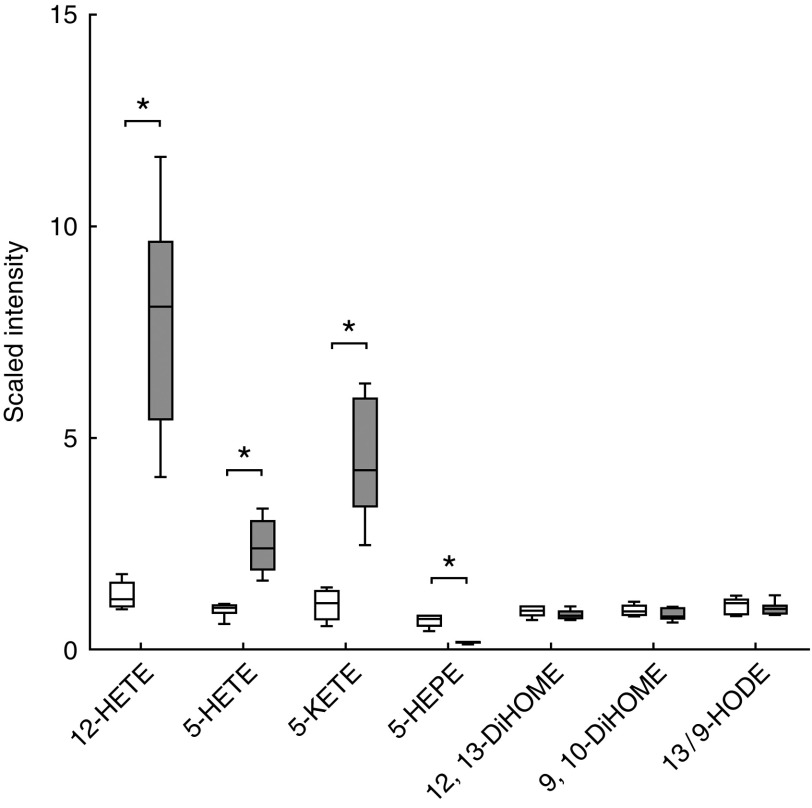
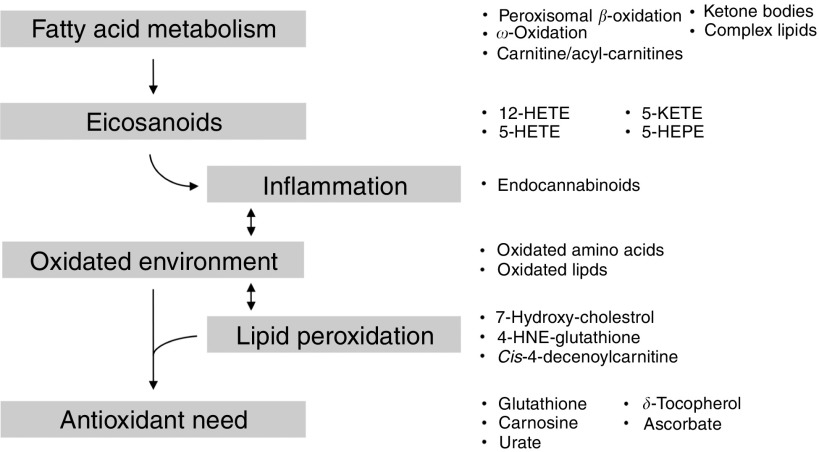
This study explores the effect of high dietary arachidonic acid (ARA) levels (high ARA) compared with low dietary ARA levels (control) on the general metabolism using zebrafish as the model organism. The fatty acid composition of today's 'modern diet' tends towards higher n-6 PUFA levels in relation to n-3 PUFA. Low dietary n-3:n-6 PUFA ratio is a health concern, as n-6 PUFA give rise to eicosanoids and PG, which are traditionally considered pro-inflammatory, especially when derived from ARA. Juvenile zebrafish fed a high-ARA diet for 17 d had a lower whole-body n-3:n-6 PUFA ratio compared with zebrafish fed a low-ARA (control) diet (0·6 in the control group v. 0·2 in the high-ARA group). Metabolic profiling revealed altered levels of eicosanoids, PUFA, dicarboxylic acids and complex lipids such as glycerophospholipids and lysophospholipids as the most significant differences compared with the control group. ARA-derived hydroxylated eicosanoids, such as hydroxy-eicosatetraenoic acids, were elevated in response to high-ARA feed. In addition, increased levels of oxidised lipids and amino acids indicated an oxidised environment due to n-6 PUFA excess in the fish. To conclude, our results indicate that an ARA-enriched diet induces changes in complex lipids and immune-related eicosanoids and increases levels of oxidised lipids and amino acids, suggesting oxidative stress and lipid peroxidation.
本研究以斑马鱼作为模式生物,探讨高膳食花生四烯酸(ARA)水平(高ARA组)与低膳食ARA水平(对照组)相比对一般代谢的影响。当今“现代饮食”的脂肪酸组成往往使n-6多不饱和脂肪酸(PUFA)水平相对于n-3 PUFA更高。低膳食n-3:n-6 PUFA比值是一个健康问题,因为n-6 PUFA会产生类二十烷酸和前列腺素,传统上认为它们具有促炎作用,尤其是当它们源自ARA时。与喂食低ARA(对照)饮食的斑马鱼相比,喂食高ARA饮食17天的幼年斑马鱼全身n-3:n-6 PUFA比值更低(对照组为0·6,高ARA组为0·2)。代谢谱分析显示,与对照组相比,类二十烷酸、PUFA、二羧酸以及甘油磷脂和溶血磷脂等复合脂质水平的改变最为显著。ARA衍生的羟基化类二十烷酸,如羟基二十碳四烯酸,在高ARA饲料喂养下升高。此外,氧化脂质和氨基酸水平的升高表明由于鱼体内n-6 PUFA过量而导致氧化环境。总之,我们的结果表明,富含ARA的饮食会引起复合脂质和免疫相关类二十烷酸的变化,并增加氧化脂质和氨基酸的水平,提示存在氧化应激和脂质过氧化。