Camacho Salvador, Ruppel Andreas
a Institute of Public Health , Universitätsklinikum Heidelberg , Heidelberg , Germany.
b Alfred-Weber Institute , Universität Heidelberg , Heidelberg , Germany.
Glob Health Action. 2017;10(1):1289650. doi: 10.1080/16549716.2017.1289650.
The obesity epidemic has been growing steadily across the whole world, and so far not a single country has been able to reverse it. The cause of obesity is stated by the World Health Organization as an energy imbalance between calories consumed and calories expended. However, growing evidence suggests that the calorie imbalance concept may not be sufficient to manage and reverse the obesity epidemic.
To discuss the use of the calorie imbalance concept and its elements as a tool for weight management as well as its possible negative consequences and implications for public health, with the aim to point toward the need of an updated concept for causes of obesity. This update should guide public health interventions more efficiently to limit obesity by preventing weight gain or promoting weight loss.
This is a literature reviews based on a semi-structured approach to determine the material to be examined.
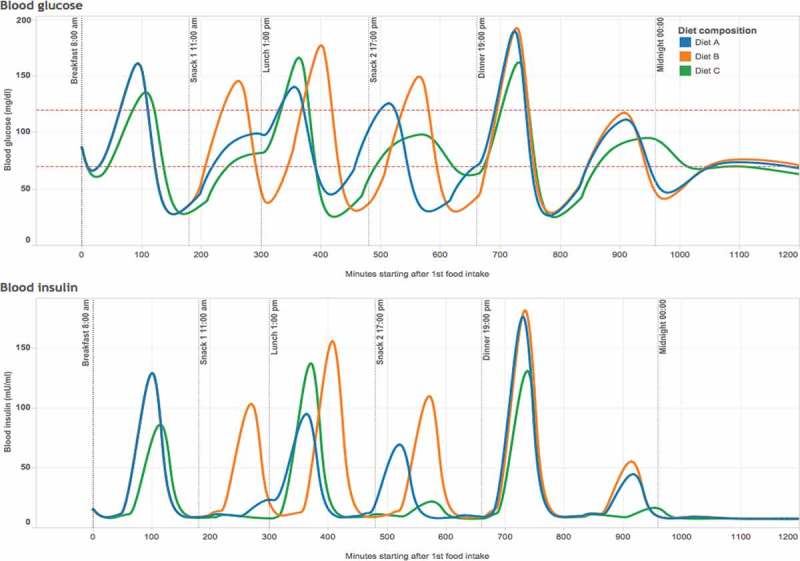
After revisiting general facts about fat generation and accumulation, we propose an updated concept for the causes of obesity including diet composition and hormonal regulation of fat metabolism.
We discuss how this updated concept could benefit the overall efficiency of strategies against obesity, and hypothesize how potential resistance to adopting this new view could be lowered.
肥胖流行在全球范围内一直在稳步加剧,迄今为止没有一个国家能够扭转这一趋势。世界卫生组织指出,肥胖的原因是摄入的卡路里与消耗的卡路里之间存在能量失衡。然而,越来越多的证据表明,卡路里失衡概念可能不足以应对和扭转肥胖流行趋势。
探讨将卡路里失衡概念及其要素用作体重管理工具的情况,以及其可能对公共卫生产生的负面后果和影响,旨在指出需要一个关于肥胖成因的更新概念。这一更新应更有效地指导公共卫生干预措施,通过预防体重增加或促进体重减轻来限制肥胖。
这是一项基于半结构化方法的文献综述,以确定要审查的材料。
在重新审视了有关脂肪生成和积累的一般事实后,我们提出了一个关于肥胖成因的更新概念,包括饮食组成和脂肪代谢的激素调节。
我们讨论了这一更新概念如何能提高对抗肥胖策略的整体效率,并推测如何降低采纳这一新观点可能遇到的潜在阻力。