Gao William N D, Carpentier David C J, Ewles Helen A, Lee Stacey-Ann, Smith Geoffrey L
Department of Pathology, University of Cambridge, Cambridge, UK.
Traffic. 2017 Aug;18(8):505-518. doi: 10.1111/tra.12494. Epub 2017 Jun 27.
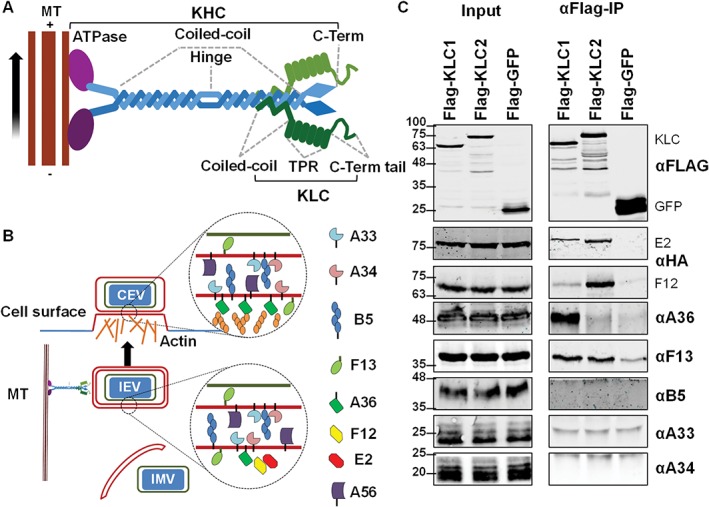
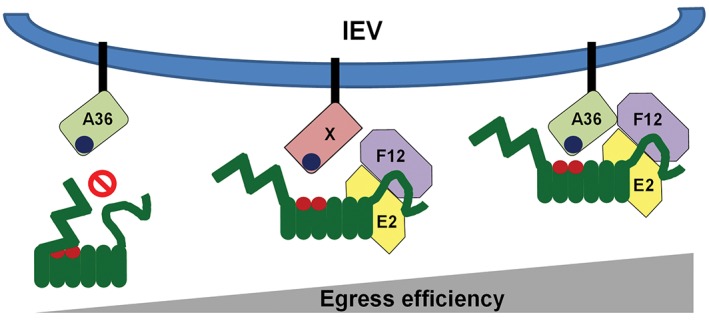
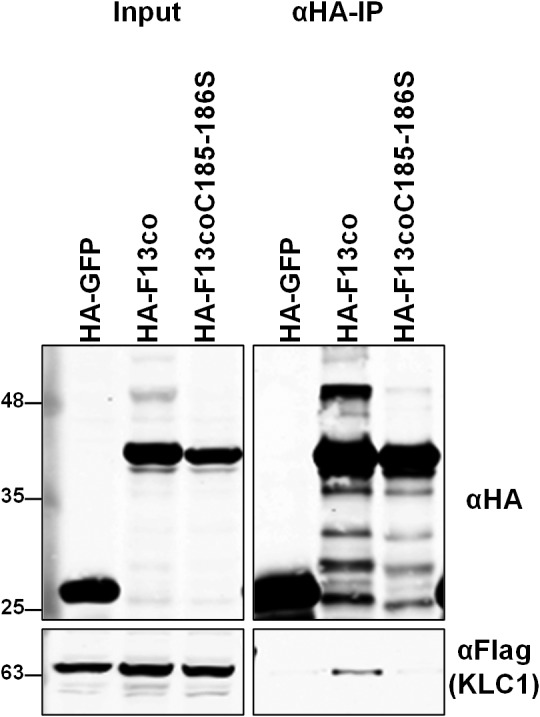
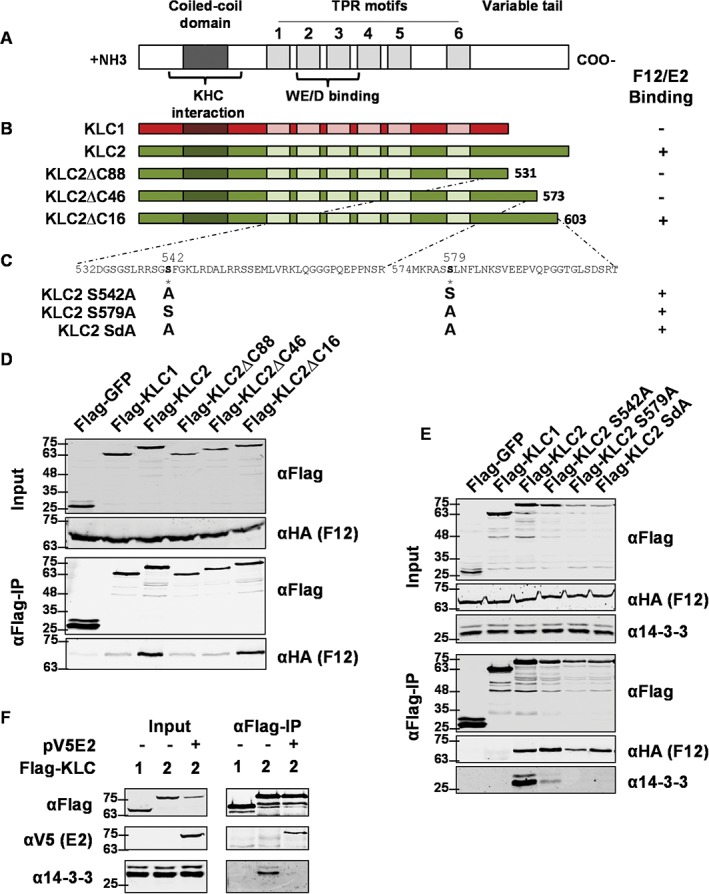
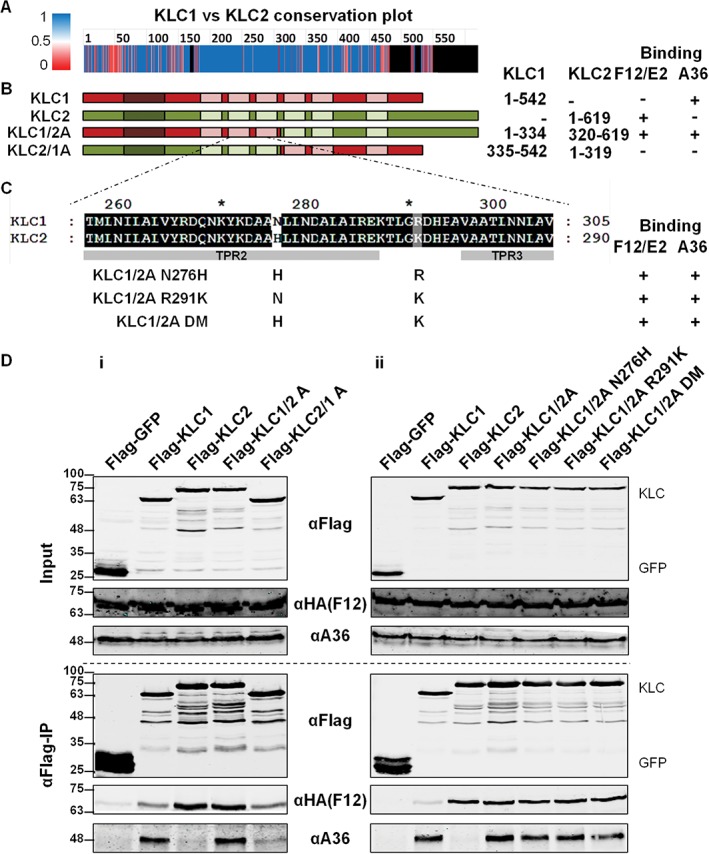
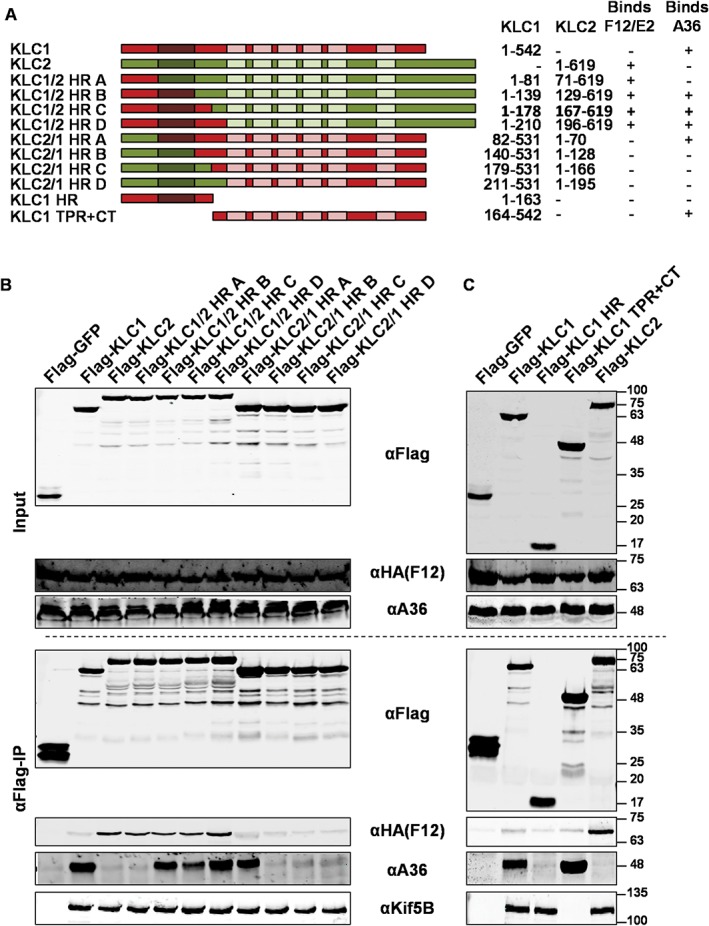
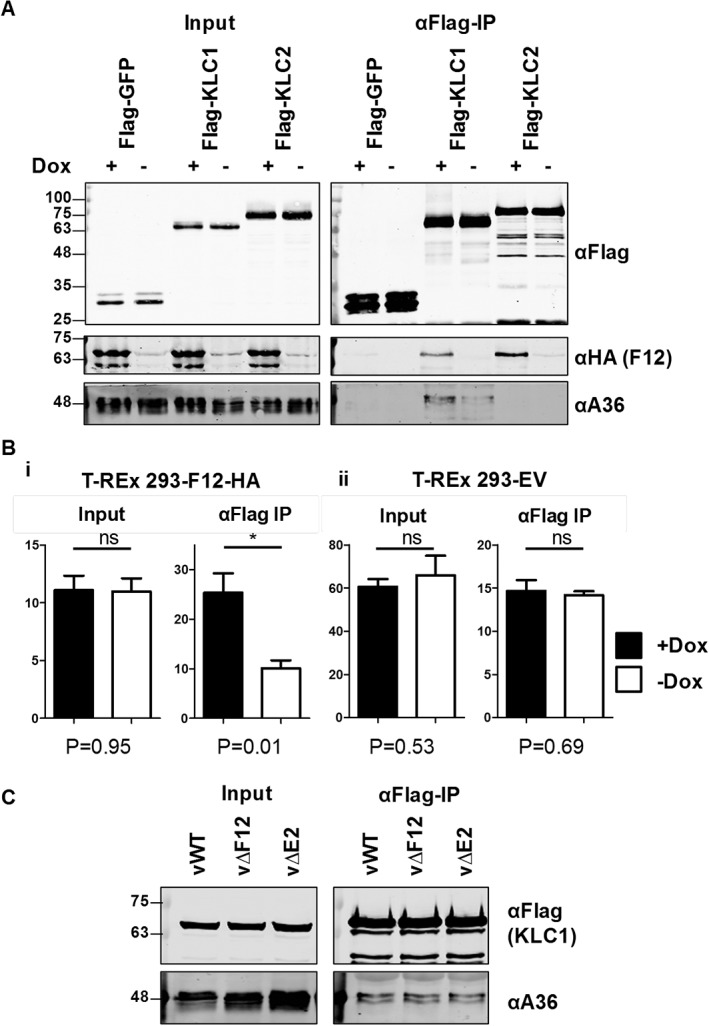
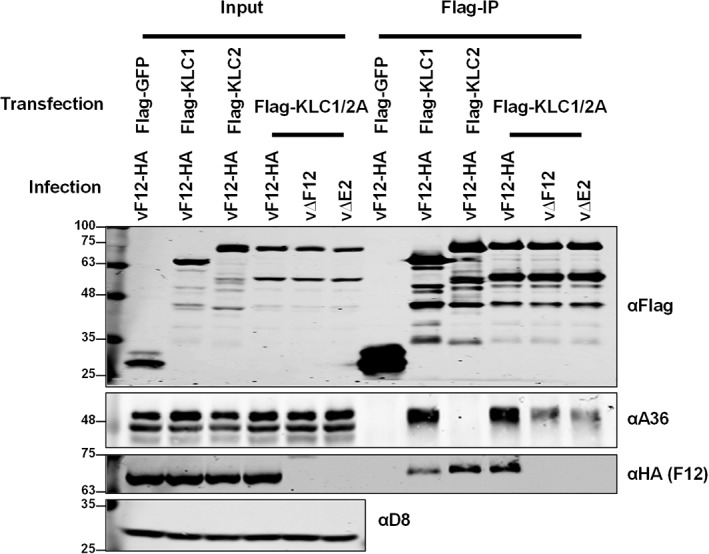
Vaccinia virus (VACV) utilizes microtubule-mediated trafficking at several stages of its life cycle, of which virus egress is the most intensely studied. During egress VACV proteins A36, F12 and E2 are involved in kinesin-1 interactions; however, the roles of these proteins remain poorly understood. A36 forms a direct link between virions and kinesin-1, yet in its absence VACV egress still occurs on microtubules. During a co-immunoprecipitation screen to seek an alternative link between virions and kinesin, A36 was found to bind isoform KLC1 rather than KLC2. The F12/E2 complex associates preferentially with the C-terminal tail of KLC2, to a region that overlaps the binding site of cellular 14-3-3 proteins. F12/E2 displaces 14-3-3 from KLC and, unlike 14-3-3, does not require phosphorylation of KLC for its binding. The region determining the KLC1 specificity of A36 was mapped to the KLC N-terminal heptad repeat region that is responsible for its association with kinesin heavy chain. Despite these differing binding properties F12/E2 can co-operatively enhance A36 association with KLC, particularly when using a KLC1-KLC2 chimaera that resembles several KLC1 spliceforms and can bind A36 and F12/E2 efficiently. This is the first example of a pathogen encoding multiple proteins that co-operatively associate with kinesin-1.
痘苗病毒(VACV)在其生命周期的多个阶段利用微管介导的运输,其中病毒释放是研究最为深入的阶段。在病毒释放过程中,VACV蛋白A36、F12和E2参与驱动蛋白-1的相互作用;然而,这些蛋白的作用仍知之甚少。A36在病毒粒子和驱动蛋白-1之间形成直接联系,但在其缺失的情况下,VACV仍能在微管上释放。在一项共免疫沉淀筛选中,为了寻找病毒粒子和驱动蛋白之间的替代联系,发现A36与异构体KLC1结合,而不是与KLC2结合。F12/E2复合物优先与KLC2的C末端尾部结合,该区域与细胞14-3-3蛋白的结合位点重叠。F12/E2从KLC上取代14-3-3,并且与14-3-3不同,其结合不需要KLC的磷酸化。将决定A36对KLC1特异性的区域定位到KLC的N末端七肽重复区域,该区域负责其与驱动蛋白重链的结合。尽管有这些不同的结合特性,F12/E2可以协同增强A36与KLC的结合,特别是当使用类似于几种KLC1剪接形式且能有效结合A36和F12/E2的KLC1-KLC2嵌合体时。这是病原体编码多种与驱动蛋白-1协同结合的蛋白的首个例子。