Australian Centre for Astrobiology, PANGEA Research Centre and School of Biological, Earth and Environmental Sciences, University of New South Wales, Kensington, New South Wales 2052, Australia.
Australian Research Council Centre of Excellence for Core to Crust Fluid Systems (CCFS), Macquarie University, New South Wales 2109, Australia.
Nat Commun. 2017 May 9;8:15263. doi: 10.1038/ncomms15263.
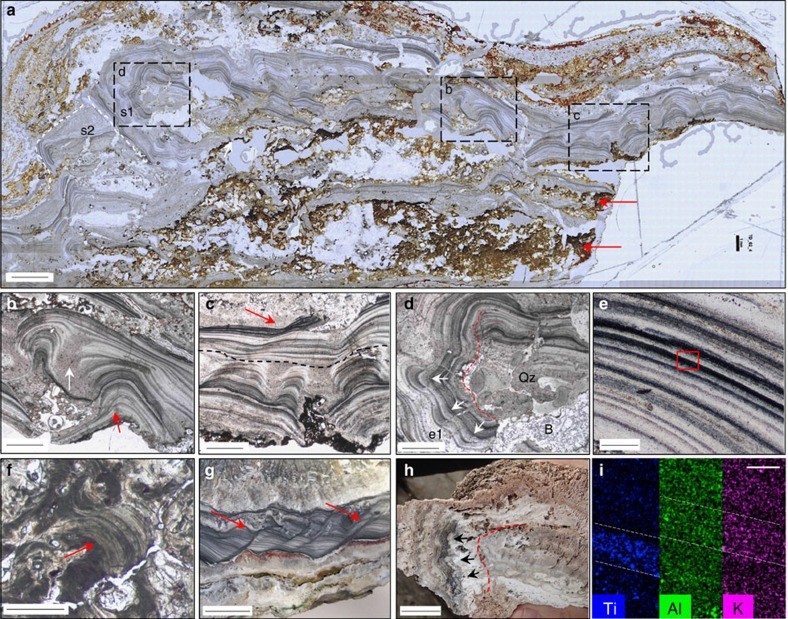
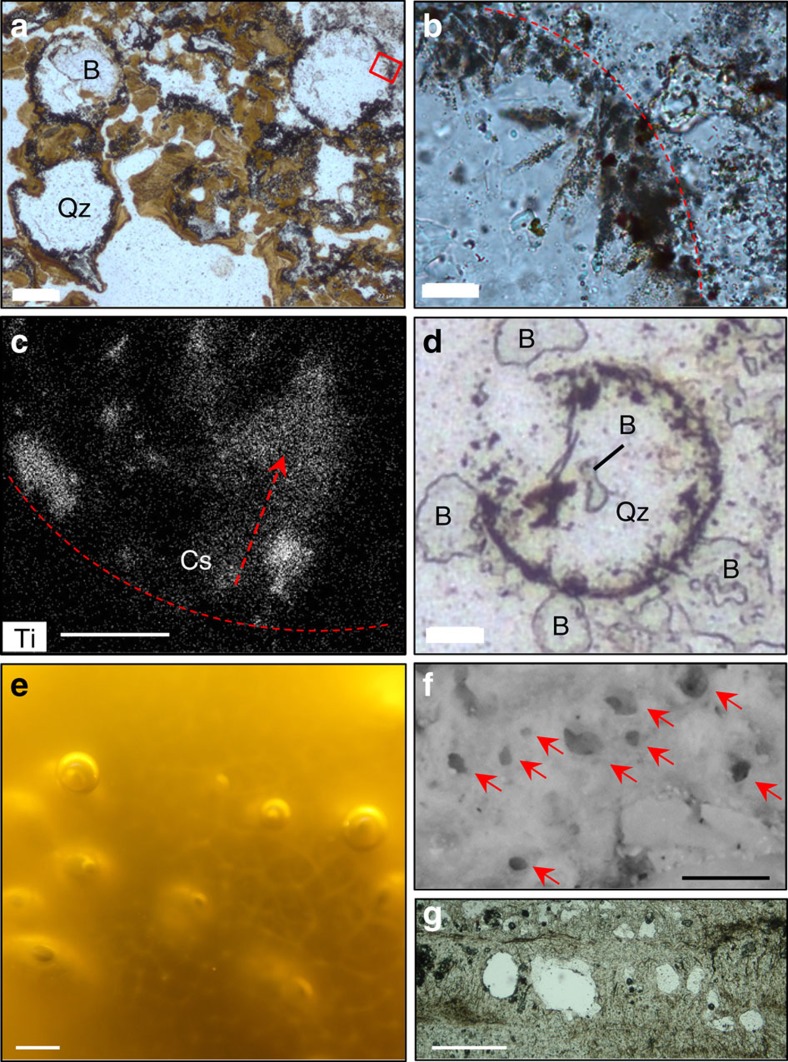
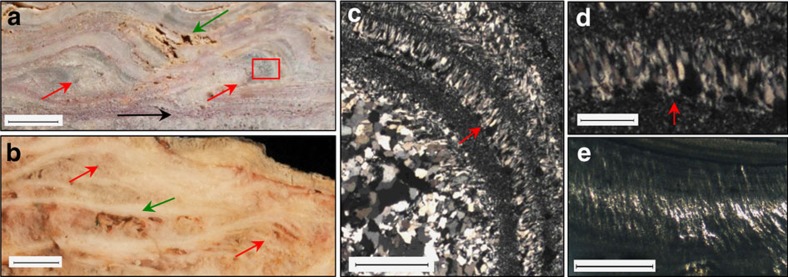
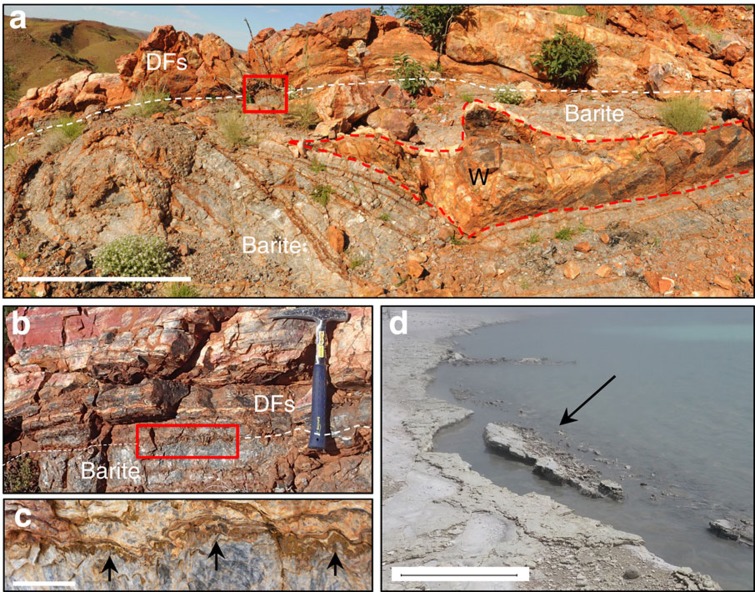
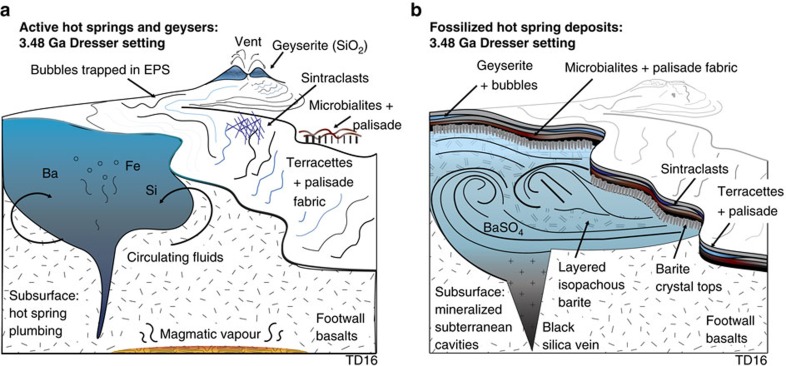
The ca. 3.48 Ga Dresser Formation, Pilbara Craton, Western Australia, is well known for hosting some of Earth's earliest convincing evidence of life (stromatolites, fractionated sulfur/carbon isotopes, microfossils) within a dynamic, low-eruptive volcanic caldera affected by voluminous hydrothermal fluid circulation. However, missing from the caldera model were surface manifestations of the volcanic-hydrothermal system (hot springs, geysers) and their unequivocal link with life. Here we present new discoveries of hot spring deposits including geyserite, sinter terracettes and mineralized remnants of hot spring pools/vents, all of which preserve a suite of microbial biosignatures indicative of the earliest life on land. These include stromatolites, newly observed microbial palisade fabric and gas bubbles preserved in inferred mineralized, exopolymeric substance. These findings extend the known geological record of inhabited terrestrial hot springs on Earth by ∼3 billion years and offer an analogue in the search for potential fossil life in ancient Martian hot springs.
西澳大利亚皮尔巴拉克拉通的约 34.8 亿年的德雷瑟地层以其拥有地球上一些最古老的生命证据而闻名(叠层石、分馏的硫/碳同位素、微生物化石),这些证据存在于一个受大量热液流体循环影响的动态、低爆发性火山破火山口内。然而,在这个火山-热液系统的火山口模型中缺少了表面的表现形式(温泉、间歇泉)以及它们与生命的明确联系。在这里,我们介绍了温泉沉积物的新发现,包括钙华、烧结梯田和温泉池/喷口的矿化残余物,所有这些都保存了一套微生物生物特征,表明这是地球上最早的生命。这些包括叠层石、新观察到的微生物栅栏状结构和保存在推断的矿化、外多聚物物质中的气泡。这些发现将已知的地球上有生命栖息的陆地温泉的地质记录延长了约 30 亿年,并为在古老的火星温泉中寻找潜在的化石生命提供了一个类比。