School of Earth and Space Exploration, Arizona State University, Tempe, Arizona 85287-6305, USA.
Nat Commun. 2016 Nov 17;7:13554. doi: 10.1038/ncomms13554.
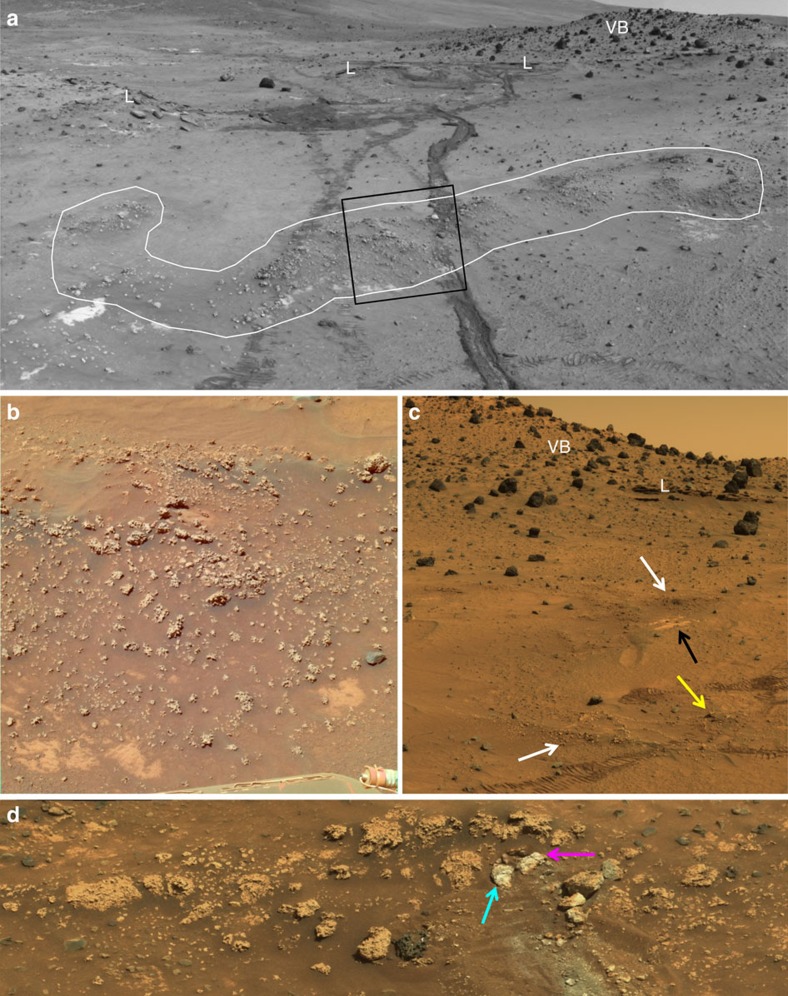
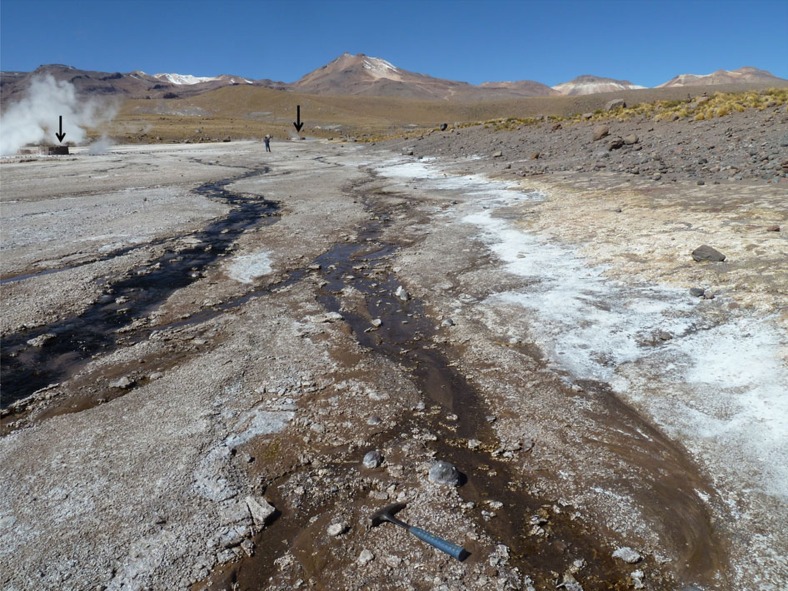
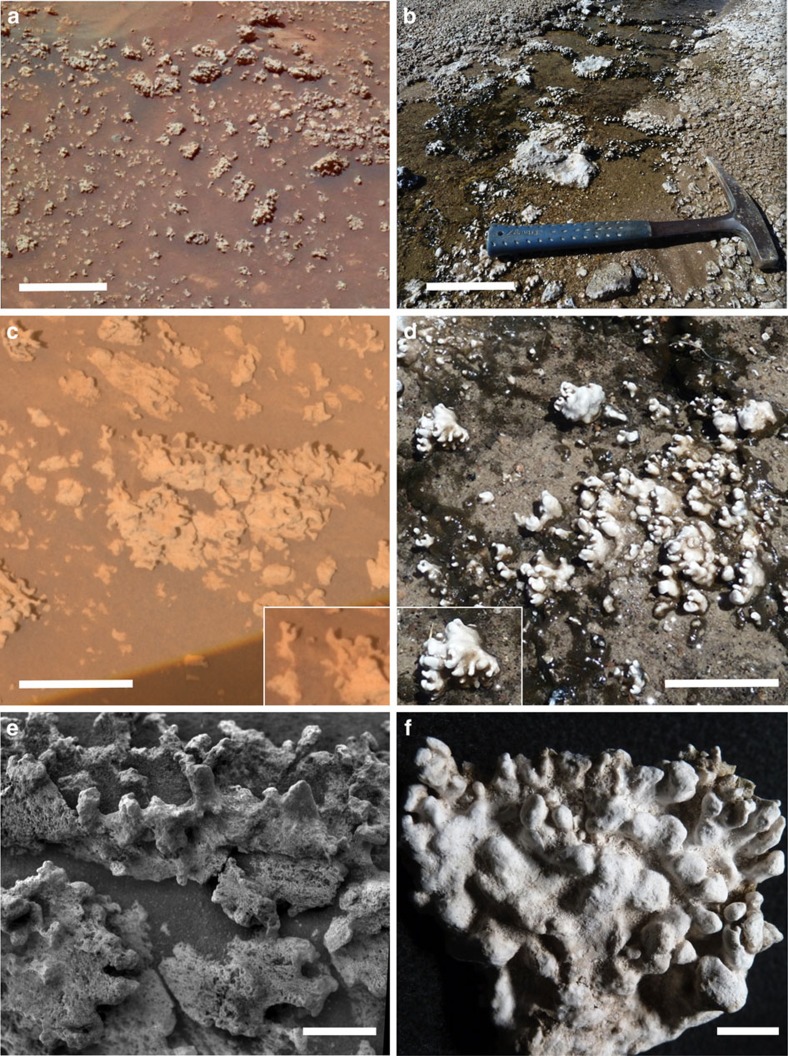
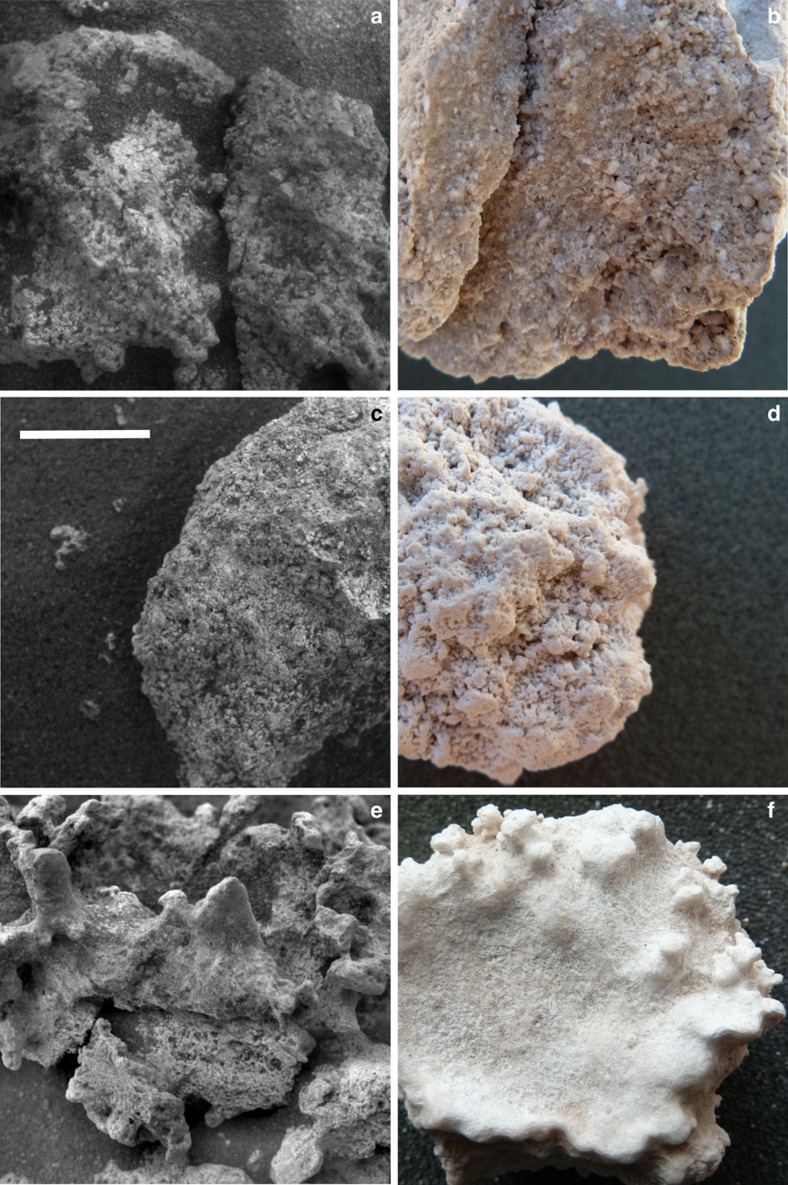
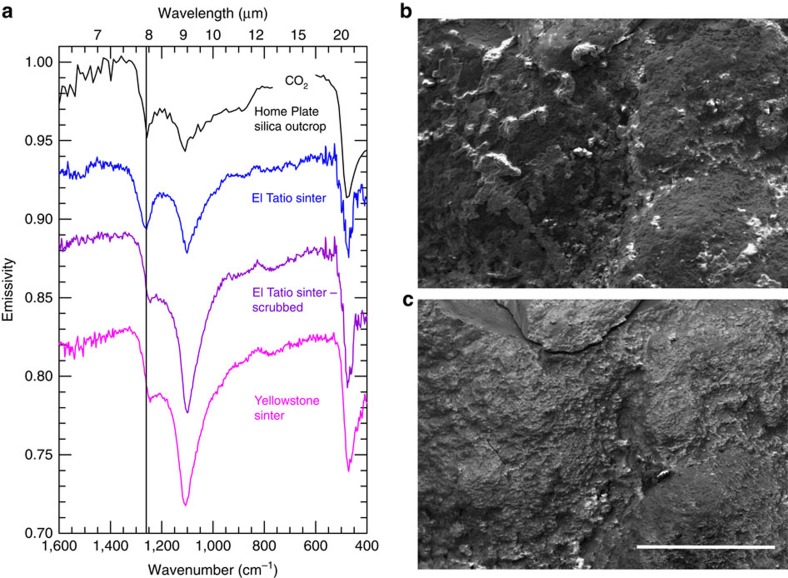
The Mars rover Spirit encountered outcrops and regolith composed of opaline silica (amorphous SiO·nHO) in an ancient volcanic hydrothermal setting in Gusev crater. An origin via either fumarole-related acid-sulfate leaching or precipitation from hot spring fluids was suggested previously. However, the potential significance of the characteristic nodular and mm-scale digitate opaline silica structures was not recognized. Here we report remarkably similar features within active hot spring/geyser discharge channels at El Tatio in northern Chile, where halite-encrusted silica yields infrared spectra that are the best match yet to spectra from Spirit. Furthermore, we show that the nodular and digitate silica structures at El Tatio that most closely resemble those on Mars include complex sedimentary structures produced by a combination of biotic and abiotic processes. Although fully abiotic processes are not ruled out for the Martian silica structures, they satisfy an a priori definition of potential biosignatures.
火星车“机遇号”在古火山热液环境中盖尔陨石坑内遇到了蛋白石硅(无定形 SiO·nHO)露头和风化层。此前曾提出过两种成因,一种是通过喷气孔相关的酸-硫酸盐浸出,另一种是从温泉流体中沉淀。然而,特征性的结节状和毫米级指状蛋白石硅结构的潜在意义尚未得到认识。在这里,我们报告了在智利北部埃尔塔蒂奥的活跃温泉/间歇泉排放通道中存在非常相似的特征,那里的盐壳包裹硅产生的红外光谱与“机遇号”上的光谱最为匹配。此外,我们还表明,埃尔塔蒂奥与火星上最相似的结节状和指状硅结构包括由生物和非生物过程共同产生的复杂沉积结构。尽管对于火星上的硅结构,完全非生物过程尚未被排除,但它们满足了潜在生物特征的先验定义。