Anglès d'Auriac Marc B, Rinde Eli, Norling Pia, Lapègue Sylvie, Staalstrøm André, Hjermann Dag Ø, Thaulow Jens
Norwegian Institute of Water Research (NIVA), Oslo, Norway.
French Research Institute for Exploitation of the Sea (Ifremer), SG2M-LGPMM, Laboratoire de Génétique et Pathologie des Mollusques Marins, La Tremblade, France.
PLoS One. 2017 May 9;12(5):e0177481. doi: 10.1371/journal.pone.0177481. eCollection 2017.
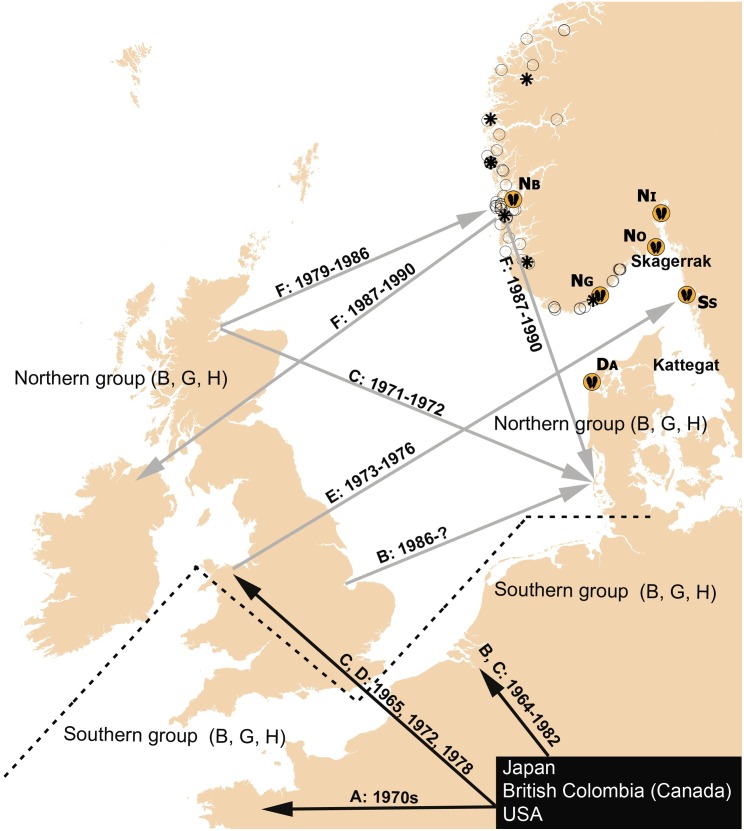
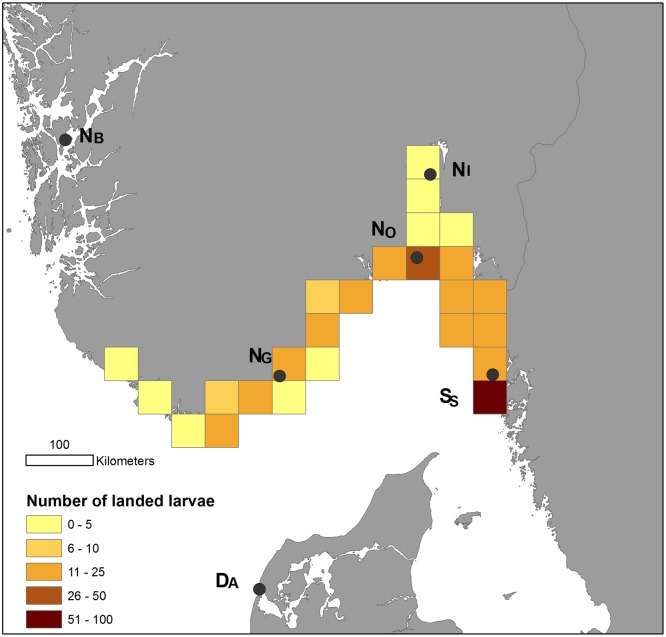
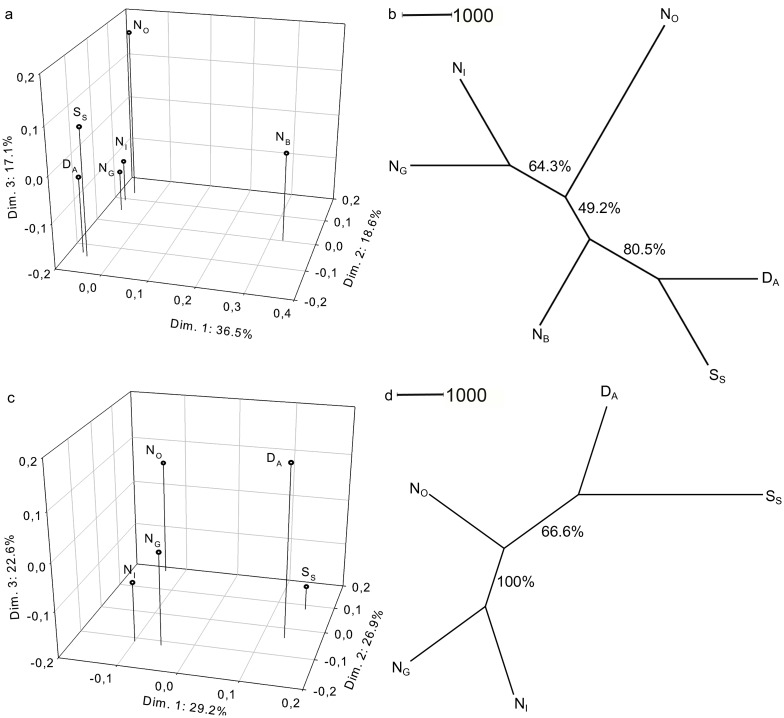
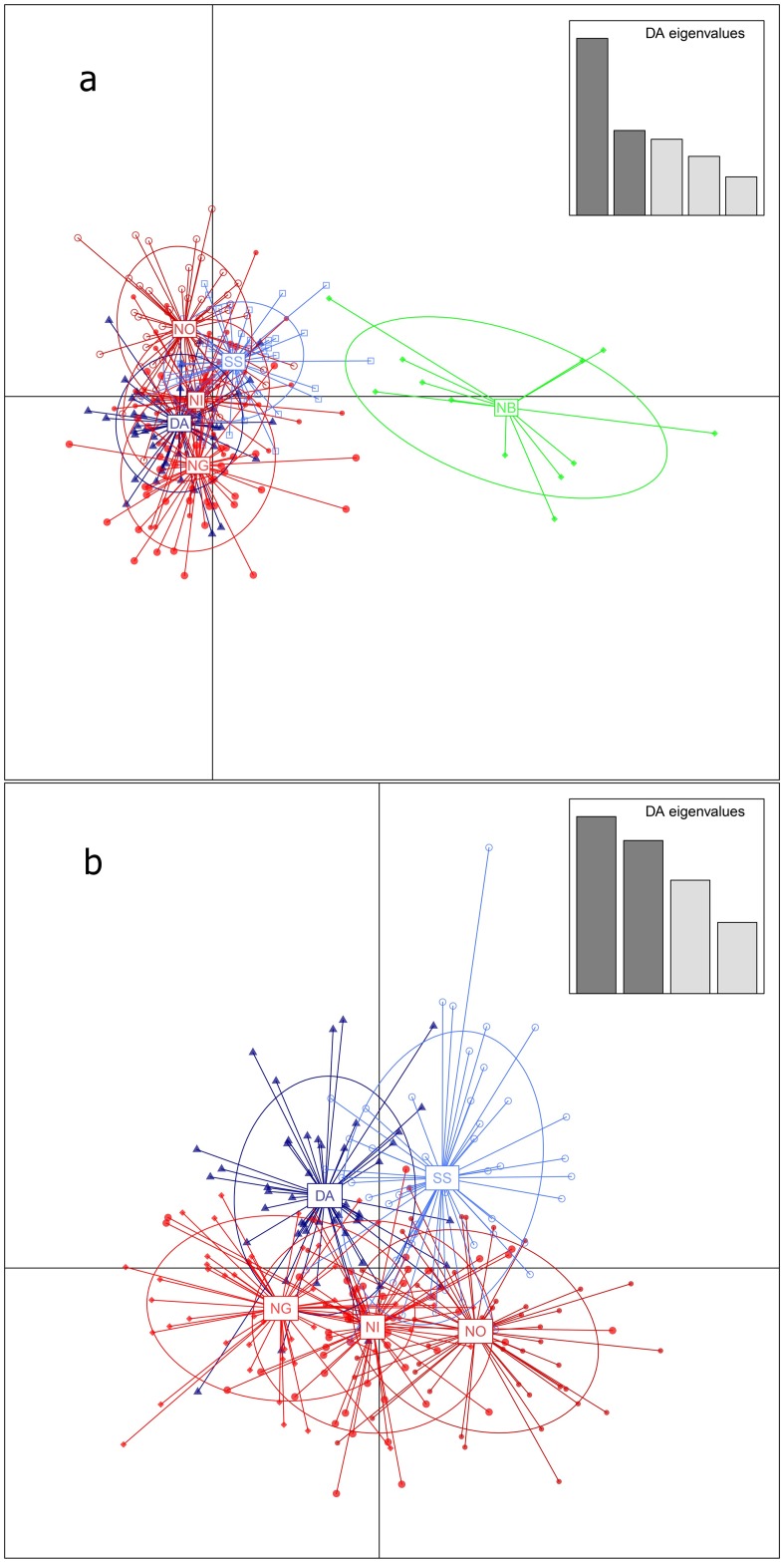
The Pacific oyster, Crassostrea gigas, was introduced to Europe for aquaculture purposes, and has had a rapid and unforeseen northward expansion in northern Europe. The recent dramatic increase in number of C. gigas populations along the species' northern distribution limit has questioned the efficiency of Skagerrak as a dispersal barrier for transport and survival of larvae. We investigated the genetic connectivity and possible spreading patterns between Pacific oyster populations on the southern Norwegian coast (4 localities) and Swedish and Danish populations by means of DNA microsatellite analysis of adult oysters, and by simulating larvae drift. In the simulations we used a 3D oceanographic model to explore the influence of recent climate change (1990-2010) on development, survival, and successful spreading of Danish and Swedish Pacific oyster larvae to Norwegian coastal waters. The simulations indicated adequate temperature conditions for development, survival, and settlement of larvae across the Skagerrak in warm years since 2000. However, microsatellite genotyping revealed genetic differences between the Norwegian populations, and between the Norwegian populations and the Swedish and Danish populations, the latter two populations being more similar. This patchwork pattern of genetic dissimilarity among the Norwegian populations points towards multiple local introduction routes rather than the commonly assumed unidirectional entry of larvae drifted from Denmark and Sweden. Alternative origins of introduction and implications for management, such as forecasting and possible mitigation actions, are discussed.
太平洋牡蛎(Crassostrea gigas)被引入欧洲用于水产养殖目的,并且在北欧迅速且意外地向北扩张。最近,在该物种的北半分布界限沿线,太平洋牡蛎种群数量急剧增加,这使得斯卡格拉克海峡作为幼虫运输和生存的扩散屏障的有效性受到质疑。我们通过对成年牡蛎进行DNA微卫星分析,并模拟幼虫漂移,研究了挪威南部海岸(4个地点)的太平洋牡蛎种群与瑞典和丹麦种群之间的遗传连通性以及可能的扩散模式。在模拟中,我们使用三维海洋模型来探究近期气候变化(1990 - 2010年)对丹麦和瑞典太平洋牡蛎幼虫发育、生存以及成功扩散到挪威沿海水域的影响。模拟结果表明,自2000年以来的温暖年份里,幼虫在斯卡格拉克海峡发育、生存和定居的温度条件适宜。然而,微卫星基因分型显示挪威种群之间以及挪威种群与瑞典和丹麦种群之间存在遗传差异,后两者更为相似。挪威种群之间这种遗传差异的拼凑模式表明存在多条本地引入途径,而非通常所认为的幼虫从丹麦和瑞典单向漂移进入。本文还讨论了引入的其他可能来源以及对管理的影响(如预测和可能的缓解措施)。